CALL US 850-385-3774
Knowing how to ensure your AC unit is ready for summer can make a noticeable difference in how your home feels during a long North Florida cooling season. In Tallahassee and nearby communities like Crawfordville, Quincy, Monticello, Woodville, and Bradfordville, summer comfort is not just about lowering the thermostat. It is also about airflow, humidity control, clean filters, clear outdoor equipment, and catching small issues before they become harder on the system.
This guide walks through practical ways to get your air conditioner ready for summer, what you can safely check on your own, when a professional inspection makes sense, and how to help your AC run more steadily during hot, humid weather.
North Florida summers are hot, humid, and long. Your air conditioning system may run for many hours a day to keep up with indoor comfort, especially when afternoon heat, high moisture levels, and frequent storms are part of the forecast. Preparing your system before the season gets intense helps improve airflow, reduce strain, and make your home feel more consistent from room to room.
Many AC problems start small. A dirty filter, leaves around the outdoor unit, a clogged drain line, or a thermostat issue can make the system work harder than it should. Homeowners may first notice symptoms like:
For a deeper look at local seasonal preparation, see Tony Kelly HVAC’s guide to preparing your HVAC system for Tallahassee’s summer heat.
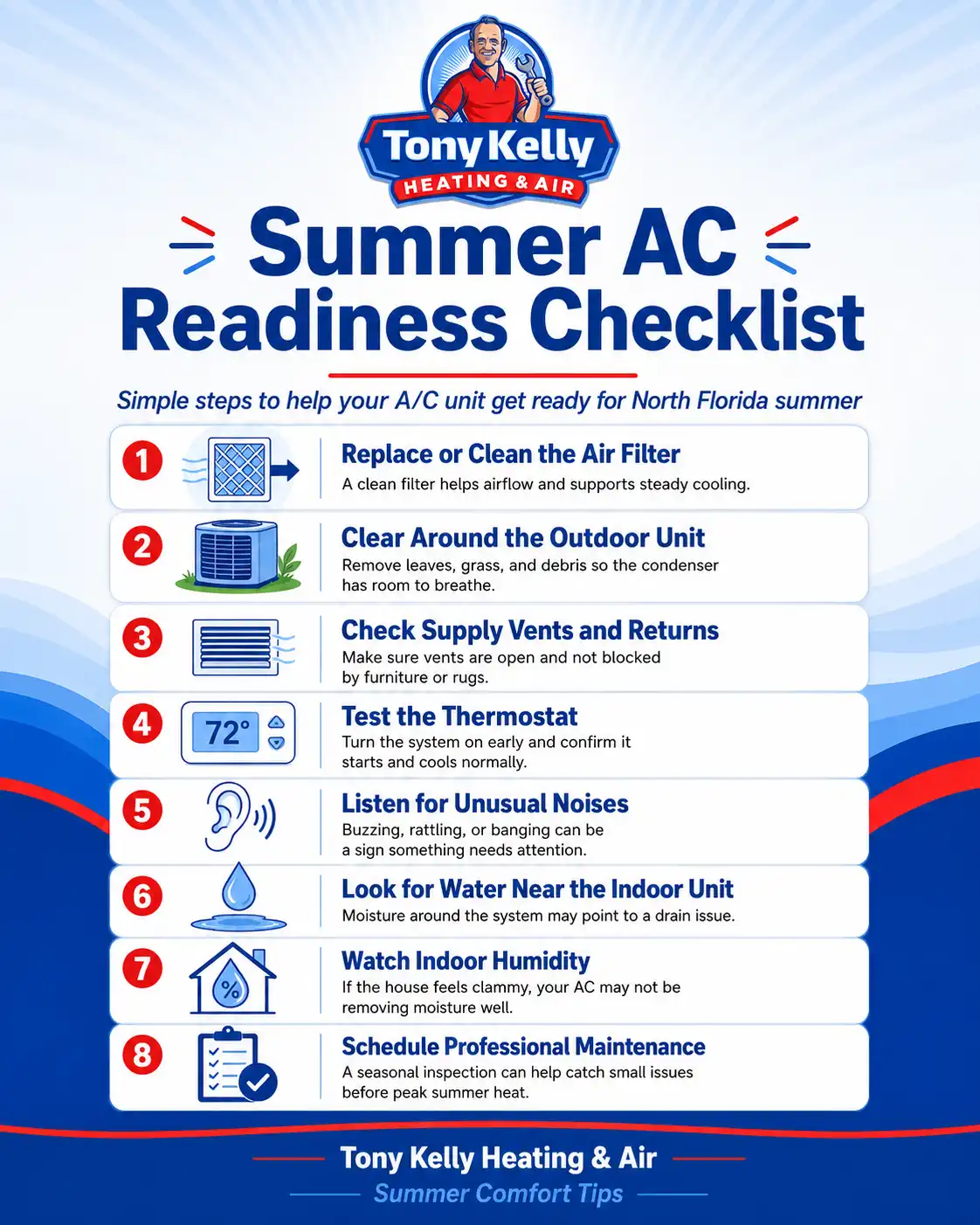
The best way to prepare your air conditioner is to look at the system as a whole. Your AC depends on clean airflow, an unobstructed outdoor unit, a properly working thermostat, clear drainage, and correctly operating components. The steps below focus on practical maintenance tasks that support comfort without turning the process into guesswork.
The air filter is one of the simplest places to start. A dirty filter restricts airflow, which can make the AC run longer than necessary and reduce comfort throughout the home. During high-use months, many homes need filter checks more often, especially if there are pets, allergies, dusty conditions, or frequent door traffic.
ENERGY STAR recommends checking filters monthly during heavy-use seasons and changing them at least every three months. You can review their general heating and cooling tips for additional guidance.
When replacing your filter, make sure the size matches the system and that the airflow arrow points in the correct direction. If the filter looks gray, dusty, bowed, or clogged, replacing it is usually a good first step before summer heat increases.
Your outdoor condenser needs room to release heat. Leaves, pine straw, grass clippings, weeds, branches, and stored items near the unit can reduce airflow. In Tallahassee-area yards, outdoor units often collect debris after spring growth, heavy rain, and stormy weather.
Clear away loose debris around the condenser and keep plants, patio furniture, lawn tools, and other obstructions away from the unit. A clean area around the system helps air move properly through the condenser coil. Do not remove panels, reach inside the unit, or attempt electrical work. The goal for homeowners is simple: keep the area around the unit open and clean.
If the outside of the condenser is dusty or covered in grass clippings, a gentle rinse with a garden hose can help remove loose buildup. Use light water pressure only. Avoid pressure washers, harsh chemicals, or anything that could bend the fins or damage components.
If the coil looks heavily packed with dirt or the fins appear damaged, that is a good time to have the unit inspected by an HVAC technician. Deep coil cleaning and component checks are better handled with the right tools and training.
Many homeowners ask, “What should the air conditioner be set at in summer?” There is no perfect number for every home, but the goal is to choose a setting that balances comfort, humidity, and system performance. The Department of Energy recommends setting your thermostat as high as comfortably possible in summer and raising the setpoint when you are away. Their home cooling guidance suggests starting around 75 to 78 degrees during the day.
In North Florida humidity, comfort may depend on more than the number on the thermostat. If your home still feels damp or sticky, the AC may not be removing moisture effectively, or the system may be short cycling, oversized, low on airflow, or affected by another issue. A small thermostat adjustment may help, but persistent humidity usually deserves a closer look.
Do not wait until the first stretch of heavy summer heat to find out how your AC is performing. Turn the system on and let it run long enough to check for normal operation. Walk through the home and pay attention to the air coming from the vents, the sound of the system, and whether the indoor temperature begins moving toward the thermostat setting.
During this test, watch for signs like weak airflow, warm air from vents, unusual noises, frequent starting and stopping, musty odors, or water around the indoor unit. If the AC is running but the house is not cooling, this related guide on common summer HVAC problems can help you understand what may be happening.
Closed vents, blocked returns, and furniture placed over registers can make the system work harder to move air. Before summer, walk through your home and make sure supply vents and return grilles are open, clean, and not covered by rugs, curtains, furniture, boxes, or pet beds.
If one part of the house is consistently warmer than the rest, the issue may involve ductwork, insulation, sun exposure, airflow balance, or layout. For homes with recurring room-to-room comfort issues, an HVAC zoning system installation may be worth learning about, especially when different areas of the home have different cooling needs.
Air conditioners remove moisture from indoor air. That moisture drains away through the condensate system. In humid climates like Tallahassee, this drainage process matters. If the drain line becomes clogged, water may back up, trigger a safety switch, or create moisture issues near the indoor equipment.
Look near the indoor unit for standing water, staining, algae buildup, musty smells, or signs that moisture is not draining correctly. Do not ignore repeated water around HVAC equipment. Even if the AC is cooling, drainage issues can affect comfort and indoor air quality over time.
Summer comfort is not only about temperature. High indoor humidity can make a house feel warmer than the thermostat suggests. The EPA notes that high humidity can increase the likelihood of mold and recommends keeping indoor humidity ideally between 30% and 50%. You can read more in the EPA’s indoor air quality guidance.
If your home feels clammy, smells musty, or has condensation on windows or vents, your AC may not be managing moisture well. Possible causes include airflow problems, dirty components, duct issues, thermostat settings, or equipment that needs service. A clean filter and steady airflow are good starting points, but recurring humidity problems should be evaluated more carefully.
Once summer arrives, everyday habits can help your AC run more steadily. The goal is not to force the system to cool faster, but to reduce unnecessary heat gain and support consistent airflow.
If your system seems to run constantly or struggles to keep up, this guide on how to tell if your AC is running efficiently can help you compare normal operation with potential warning signs.
There is no single number of hours that is right for every home. During a hot, humid Tallahassee summer day, it can be normal for an AC to run for long cycles, especially in the afternoon. Longer run times are not always a problem. In fact, steady cycles can help remove humidity more effectively than very short bursts.
What matters more is whether the system is cooling properly, maintaining comfort, and cycling in a consistent way. A system that runs longer during peak heat but reaches the thermostat setting may be operating normally. A system that runs all day and never gets close to the set temperature may need attention.
Watch for these signs that runtime may be pointing to a problem:
Some AC prep tasks are homeowner-friendly. Others should be left to a trained HVAC technician. Avoid DIY work involving refrigerant, electrical components, capacitors, motors, sealed system repairs, duct pressure testing, or internal equipment disassembly.
For example, low refrigerant is not something to simply “top off.” Air conditioners are closed systems. If refrigerant is low, there may be a leak or another issue that needs proper diagnosis. Electrical problems can also be dangerous and may damage the system if handled incorrectly.
A good rule of thumb: changing filters, clearing debris, checking vents, reviewing thermostat settings, and watching for visible moisture are reasonable homeowner tasks. Anything involving electrical testing, refrigerant, internal parts, or repeated performance issues should be handled professionally.
A professional inspection can help find issues that are not obvious during a basic homeowner check. This may include evaluating refrigerant pressures, electrical components, blower operation, drain performance, thermostat calibration, coil condition, and overall system operation.
Scheduling maintenance before the most demanding part of the cooling season can give you a clearer picture of how the system is performing. Tony Kelly HVAC’s Ultimate Savings Agreement is one way homeowners can learn about ongoing maintenance support without waiting for comfort issues to appear.
If an inspection finds a repair concern, homeowners can also review available support for AC repair in Tallahassee. For larger repair decisions, Tony Kelly also provides information about HVAC financing options.
North Florida storm season can bring heavy rain, lightning, wind, and power interruptions. NOAA notes that Atlantic hurricane season runs from June 1 through November 30, and its hurricane season preparation guidance encourages preparing before storms arrive.
For your AC system, storm-season awareness is mostly about prevention and observation. Keep the outdoor unit clear of loose yard debris, avoid stacking items near the condenser, and look over the area after strong weather passes. If the system acts differently after a storm, such as making unusual noises, failing to start, or producing warm air, it is better to have it checked before continuing to run it heavily.
Start by replacing or cleaning the air filter, clearing debris from around the outdoor unit, checking that vents are open, testing the thermostat, and watching for weak airflow, unusual noises, water near the indoor unit, or warm air from the vents. A professional inspection can also help identify issues that are not visible during a basic homeowner check.
Many homeowners start around 75 to 78 degrees during the day and adjust based on comfort, humidity, home layout, and personal preference. Setting the thermostat extremely low usually does not cool the home faster. It often just keeps the system running longer.
It depends on the outdoor temperature, humidity, home insulation, system size, thermostat setting, and sun exposure. During hot Tallahassee afternoons, longer cycles can be normal. The bigger concern is when the system runs constantly but never reaches the thermostat setting, short cycles repeatedly, or leaves the home feeling humid.
You can help your AC by changing dirty filters, keeping the outdoor unit clear, closing blinds during peak sun, using ceiling fans for comfort, avoiding blocked vents, and keeping thermostat adjustments reasonable. These small steps support airflow and reduce avoidable heat gain.
For many homes, raising the thermostat a few degrees while away is more practical than turning the system completely off. In humid climates, shutting the system off for long periods can allow indoor humidity to rise, which may make the home feel uncomfortable when you return.
Common causes include a dirty filter, blocked airflow, dirty coils, thermostat issues, duct leaks, low refrigerant, or other mechanical problems. If basic checks do not improve comfort, review Tony Kelly HVAC’s guide to common summer HVAC problems or have the system evaluated.
Summer AC maintenance can help improve airflow, identify worn components, check drainage, review thermostat operation, and confirm the system is ready for heavier seasonal use. It is a preventive step, not a promise that problems will never happen.
Getting your AC unit ready for summer does not have to be complicated. Clean airflow, clear outdoor space, reasonable thermostat settings, humidity awareness, and routine maintenance all play a role in keeping your home more comfortable during North Florida’s long cooling season.
For homeowners in Tallahassee and surrounding communities, the best approach is to handle the simple checks early, pay attention to how the system behaves, and use professional support when symptoms point beyond basic maintenance. You can also review Tony Kelly HVAC’s testimonial videos to hear more from local customers about their experience.
Address:
870 Blountstown Hwy. Unit # 9
Tallahassee, FL 32303
Phone: 850-385-3774
License #: CMC1249702
Open Monday Through Friday
8:00 am to 8:00 pm

