CALL US 850-385-3774
Florida homeowners often ask the same question after a few long summers: how long should an air conditioner realistically last in this climate? The answer is more nuanced than a single number. While manufacturers may publish general lifespan estimates, Florida’s heat, humidity, storm patterns, and extended cooling seasons create operating conditions that are very different from those in cooler or drier regions.
This guide explains how long AC units typically last in Florida, why climate matters so much, how different system types age over time, and what homeowners in Tallahassee and North Florida can do to better understand their system’s long-term reliability.
In many parts of the United States, homeowners are often told that a central air conditioning system should last between 15 and 20 years. While that range may be achievable in mild or seasonal climates, Florida systems usually experience a shorter working life.
For most North Florida homes, a realistic average lifespan for a central air conditioner is closer to 10 to 14 years. Heat pumps often fall into a similar range, while ductless mini-split systems may last slightly longer in some cases due to differences in design and operation.
These numbers are not guarantees or expiration dates. Some systems last longer, and others fail sooner. The key difference in Florida is how consistently and intensely systems are used throughout the year.
Unlike northern climates where air conditioners may sit idle for months, Florida systems often run daily for much of the year. That sustained workload affects nearly every component inside the system.
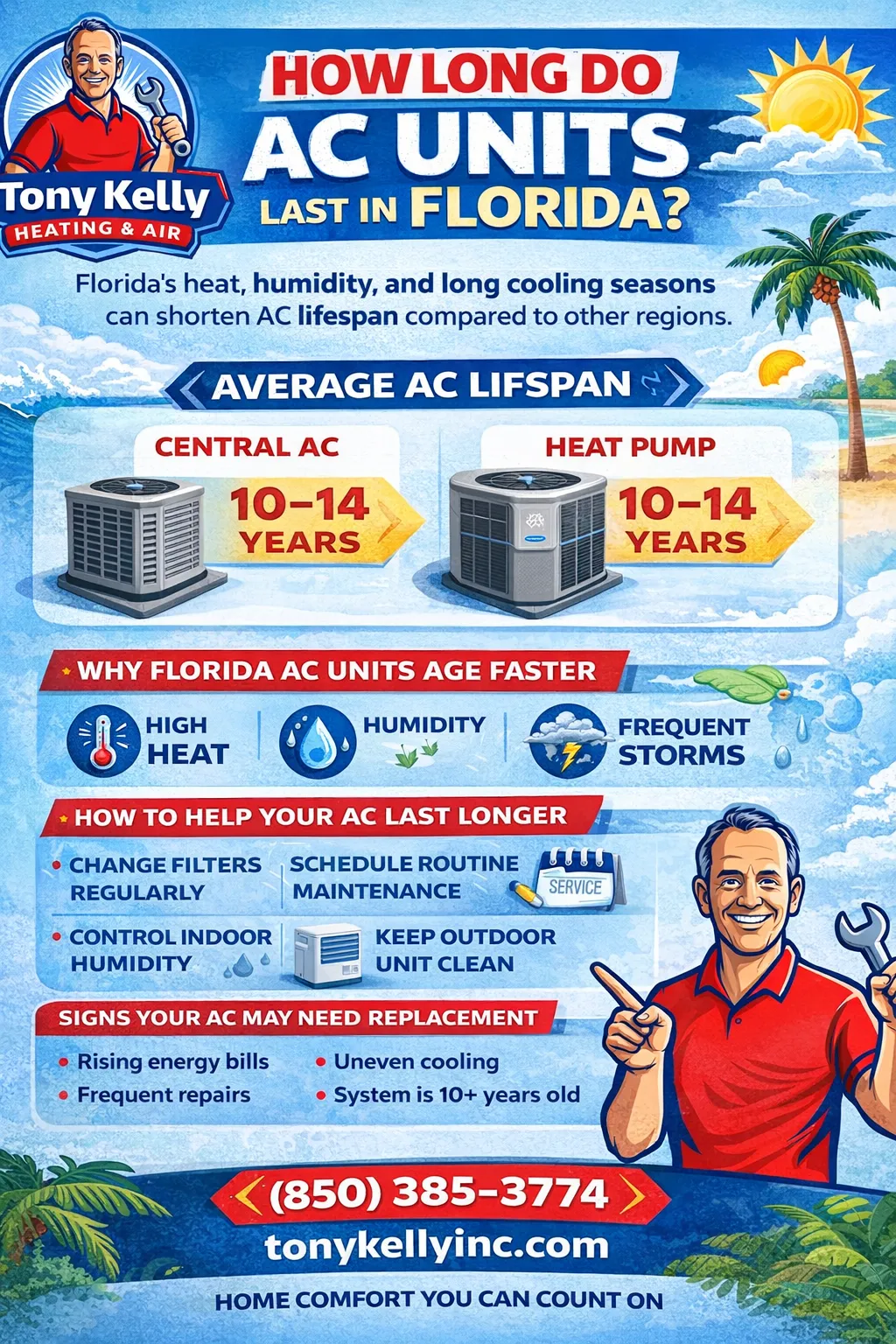
Florida’s climate creates a unique set of challenges for HVAC equipment. Heat, humidity, and weather patterns all contribute to increased wear over time.
High outdoor temperatures force air conditioners to work harder to maintain indoor comfort. Compressors run longer cycles, motors operate under heavier loads, and electrical components experience more frequent stress.
Humidity adds another layer of complexity. In North Florida, air conditioners are responsible not only for cooling the air but also for removing moisture. This latent load increases run time and places additional strain on coils, blowers, and drainage systems.
Moisture also accelerates corrosion. Metal components inside and outside the system are more vulnerable in humid environments, particularly when combined with salt exposure in coastal regions or frequent rainfall.
Storms and power disruptions further affect system longevity. Voltage fluctuations, sudden outages, and repeated restarts can stress compressors and control boards, even if damage is not immediately obvious.
Older homes common throughout Tallahassee and surrounding communities often compound these issues. Aging ductwork, inadequate insulation, and outdated electrical systems can cause modern HVAC equipment to operate under less-than-ideal conditions.
Central air conditioning systems remain the most common cooling solution in Florida homes. These systems rely on a combination of indoor and outdoor components working together through ductwork.
In Florida’s climate, the outdoor condenser unit is often the first area to show signs of aging. Continuous exposure to heat, rain, debris, and humidity can affect coils, fan motors, and electrical connections.
Indoors, evaporator coils and blower assemblies are exposed to moisture for much of the year. Without proper airflow and drainage, these components can experience reduced efficiency and increased wear.
While central AC systems can last beyond 14 years in some cases, many Florida homeowners notice declining performance well before that point. Reduced cooling capacity, longer run times, and inconsistent temperatures are often early signs of age-related wear.
Understanding how efficiently a system is operating can help distinguish between normal aging and developing issues, which is discussed in more detail in how to tell if your AC is running efficiently.
Heat pumps are widely used in Florida because they provide both cooling and heating. Unlike traditional furnaces, heat pumps operate year-round, reversing their function based on the season.
Because heat pumps run in both summer and winter, their total annual operating hours are often higher than those of cooling-only systems in other climates. This increased usage can affect overall lifespan.
In North Florida, heat pump life expectancy is commonly similar to or slightly shorter than that of central air conditioners, often ranging from 10 to 14 years depending on maintenance and operating conditions.
Humidity, outdoor exposure, and electrical reliability all play important roles. Systems that are properly sized and maintained tend to age more evenly and predictably.
Homeowners comparing different system types may benefit from understanding how design differences affect longevity, as outlined in mini-split vs central AC systems in Tallahassee.
Ductless mini-split systems are becoming more common in Florida homes, particularly for additions, renovations, or homes without existing ductwork.
Because mini-splits do not rely on long duct runs, they often avoid some of the airflow losses and moisture-related issues found in older duct systems. This can contribute to steadier performance over time.
Many mini-split systems are designed to operate efficiently under variable loads, which may reduce wear during partial cooling demand. As a result, some homeowners experience longer system life compared to traditional central systems.
That said, mini-splits are still exposed to the same outdoor climate challenges as other systems. Heat, humidity, and storms affect outdoor units regardless of system type.
Longevity ultimately depends on installation quality, usage patterns, and maintenance rather than system style alone.
One of the most important factors influencing how long an AC unit lasts in Florida is installation quality. Even well-built equipment can experience premature wear if installed improperly.
Oversized systems may short-cycle, turning on and off frequently instead of running steady cycles. This increases electrical stress and reduces humidity control.
Undersized systems may run nearly nonstop, accelerating wear on compressors and motors.
Improper refrigerant charge, inadequate airflow, or poorly sealed ductwork can all shorten system life without causing immediate failure.
Installation quality also affects comfort, efficiency, and moisture control, making it a long-term factor rather than a one-time event. This is why installation considerations are often discussed alongside planning topics such as HVAC installation in educational resources.
Maintenance plays a direct role in how long HVAC systems last in Florida’s demanding environment. Routine inspections and adjustments help reduce long-term stress on critical components.
Professional maintenance typically includes coil cleaning, electrical inspections, refrigerant verification, drainage checks, and airflow testing. These steps help systems operate within design parameters.
Without maintenance, dirt buildup, restricted airflow, and minor electrical issues can compound over time, leading to earlier failures.
Homeowners often perform basic tasks such as filter changes, but deeper system checks require professional tools and experience. Understanding where homeowner upkeep ends and professional service begins is covered in DIY vs professional HVAC maintenance.
Humidity is one of the most influential factors affecting HVAC lifespan in Florida, yet it is often overlooked.
When indoor humidity remains high, air conditioners must run longer to remove moisture from the air. This extended run time increases wear on compressors, blower motors, and coils.
Excess moisture can also lead to biological growth inside the system and ductwork, which may reduce airflow and efficiency.
In North Florida homes, humidity management is often a system-wide issue rather than a single component problem. Educational discussions around whole-home dehumidifiers often focus on comfort, but moisture control also plays a role in long-term equipment health.
Many older Florida homes still rely on duct systems that were installed decades ago. Leaky, poorly insulated, or improperly sized ductwork can increase system strain.
When conditioned air escapes through leaks, the system must run longer to maintain indoor temperatures. This extra workload accelerates wear.
Ducts located in hot attics are especially vulnerable. High attic temperatures increase thermal losses and force the system to work harder.
Moisture infiltration in ductwork can also contribute to indoor air quality concerns and airflow restrictions.
Addressing duct-related issues can improve efficiency and reduce unnecessary system stress, which ties closely to broader topics around maintenance and indoor air quality.
As AC systems age, homeowners often notice changes that go beyond normal performance variation.
Longer cooling cycles, uneven temperatures, increased noise, and more frequent repairs can all indicate that a system is approaching the later stages of its lifespan.
This does not automatically mean replacement is required. Some issues are isolated and repairable. Others may reflect cumulative wear.
Understanding how age factors into repair decisions is part of long-term planning, which is why educational comparisons like AC repair vs AC replacement in Tallahassee exist as separate resources.
While Florida’s climate sets the baseline, homeowners still influence how long their systems last.
Consistent filter changes help maintain airflow and reduce blower strain.
Keeping outdoor units clear of debris improves heat transfer and reduces motor load.
Scheduling routine professional maintenance helps identify small issues before they escalate.
Managing indoor humidity reduces overall system workload.
Reducing strain during peak summer conditions can also help, as outlined in tips to minimize HVAC strain during summer.
Most AC units in Florida last about 10 to 14 years, depending on system type, maintenance, and operating conditions.
Central air systems in Florida typically last around 10–14 years due to long cooling seasons and high humidity.
Yes. Florida’s climate requires systems to run more frequently and for longer periods than in many other regions.
Heat pumps often have similar or slightly shorter lifespans because they operate year-round for both heating and cooling.
Regular maintenance helps systems operate efficiently and can delay major component failures, improving long-term reliability.
High humidity increases run time and moisture exposure, which can accelerate wear on HVAC components.
Newer systems are often more efficient, but longevity still depends heavily on installation quality, usage patterns, and maintenance.
Yes. Poor ductwork can increase system workload, leading to faster wear and reduced efficiency.
Planning often begins when systems reach the later stages of their expected lifespan and require more frequent repairs.
Address:
870 Blountstown Hwy. Unit # 9
Tallahassee, FL 32303
Phone: 850-385-3774
License #: CMC1249702
Open Monday Through Friday
8:00 am to 8:00 pm

