CALL US 850-385-3774
The Benefits of Preventative HVAC Maintenance for Homes and Businesses in North Florida
Preventative HVAC maintenance is one of the most practical ways to protect your comfort, your indoor air quality, and the long-term performance of your heating and cooling system. In Tallahassee and the surrounding North Florida communities, HVAC systems work hard through long cooling seasons, high humidity, heavy rainfall, pollen, and stormy weather. Regular maintenance helps your system run more efficiently, respond more consistently, and avoid many of the problems that start small before becoming more disruptive.
Whether you are a homeowner trying to keep your house comfortable or a property manager responsible for a commercial building, understanding the benefits of preventive maintenance for HVAC systems can help you make better decisions throughout the year. Maintenance is not just about checking a box. It is about keeping airflow strong, helping the system remove moisture, catching worn parts early, and giving your HVAC equipment the best chance to perform the way it was designed to perform.
This guide explains what HVAC preventive maintenance includes, why HVAC maintenance is important in North Florida, how it supports energy efficiency and indoor comfort, and what signs may mean your system needs attention.
HVAC preventive maintenance is the routine inspection, cleaning, testing, and adjustment of your heating and cooling system before major problems appear. Instead of waiting for your AC, heat pump, or heating system to stop working correctly, maintenance focuses on keeping each major component in good condition.
A typical maintenance visit may include checking the air filter, inspecting electrical components, testing the thermostat, cleaning coils, clearing the condensate drain, checking refrigerant levels, inspecting airflow, and looking for signs of wear. These steps help the system move air properly, cool or heat evenly, and manage moisture more effectively.
Preventive maintenance is different from repair. Repair usually happens after something has already gone wrong. Maintenance is designed to reduce the chances of those problems happening in the first place. That makes it especially valuable in North Florida, where air conditioning systems may run for much of the year and often have to manage both heat and humidity.
For homeowners, regular maintenance helps keep daily comfort more predictable. For businesses and commercial buildings, it can also help reduce interruptions, protect equipment, and support a healthier indoor environment for employees, customers, and tenants.
HVAC maintenance matters everywhere, but it is especially important in hot, humid climates like Tallahassee. North Florida homes and businesses face long cooling seasons, frequent afternoon storms, high moisture levels, and seasonal pollen. These conditions put extra strain on air conditioning systems and heat pumps.
In a mild climate, an HVAC system may only need to handle moderate temperature swings. In Tallahassee, the AC system often runs for extended periods, especially during late spring, summer, and early fall. That means filters collect dust and pollen faster, coils can become dirty more quickly, and condensate drains may be more likely to clog due to the amount of moisture being removed from the air.
Humidity also plays a major role. Your air conditioner does more than cool the air. It also removes moisture during the cooling process. When the system is dirty, low on refrigerant, short cycling, or struggling with airflow, it may not remove humidity effectively. That can leave the home feeling sticky even when the thermostat looks like it is set correctly.
Storm season is another local consideration. Tallahassee and surrounding communities can experience heavy rain, lightning, wind, and power disruptions. Preventive HVAC maintenance does not stop storms, but it can help identify loose electrical connections, clogged drains, and vulnerable components before seasonal weather adds more stress.
In communities such as Bradfordville, Woodville, Crawfordville, Midway, Havana, Quincy, Monticello, and Ochlockonee, HVAC maintenance supports year-round comfort by helping systems stay cleaner, safer, and more consistent through changing weather conditions.
One of the most important benefits of HVAC maintenance is improved efficiency. When an HVAC system is dirty or out of adjustment, it has to work harder to move air, cool the home, remove humidity, or maintain the temperature set on the thermostat. Dirty coils, clogged filters, weak airflow, and failing components can all increase strain on the system.
Routine maintenance helps reduce that strain. A clean filter allows air to move more freely. Clean coils help heat transfer more effectively. Proper refrigerant levels help the system cool as designed. Tight electrical connections help components operate more reliably. Together, these details can help the system use energy more efficiently.
The U.S. Department of Energy notes that regular air conditioner maintenance is important for keeping cooling equipment operating efficiently. For homeowners in Tallahassee, where cooling is a major part of the year, even small efficiency improvements can make the system feel more responsive and reduce unnecessary energy waste.
Energy efficiency is not only about lower utility use. It is also about reducing stress on the equipment. When the system does not have to struggle to push air through a dirty filter or cool through a dirty coil, it can operate more smoothly and maintain comfort with less strain.
HVAC equipment is a major home investment. Preventative maintenance helps protect that investment by reducing unnecessary wear and tear. Every cooling cycle, heating cycle, fan cycle, and start-up puts some stress on the system. When parts are dirty, loose, clogged, or out of balance, that stress increases.
Maintenance helps catch early signs of wear before they shorten the life of the system. For example, a weak capacitor, worn contactor, dirty blower wheel, or clogged condensate drain may not seem like a major problem at first. Over time, however, those issues can affect performance and lead to bigger repairs.
Regular maintenance gives a technician the chance to spot these problems early. The goal is not to replace equipment before it is necessary. The goal is to help the existing equipment last as long as reasonably possible while operating safely and efficiently.
This matters for AC systems, heat pumps, and heating equipment. In North Florida, heat pumps and air conditioning systems often work heavily during the warmest months, while heating systems may sit unused for long stretches before being needed during a cold snap. Seasonal maintenance helps confirm that each mode is ready when the weather changes.
Many HVAC problems do not appear suddenly. They build over time. A filter gets too dirty. A drain line starts to clog. A coil collects debris. A wire loosens. A motor begins drawing more power than normal. A thermostat begins reading inconsistently. These issues may not stop the system immediately, but they can affect performance long before a complete failure occurs.
Preventative maintenance helps identify those warning signs. Instead of discovering a problem when the home feels hot, the system is cycling constantly, or water is pooling near the unit, maintenance allows small concerns to be addressed earlier.
This is especially helpful during North Florida’s warmest months, when HVAC companies are often busier and systems are under the most stress. Maintenance does not eliminate every possible repair, but it does reduce the chance that small, preventable issues will go unnoticed until they become more disruptive.
For additional context on common warning signs, we has a helpful guide on common HVAC problems that explains issues homeowners may notice when a system is not performing correctly.
A well-maintained HVAC system is better able to deliver steady comfort throughout the home or building. When airflow is restricted, refrigerant is low, coils are dirty, or the thermostat is not reading correctly, the system may struggle to maintain even temperatures.
Common comfort problems include rooms that feel warmer than others, weak airflow from vents, frequent cycling, long run times, or a home that feels humid even when the thermostat says the temperature is comfortable. These issues can often be traced back to maintenance-related problems such as dirty filters, blocked airflow, clogged drains, or system components that need adjustment.
Regular HVAC maintenance helps keep the system balanced and responsive. It also gives technicians a chance to identify ductwork concerns, thermostat issues, or zoning problems that may affect comfort.
For some homes, maintenance may reveal that the system itself is working but the home has uneven comfort needs. In those cases, a zoning system installation may help direct conditioned air more effectively to different areas of the home.
Indoor air quality is another major benefit of HVAC maintenance. Your HVAC system moves air throughout the home many times per day. If filters are dirty, ducts are dusty, or moisture is not being controlled properly, the system may circulate more dust, pollen, and airborne particles.
The EPA explains that indoor air quality is affected by pollutants, ventilation, moisture, and filtration. Your HVAC system plays a major role in all of those areas. While maintenance alone does not solve every indoor air concern, it does help support cleaner airflow and better moisture control.
Changing filters regularly is one of the simplest ways to support indoor air quality. During pollen-heavy seasons, homes in Tallahassee, Havana, Crawfordville, Monticello, and surrounding areas may need more frequent filter changes. Pet hair, dust, renovations, and heavy system use can also shorten filter life.
Professional maintenance can also help identify moisture problems that may contribute to musty odors or mold concerns. A clogged condensate drain, dirty evaporator coil, or system that is not removing humidity effectively may all affect indoor air quality.
In North Florida, comfort is not only about temperature. Humidity plays a major role in how a home feels. A house can be technically cool but still feel sticky, damp, or uncomfortable if indoor humidity is too high.
Air conditioning systems remove moisture as part of the cooling process. However, they need good airflow, clean coils, proper refrigerant levels, and correct run cycles to do this effectively. If the system is short cycling, dirty, oversized, low on refrigerant, or not draining properly, humidity control can suffer.
The EPA’s mold and moisture guidance explains that controlling moisture is one of the most important ways to reduce mold growth indoors. HVAC maintenance supports that goal by helping your system remove moisture and drain condensation properly.
For homeowners, signs of humidity problems may include musty odors, condensation near vents, a sticky feeling inside, doors that swell, or rooms that feel warmer than the thermostat setting. Maintenance can help determine whether the HVAC system is contributing to those problems.
HVAC maintenance also supports safe operation. Electrical connections, motors, capacitors, wiring, drain switches, heating elements, and safety controls all need to operate correctly. If a wire is loose or a component is failing, the system may continue to run for a while, but it could operate inefficiently or unpredictably.
During a maintenance visit, a technician can inspect electrical components, test controls, check startup performance, and look for signs of overheating or abnormal wear. For heating systems, maintenance may include checking burners, ignition systems, heat exchangers, or other components depending on the type of equipment.
Safety is especially important in systems that have not been serviced in a long time or systems that sit unused for much of the year before being turned on for seasonal heating. A maintenance visit helps confirm that the system is ready before you depend on it.
The benefits of commercial HVAC maintenance are similar to residential maintenance, but the stakes can be higher. Commercial HVAC systems often serve larger spaces, multiple rooms, offices, retail areas, or tenant spaces. If the system is not maintained, it may affect employee comfort, customer experience, indoor air quality, and business operations.
HVAC maintenance for commercial buildings may include filter replacement, coil cleaning, belt inspection, thermostat testing, airflow checks, drain clearing, electrical testing, and performance review. In larger buildings, technicians may also inspect rooftop units, packaged systems, multiple thermostats, dampers, zoning controls, and ventilation equipment.
For property owners and facility managers, preventive maintenance helps create a more predictable plan for upkeep. Instead of waiting for complaints about hot offices, humid rooms, or poor airflow, maintenance gives you a structured way to monitor equipment performance.
Commercial HVAC maintenance can also support compliance with ventilation expectations and occupant comfort standards. The ASHRAE standards and guidelines resource is a helpful reference point for understanding broader HVAC and ventilation principles in commercial environments.
Preventative maintenance helps homeowners and business owners plan ahead. When a technician inspects the system regularly, you get a clearer picture of equipment condition. That makes it easier to understand whether a repair may be coming, whether the system is aging, or whether certain parts need closer monitoring.
This does not mean every maintenance visit leads to a repair. In many cases, it simply gives you more information. You may learn that your system is running well, that a filter change schedule needs adjustment, or that a minor component should be watched during the next visit.
When larger repairs or upgrades are needed, having advance notice can make planning easier. We offer information on HVAC financing in Tallahassee for homeowners who want to understand available options when a larger project becomes necessary.
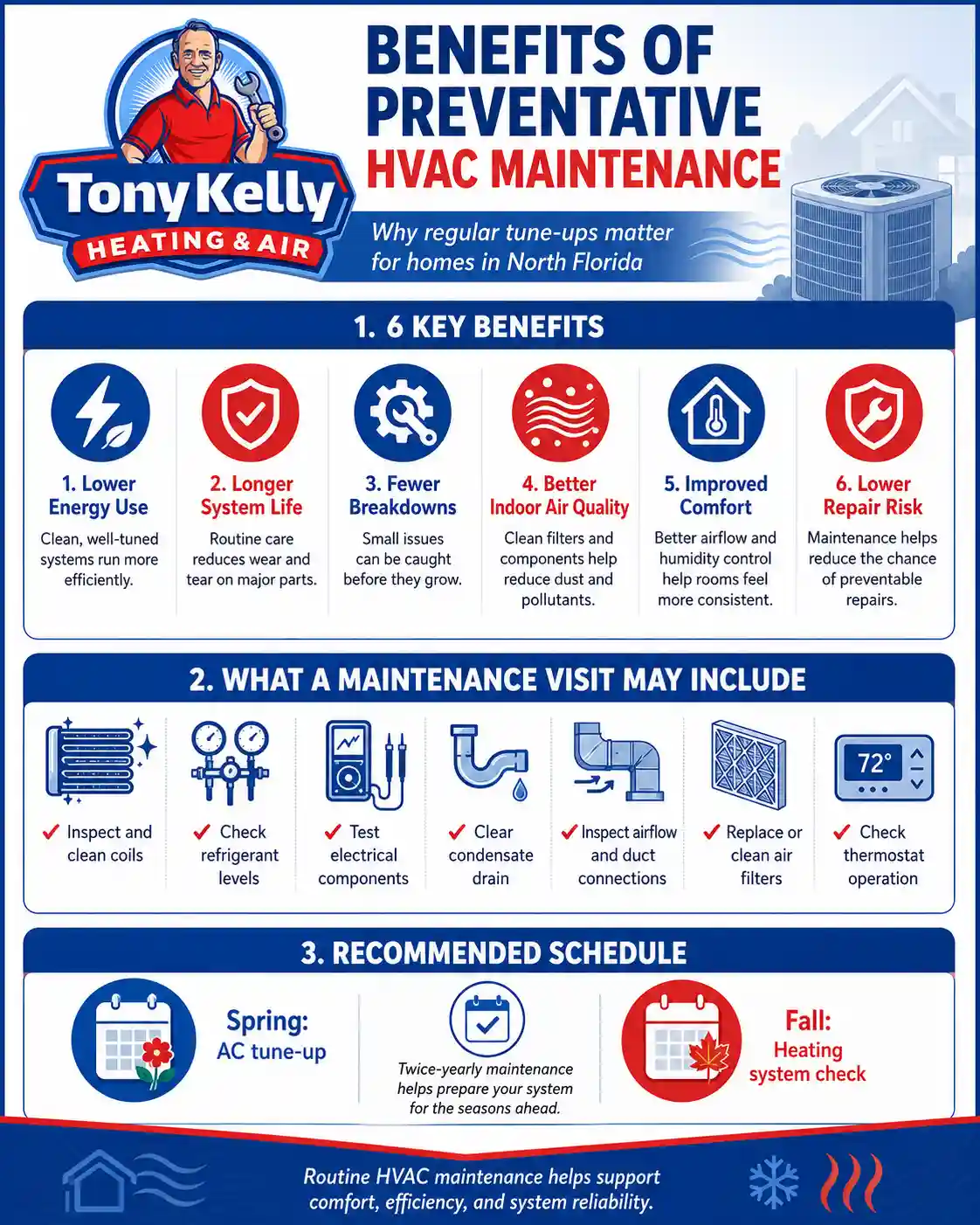
HVAC maintenance can vary depending on the system type, age, and condition, but most professional tune-ups include a combination of inspection, cleaning, testing, and adjustment. The goal is to evaluate how the system is operating and correct small issues that may affect efficiency, comfort, or reliability.
A professional HVAC maintenance service may include:
These steps help the technician understand how the system is performing as a whole. HVAC systems depend on many parts working together. A clean filter helps airflow. Proper airflow helps the coil work correctly. A clean coil improves cooling and moisture removal. A clear condensate drain helps prevent water problems. Strong electrical connections support safe operation. Each detail matters.
Air conditioning preventive maintenance is especially important in Tallahassee because the cooling season can be long and demanding. Before peak summer heat arrives, an AC system should be checked for airflow, refrigerant levels, coil condition, thermostat accuracy, drain performance, and electrical safety.
Many cooling problems begin with restricted airflow. A dirty filter, blocked return, dirty blower wheel, or dirty coil can reduce how much air moves through the system. When airflow drops, the system may run longer, cool unevenly, freeze up, or struggle with humidity.
Coil condition is also important. The evaporator coil absorbs heat and helps remove moisture. The outdoor condenser coil releases heat outside. If either coil is dirty, the system has to work harder. That can reduce cooling performance and increase strain on the compressor and other components.
Condensate drain maintenance is another key part of AC maintenance in Florida. Because air conditioners remove moisture, water must drain away from the system properly. If the drain line clogs, water can back up, trigger a safety switch, create musty odors, or cause water damage around the indoor unit.
Scheduling maintenance in spring gives the system a chance to be inspected before the heaviest cooling demand begins.
Although Tallahassee is known for heat and humidity, heating maintenance is still important. North Florida can experience chilly winter nights and occasional cold snaps. A heating system that has not been used for months may have dust buildup, worn components, thermostat issues, or other concerns that only become noticeable when temperatures drop.
For heat pumps, heating maintenance is closely connected to cooling maintenance because the same system often handles both. A heat pump needs proper refrigerant levels, clean coils, working reversing valves, strong airflow, and accurate controls to heat efficiently.
For other heating systems, maintenance may include checking ignition components, burners, safety controls, electrical connections, and overall operation. Testing heating performance before cold weather helps avoid surprises when the system is needed most.
Even in a warm climate, seasonal heating maintenance helps keep the system safe, reliable, and ready.
Many Tallahassee homes use a heat pump for both heating and cooling. Because the same equipment runs in summer and winter, a heat pump often operates for most of the year in North Florida. That extra run time is one reason heat pump preventive maintenance matters so much here.
A heat pump maintenance visit covers the same core checks as air conditioning maintenance, including filters, coils, refrigerant, electrical components, airflow, and the condensate drain. It also adds checks that only apply to heating mode:
Fall is a practical time for this visit. A short cold snap is often the first time a heat pump has worked in heating mode for months, and that is when worn parts or heat strip problems tend to show up. Checking the system before then helps avoid high bills from backup heat running more than necessary.
Between visits, watch for signs that a heat pump needs attention: AUX heat running often, ice on the outdoor unit that does not clear, cool air that lasts longer than a normal defrost cycle, or higher winter bills without a clear reason. Some of these are normal for short periods, and our guide to why a heat pump can blow cool air in winter explains what to expect. When symptoms persist, a technician can determine whether your system needs heat pump repair or replacement.
Homeowners can handle some basic HVAC maintenance tasks, but professional service is still important. DIY tasks help support the system between visits, while professional maintenance covers technical inspections and adjustments that require training and specialized tools.
Helpful DIY HVAC maintenance tasks include:
Professional maintenance should handle electrical testing, refrigerant checks, coil cleaning, blower inspection, drain clearing, safety control testing, and system performance measurements. Refrigerant and electrical components should not be handled as DIY tasks.
For a deeper breakdown, read our guide to DIY HVAC maintenance and when to call a professional in Tallahassee.
For most homes in North Florida, HVAC maintenance should be scheduled in the fall as the most practical time. A spring visit helps prepare the air conditioning system for the long cooling season. A fall visit helps confirm heating operation and checks the system after months of heavy summer use.
This schedule works well for many residential systems, especially heat pumps that provide both cooling and heating. Commercial HVAC systems may need more frequent service because they often run longer hours, serve larger spaces, and support more occupants.
You may also need maintenance more often if:
The best schedule depends on equipment age, usage, building size, and comfort needs. A technician can help recommend a maintenance rhythm based on your specific system.
Some HVAC maintenance needs are easy to miss because the system may still be running. However, performance changes often show up before a complete breakdown. Paying attention to these signs can help you schedule service before the problem becomes more disruptive.
Your system may be overdue for maintenance if you notice:
These symptoms do not always mean the system needs major repair. In many cases, the issue may be related to filters, airflow, coils, drains, thermostats, or other maintenance items. A professional inspection can help determine what is happening.
Indoor air quality is closely connected to HVAC performance. Your HVAC system controls airflow, filtration, temperature, and moisture. If the system is dirty or not operating correctly, it may contribute to dust, musty odors, humidity concerns, and uneven ventilation.
Regular maintenance supports indoor air quality by keeping filters clean, checking airflow, inspecting moisture concerns, and making sure the system is not circulating unnecessary dust or contaminants. For households with pets, allergies, asthma concerns, or young children, this can be especially important.
In Tallahassee, indoor air quality concerns often become more noticeable during pollen season and humid months. If a system is not removing humidity effectively, moisture can linger inside the home. That may contribute to musty smells or make indoor air feel heavy.
Maintenance also helps ensure that the HVAC system is not creating preventable indoor air problems. A clogged drain, dirty coil, or neglected filter can all affect how the system handles air and moisture.
Florida humidity creates unique comfort and maintenance challenges. A healthy HVAC system helps remove moisture from indoor air, but only when it is operating properly. If the system is dirty, restricted, oversized, short cycling, or not draining correctly, it may cool the home without removing enough humidity.
Moisture control is one of the most important reasons HVAC maintenance matters in North Florida. Excess indoor moisture can contribute to musty odors, dust mites, mold growth, warped materials, and general discomfort.
During maintenance, a technician can check the condensate drain, inspect coil condition, evaluate airflow, and look for signs of moisture problems. These checks help determine whether the system is helping control humidity or whether it may be contributing to indoor dampness.
Homeowners can also support moisture control by using bathroom and kitchen exhaust fans, setting the thermostat fan to AUTO instead of ON, replacing filters regularly, and keeping doors and windows closed during humid weather.
Commercial HVAC maintenance has several benefits for business owners, office managers, retail operators, and facility teams. In a commercial setting, comfort affects more than one household. It can influence employee productivity, customer experience, tenant satisfaction, and equipment reliability.
Commercial systems often have more parts than residential systems. They may include rooftop units, packaged systems, multiple thermostats, zoning controls, dampers, economizers, or ventilation equipment. Because these systems may operate for many hours each day, small issues can become more noticeable over time.
Benefits of commercial HVAC maintenance include:
For commercial buildings in Tallahassee and nearby communities, a preventative maintenance plan can help reduce the chance of avoidable service interruptions during the hottest parts of the year.
Preventive maintenance can help reduce energy waste, which may support lower utility use over time. However, it is important to frame this accurately. Maintenance does not create a guaranteed bill reduction, because energy use also depends on thermostat settings, insulation, ductwork, equipment age, home size, weather, and usage habits.
That said, a neglected HVAC system often uses more energy because it has to work harder. A dirty filter restricts airflow. Dirty coils reduce heat transfer. Low refrigerant affects cooling performance. Loose electrical connections can reduce reliability. A clogged drain can shut the system down or affect moisture control.
Maintenance helps the system operate closer to its intended performance. When the system runs more efficiently, it can reduce wasted energy and help keep comfort more consistent.
Skipping HVAC maintenance may not cause immediate problems, but it increases the chance of performance issues over time. Systems that are not maintained often develop airflow restrictions, dirty coils, clogged drains, worn electrical components, and reduced efficiency.
Common problems caused or worsened by skipped maintenance include:
Skipping maintenance can also make it harder to identify whether a problem is minor or more serious. A system that has not been serviced in years may have multiple issues happening at once, which makes diagnosis more complex.
To get the most value from HVAC maintenance, consistency matters. A single tune-up can help, but long-term maintenance works best when it becomes part of your seasonal home care routine.
Here are practical ways to support your system between visits:
It also helps to ask questions during a maintenance visit. Ask how the filter looks, whether the drain line was clear, whether refrigerant levels appear normal, and whether the technician noticed signs of wear. These details can help you better understand your system’s condition.
Sometimes a maintenance visit reveals that a repair is needed. This does not mean the maintenance caused the problem. It means the inspection found an issue before it became more disruptive.
Examples of repair recommendations that may come from maintenance include:
These recommendations should be explained clearly so you understand what was found, why it matters, and what options are available. A good maintenance visit should leave you better informed about the condition of your HVAC system.
Preventative maintenance is not replacement-first advice. In fact, one of the benefits of maintenance is helping your existing system last longer when possible. Regular care can delay avoidable replacement by reducing wear, improving airflow, and catching minor problems early.
However, maintenance can also help you recognize when an older system is nearing the end of its useful life. If a system needs frequent repairs, struggles to cool the home, has poor humidity control, or uses outdated components, maintenance records can help you make a more informed decision.
The goal is not to push replacement. The goal is to understand whether the system is still serving the home well and what steps make the most sense based on performance, age, condition, and comfort needs.
HVAC preventive maintenance is routine service designed to keep your heating and cooling system running properly. It includes inspection, cleaning, testing, and adjustment of important components such as filters, coils, drains, thermostats, electrical parts, refrigerant levels, and airflow.
HVAC maintenance is important because it helps the system run more efficiently, supports indoor comfort, improves air quality, reduces unnecessary wear, and helps catch small problems before they become larger repairs. In Tallahassee and North Florida, it is especially important because HVAC systems often run for long periods in humid conditions.
The main benefits of HVAC maintenance include better energy efficiency, fewer surprise repairs, longer equipment life, improved comfort, better humidity control, healthier indoor air, and more predictable system performance.
Most homes should schedule HVAC maintenance up to twice per year: once in spring before peak cooling season and once in fall before heating season. Commercial buildings or heavily used systems may need more frequent maintenance.
Yes. New systems still need maintenance to protect performance, support warranty requirements, keep airflow strong, and prevent small issues from developing early. Maintenance is not only for older equipment.
Yes. Maintenance can help improve humidity control by keeping coils clean, airflow strong, refrigerant levels correct, and condensate drains clear. These factors help your system remove moisture during the cooling process.
Yes. Dirty filters restrict airflow, which can reduce comfort, increase strain, lower efficiency, and contribute to coil freezing or poor humidity control. Filter changes are one of the simplest and most important HVAC maintenance tasks.
Skipping maintenance can lead to dirty coils, clogged drains, reduced airflow, higher humidity, uneven temperatures, more frequent repairs, and shorter equipment life. The system may still run, but it may work harder than necessary.
Air conditioning preventive maintenance commonly includes filter inspection, coil cleaning, refrigerant checks, thermostat testing, electrical inspection, blower inspection, drain clearing, airflow review, and overall system performance testing.
Yes. Even though Tallahassee has a warm climate, heating systems and heat pumps still need maintenance. Seasonal checks help ensure the system is ready for cold snaps and safe operation when heating is needed.
Maintenance helps indoor air quality by supporting filtration, reducing dust buildup, improving airflow, and helping control moisture. Clean filters, clean coils, and clear drains all help the system move and condition air more effectively.
Signs include weak airflow, uneven temperatures, long run times, frequent cycling, musty smells, water near the indoor unit, higher humidity, unusual noises, and dust buildup around vents.
You can handle basic tasks like changing filters, keeping outdoor units clear, and making sure vents are not blocked. Professional maintenance is still needed for refrigerant checks, electrical testing, coil inspection, drain clearing, and system performance evaluation.
Yes. Commercial HVAC systems often run longer hours, serve larger areas, and may include multiple units, thermostats, dampers, rooftop equipment, or ventilation controls. Commercial systems may need more frequent inspections than residential systems.
Heat pump preventive maintenance includes the same core checks as air conditioning maintenance, plus heating-specific tests such as defrost cycle operation, reversing valve function, backup heat strip performance, thermostat staging, and heating output. Because a heat pump heats and cools with the same equipment, it runs for much of the year in North Florida.
No. Maintenance cannot prevent every possible repair, but it can reduce the chance of preventable problems and help catch issues earlier. It is best understood as risk reduction and performance protection, not a guarantee that repairs will never happen.
For additional homeowner questions, visit our HVAC FAQs.
The benefits of preventive maintenance for HVAC systems go beyond one tune-up. Regular maintenance supports energy efficiency, indoor comfort, humidity control, air quality, equipment lifespan, and repair planning. In Tallahassee and surrounding North Florida communities, where HVAC systems work through long, humid cooling seasons and stormy weather, routine maintenance is one of the most practical ways to care for your system.
Preventative HVAC maintenance helps homeowners and businesses stay ahead of small issues, better understand system condition, and keep indoor spaces more comfortable throughout the year. By combining professional maintenance with simple homeowner tasks like changing filters and keeping outdoor units clear, you can help your HVAC system perform more reliably in every season.
To learn more about ongoing care, visit our HVAC maintenance in Tallahassee page.
Address:
870 Blountstown Hwy. Unit # 9
Tallahassee, FL 32303
Phone: 850-385-3774
License #: CMC1249702
Open Monday Through Friday
8:00 am to 8:00 pm

