CALL US 850-385-3774
When your HVAC unit goes out, it can be hard to know what to check first. Your home may start feeling warm, the air may stop moving through the vents, or the system may sound like it is trying to run but never actually cool the house. In Tallahassee and the surrounding North Florida communities, this can feel especially frustrating because long cooling seasons, high humidity, and stormy weather can put a lot of strain on an HVAC system.
The good news is that not every HVAC issue means something major has failed. Sometimes the problem is as simple as a thermostat setting, dirty air filter, tripped breaker, clogged drain line, or blocked outdoor unit. Other times, the issue may involve electrical components, refrigerant levels, motors, or airflow problems that need a trained HVAC technician.
This guide walks through practical HVAC troubleshooting tips, what to do if your HVAC unit goes out, what not to do, and when it makes sense to bring in a professional. The goal is to help you understand what may be happening, rule out simple problems, and avoid making the issue worse.
If your HVAC system suddenly stops working, start with the basics. A calm, step-by-step approach can help you figure out whether the issue is something simple or whether the system needs professional attention.
The thermostat is one of the first places to look when your air conditioning goes out. Make sure it is set to “cool” and that the temperature is set lower than the current indoor temperature. If the thermostat screen is blank, replace the batteries if your model uses them. Also make sure the thermostat has not accidentally been switched to “heat,” “off,” or “fan only.”
If your thermostat is programmable or smart, review the schedule settings. Sometimes the system may be following a programmed temperature that does not match what you expected. In a North Florida home, even a small thermostat setting issue can make the house feel uncomfortable quickly when outdoor humidity is high.
A dirty air filter is one of the most common causes of HVAC system problems. When the filter is clogged with dust, pollen, pet hair, and other debris, air cannot move through the system properly. That can make your HVAC equipment run longer, cool poorly, or shut down as a protective measure.
Remove the filter and hold it up to the light. If you cannot see light through it, or if it looks gray and packed with dust, replace it with the correct size and type for your system. In homes with pets, heavy dust, or frequent AC use, filters may need to be checked more often.
For more long-term prevention, this is also a good place to connect the issue to routine HVAC maintenance in Tallahassee, since filter checks, airflow checks, and system inspections can help catch problems before they turn into breakdowns.
If the HVAC system is not turning on at all, check your electrical panel. Look for a breaker labeled “AC,” “air handler,” “furnace,” “HVAC,” or “condenser.” If the breaker is in the middle position or switched off, flip it fully off and then back on.
If the system starts working after you reset the breaker, keep an eye on it. A breaker that trips once may be the result of a temporary overload. A breaker that trips repeatedly can point to a deeper electrical issue and should be inspected by a professional.
Some HVAC systems have a switch near the indoor air handler. It may look like a regular light switch, which means it can sometimes be turned off by mistake. Outdoor units also usually have a disconnect box nearby. Make sure the system has power at both the indoor and outdoor equipment.
Do not open electrical panels, disconnect boxes, or equipment cabinets unless you are trained to do so. The goal is simply to confirm that obvious switches are in the proper position.
Walk outside and look at the condenser unit. Make sure it is not blocked by leaves, grass clippings, branches, weeds, or other debris. In Tallahassee, outdoor units can collect storm debris, pine needles, and yard waste that restrict airflow.
The outdoor unit needs room to breathe. If plants, fences, or debris are too close to the equipment, the system may overheat or struggle to remove heat from your home. Clear away loose debris around the unit, but do not bend fins, remove panels, or spray electrical components directly.
If the system is running but the home is not cooling evenly, check the supply vents and return air grilles. Make sure furniture, curtains, rugs, or boxes are not blocking airflow. Closed or blocked vents can create pressure imbalances and make certain rooms feel warmer than others.
If only one area of the home feels uncomfortable, the issue may involve ductwork, insulation, airflow balancing, or a room that receives more sun exposure during the day.
Water near the indoor air handler may point to a clogged condensate drain line, frozen coil, or drainage issue. In humid North Florida homes, HVAC systems remove a lot of moisture from the air. That moisture needs to drain properly.
If the drain line backs up, some systems will shut down to prevent water damage. If you see water pooling, wet drywall, stained flooring, or a full drain pan, turn the system off and avoid continuing to run it until the issue is addressed.
If your HVAC unit stopped working after a power outage or storm, give it a little time before trying to restart it. Power interruptions can cause the system to pause, reset, or enter a short delay before restarting. This is especially common with some thermostats and newer equipment.
After checking the thermostat and breaker, wait several minutes before trying to restart the system. If it still does not turn on, or if it turns on and shuts off again, the issue may need professional diagnosis.
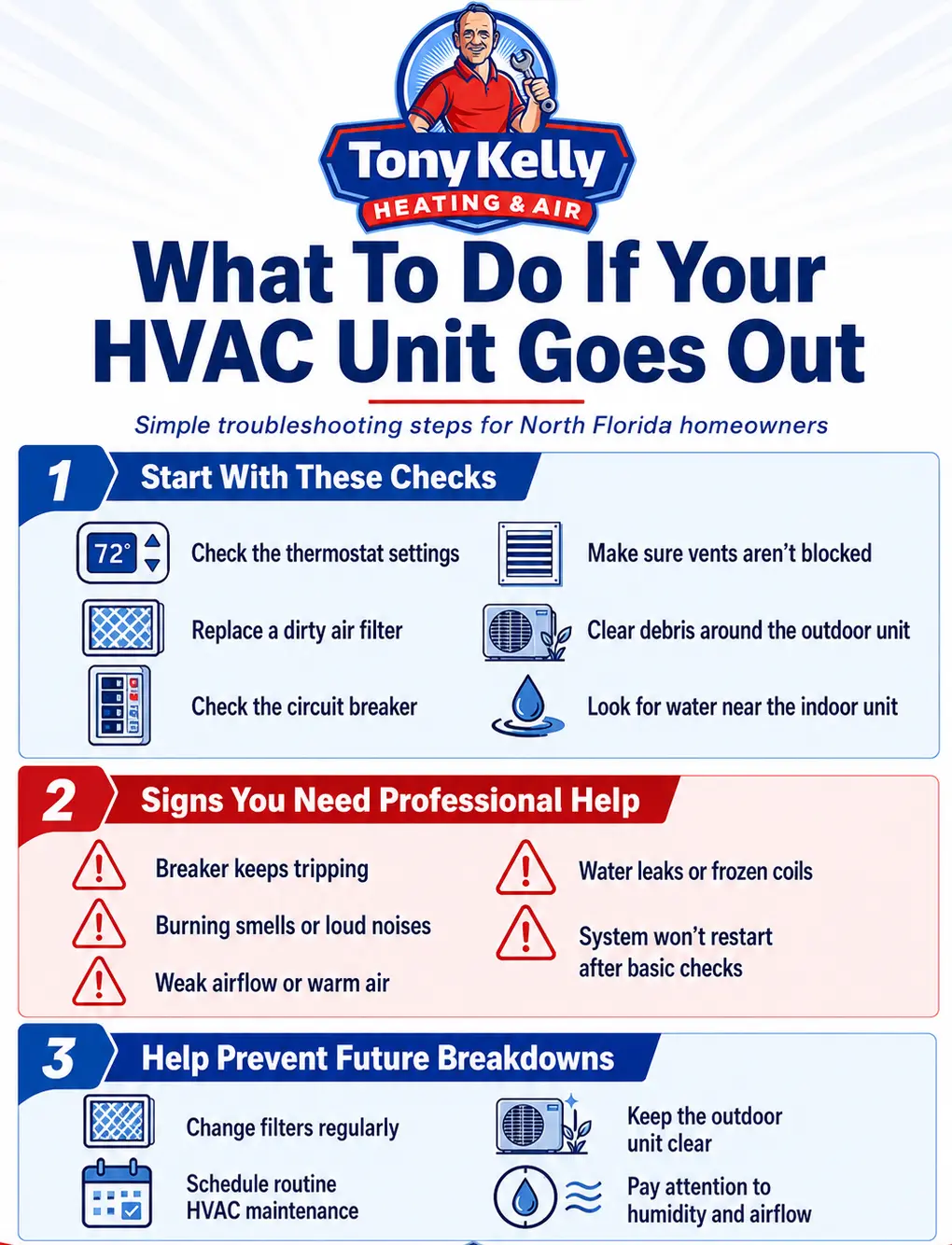
Knowing what to do is important, but knowing what not to do can be just as helpful. HVAC systems include electrical components, refrigerant lines, moving parts, drainage systems, and controls that all need to work together. Some checks are safe for homeowners. Others should be left to trained technicians.
Before assuming the worst, check the thermostat, filter, breaker, vents, and outdoor unit. These simple checks can sometimes explain why the HVAC system is not working.
If the filter is clogged, replace it. A clean filter supports better airflow and can reduce strain on the system. Make sure the replacement filter is installed in the correct direction, using the airflow arrow printed on the filter frame.
Trim back vegetation, remove leaves, and keep grass clippings away from the condenser. Outdoor airflow matters, especially during long periods of hot weather.
If you end up needing service, write down what happened. For example, did the system stop after a storm? Is the thermostat blank? Is the outdoor unit running but the indoor blower is not? Are some rooms warm while others feel normal? These details can help a technician troubleshoot faster.
If the breaker trips again after being reset, stop resetting it. Repeated trips can signal an electrical problem, overheating component, compressor issue, or short circuit. Continuing to reset the breaker can make the problem worse.
A burning smell from the vents or equipment should not be ignored. Turn the system off and have it inspected. Burning odors may involve wiring, motors, overheating components, or dust burning off after a long period of inactivity.
Low refrigerant is not solved by simply “topping off” the system. Refrigerant levels should be checked by a trained professional, and leaks should be repaired properly. If the system is low on refrigerant, there is usually a reason.
A homeowner can check filters, thermostat settings, breakers, vents, and visible debris. However, internal parts like capacitors, contactors, motors, coils, circuit boards, and refrigerant lines should be handled by a professional.
There are several reasons an HVAC system may stop working. Some are simple and easy to identify. Others require tools, training, and experience to diagnose correctly.
A clogged air filter restricts airflow and can cause the system to work harder than normal. In cooling mode, poor airflow can also contribute to frozen evaporator coils. If your HVAC system seems to run but the home is not cooling well, the filter is one of the first things to check.
The thermostat tells the HVAC system when to turn on and off. If the thermostat is set incorrectly, has dead batteries, is not communicating with the equipment, or is located in a poor spot, the system may not operate as expected.
HVAC systems use a significant amount of electricity. A tripped breaker, blown fuse, loose connection, or storm-related power issue can prevent the system from starting. If the system loses power repeatedly, it should be inspected.
During cooling season, your HVAC system removes moisture from indoor air. That moisture drains away through the condensate line. If the drain clogs, water can back up and trigger a float switch that shuts the system down to help prevent water damage.
A frozen coil may happen when airflow is restricted, refrigerant is low, or the system is running under the wrong conditions. Signs may include weak airflow, ice on refrigerant lines, water around the air handler, or the system running without cooling properly.
If you suspect the coil is frozen, turn the system off and switch the fan setting to “on” if appropriate. Do not chip away ice or continue running the system in cooling mode. If the problem returns, schedule professional service.
The outdoor condenser coil releases heat from inside your home. If it is covered in dirt, leaves, or grass clippings, the system cannot reject heat efficiently. This can lead to longer run times, poor cooling, overheating, and system shutdowns.
The capacitor helps start and run motors in the HVAC system. If it fails, the outdoor unit may hum but not start, the fan may not spin, or the system may shut off unexpectedly. Capacitors can hold electrical charge and should be handled by a professional.
Refrigerant is essential to the cooling process. If the system is low on refrigerant, it may cool poorly, freeze up, or shut down. Refrigerant leaks should be located and repaired by a trained HVAC technician.
The blower motor moves conditioned air through your ductwork and into your home. If the blower motor fails, the outdoor unit may run while little or no air comes from the vents. You may also hear humming, buzzing, or unusual motor noises.
Leaky, disconnected, crushed, or poorly insulated ducts can make your HVAC system seem like it is not working properly. Duct issues may cause weak airflow, uneven temperatures, high humidity, or rooms that never feel comfortable.
For more examples of common system issues, you can support this section with an internal link to common HVAC problems.
If your AC unit goes out in the middle of a hot day, your first priority is to keep the home as comfortable as possible while you troubleshoot. This does not mean using unsafe shortcuts or overworking the equipment. It means reducing heat gain and helping the house hold onto the cool air it still has.
Direct sunlight can heat rooms quickly. Close blinds, curtains, or shades on windows that receive strong afternoon sun. This is especially helpful for west-facing rooms that tend to heat up later in the day.
Ceiling fans do not lower the actual temperature, but they can help you feel cooler by moving air across your skin. Make sure fans are spinning counterclockwise in cooling season. Turn fans off when leaving a room because they cool people, not empty spaces.
Delay using the oven, stove, dryer, or other heat-producing appliances if possible. Small choices can reduce the heat load inside your home while your HVAC system is down or struggling.
In humid North Florida weather, opening windows may bring in more moisture than relief. Unless outdoor conditions are clearly cooler and less humid, keeping the home closed can help prevent humidity from rising indoors.
Every time an exterior door opens, hot, humid air enters the home. If your AC is not working, reducing door traffic can help slow down the indoor temperature increase.
Portable fans can help move air, but avoid unsafe electrical setups, overloaded extension cords, or placing fans near water. If you use a portable AC unit, make sure it is vented properly according to the manufacturer’s instructions.
Some HVAC issues are not safe or practical for homeowners to fix. If your basic troubleshooting steps do not solve the issue, it may be time to have the system inspected.
A breaker that trips repeatedly is not a normal inconvenience. It may point to a motor, compressor, wiring, or electrical issue. Stop resetting the breaker and have the system checked.
Grinding, buzzing, banging, screeching, or hissing noises can indicate worn parts, electrical problems, refrigerant leaks, or mechanical failure. Turn the system off if the sound is severe or new.
If the condenser is running but the home is not cooling, the problem may involve airflow, refrigerant, frozen coils, ductwork, or the indoor blower.
Water near the air handler may point to a clogged drain, frozen coil, cracked drain pan, or other moisture issue. In humid climates, water problems should be addressed before they create additional damage.
Turn the system off and do not continue running it. Burning smells may involve overheated components or wiring issues.
Short cycling means the system turns on and off repeatedly without completing a normal cooling cycle. This can be caused by thermostat issues, airflow restrictions, refrigerant problems, electrical faults, or equipment sizing concerns.
High indoor humidity can make your home feel warmer than the thermostat shows. If humidity remains high, the system may not be running long enough, may have airflow issues, or may need adjustment.
For additional warning signs, this section can naturally link to Top 5 Signs Your HVAC System Needs Immediate Attention.
The best time to think about HVAC troubleshooting is before your unit goes out. Preventative maintenance helps your system operate more reliably, especially during Tallahassee’s long cooling season.
Check your air filter monthly. Replace it when it is dirty or according to your system’s recommendations. Clean filters help support steady airflow, better indoor comfort, and reduced system strain.
Trim grass, shrubs, and weeds around the condenser. Remove leaves, pine needles, and storm debris. Make sure the unit has open space on all sides so it can release heat properly.
Professional maintenance can include checking electrical connections, cleaning coils, inspecting the condensate drain, testing system controls, checking refrigerant levels, and reviewing airflow. These steps help catch small issues before they become larger system problems.
In North Florida, comfort is not just about temperature. Humidity plays a major role in how your home feels. If the AC runs but the house still feels sticky, your system may need inspection, cleaning, or adjustment.
Storms can cause power interruptions, debris buildup, and electrical stress. After heavy weather, check the outdoor unit for debris and watch for any changes in system performance.
Small issues like weaker airflow, longer run times, unusual sounds, or inconsistent cooling can become bigger problems over time. Addressing them early can help protect your equipment.
Check the thermostat, batteries, breaker, indoor switch, and outdoor disconnect. If everything appears normal and the system still will not start, the issue may involve wiring, controls, a capacitor, motor, or other electrical component.
Check the filter, vents, outdoor unit, thermostat settings, and visible signs of ice. If airflow is weak or the system continues running without cooling, the issue may involve refrigerant, coils, blower components, or ductwork.
Short cycling may be caused by a dirty filter, thermostat issue, frozen coil, refrigerant problem, or electrical fault. Replace the filter if needed and make sure vents are open. If the issue continues, schedule service.
Turn the system off. Burning or rubber-like smells may involve overheating parts, wiring, belts, motors, or electrical components. Do not continue running the unit until the source is identified.
Start with the filter and vents. Make sure returns are not blocked and that supply vents are open. If airflow remains weak, the issue could involve the blower motor, duct leaks, dirty coils, or a frozen coil.
Air that starts and stops may point to short cycling, thermostat communication issues, dirty filters, blocked airflow, or electrical problems. Track when it happens and whether the outdoor unit shuts off at the same time.
Turn the system off if water is pooling near the indoor unit. Check for a clogged drain line or full drain pan. If the area is wet or the issue returns, have the system inspected.
Basic troubleshooting is helpful, but it has limits. If your HVAC system still does not work after checking the thermostat, filter, breaker, vents, and outdoor unit, the problem may require professional tools and training.
At that point, the best next step is not to keep resetting the system or guessing. A professional can test electrical components, inspect refrigerant levels, evaluate airflow, check safety controls, and identify whether the issue is repair-related or part of a larger system concern.
If your system is older, unreliable, or requiring frequent service, a technician may also help you understand whether continued repair or future replacement planning makes sense. This article should remain educational, but it can lightly support HVAC repair in Tallahassee and HVAC installation in Tallahassee where appropriate.
Start by checking the thermostat, air filter, circuit breaker, indoor switch, outdoor disconnect, vents, and outdoor unit. These simple checks can help you rule out common issues before scheduling service.
Check the thermostat settings, replace a dirty filter, reset the breaker once if it has tripped, and make sure the outdoor unit is clear of debris. Close blinds, limit heat-producing appliances, and use fans safely while you troubleshoot.
The issue may involve a clogged filter, tripped breaker, blocked drain line, faulty capacitor, blower motor problem, refrigerant issue, or wiring problem. If basic checks do not solve it, a professional inspection is recommended.
Yes. A clogged filter can restrict airflow, contribute to frozen coils, increase system strain, and cause poor cooling. Replacing the filter is one of the simplest HVAC troubleshooting steps.
A breaker that keeps tripping may signal an electrical issue, failing component, compressor problem, or short circuit. Do not keep resetting it. Have the system inspected.
Common causes include a dirty filter, blocked vents, dirty outdoor coil, low refrigerant, frozen evaporator coil, duct leakage, or blower issues. Start with airflow checks, then schedule service if cooling does not improve.
Check the breaker, thermostat, and outdoor unit for obvious debris. If the system does not restart after a short delay, or if the breaker trips again, schedule professional service to check for storm-related electrical damage.
Basic checks like thermostat settings, filters, breakers, vents, and visible debris are generally safe. Electrical repairs, refrigerant work, capacitor replacement, motor repair, and internal diagnostics should be handled by a trained technician.
Most homeowners benefit from professional HVAC maintenance at least once per year. In North Florida, where cooling systems work through long hot and humid seasons, regular maintenance is especially helpful.
Stop troubleshooting if the breaker keeps tripping, you smell burning, the system leaks water, airflow is very weak, the outdoor unit makes unusual noises, the coil freezes, or the system still will not run after basic checks.
If your HVAC unit goes out, start with simple, safe troubleshooting steps. Check the thermostat, replace a dirty filter, reset the breaker once, inspect vents, look at the outdoor unit, and watch for water around the indoor equipment. These steps can help you understand whether the issue is minor or whether the system needs professional attention.
For homeowners in Tallahassee, Crawfordville, Woodville, Quincy, Monticello, Midway, Havana, Bradfordville, and nearby North Florida communities, HVAC reliability matters because the cooling season is long and humidity can make indoor comfort difficult when the system is not working properly.
Simple habits like changing filters, keeping the outdoor unit clear, watching for storm debris, and scheduling routine maintenance can reduce the chance of unexpected breakdowns. When troubleshooting does not solve the issue, a professional diagnosis can help protect the system and restore comfort safely.
Address:
870 Blountstown Hwy. Unit # 9
Tallahassee, FL 32303
Phone: 850-385-3774
License #: CMC1249702
Open Monday Through Friday
8:00 am to 8:00 pm

