CALL US 850-385-3774
Your HVAC system works quietly in the background for most of the year, so it is easy to overlook small changes until they become major comfort problems. A slightly louder outdoor unit, weaker airflow from the vents, rooms that never seem to cool evenly, or an unexpected increase in your energy bill can all be early signs of HVAC problems.
For homeowners in Tallahassee and surrounding North Florida communities, these warning signs matter because heating and cooling systems work hard through long cooling seasons, high humidity, storm season, and year-round heat pump use. When small HVAC symptoms are ignored, the system may continue running while putting extra stress on the blower motor, compressor, thermostat, ductwork, refrigerant circuit, coils, drain system, or electrical components.
Not every symptom means your HVAC system is failing. Some issues are caused by a dirty air filter, blocked vent, thermostat setting, or simple maintenance need. Others may point to a repair issue that should be diagnosed before the system breaks down. This guide explains how to spot the signs of HVAC system problems, what those symptoms may mean, what homeowners can safely check, and when it makes sense to call an HVAC technician.
Most HVAC problems do not begin as complete system failures. They usually start with smaller signs. Airflow gets slightly weaker. The system runs longer than normal. The thermostat takes more time to reach the setting. A new noise appears during startup. The house feels more humid even though the AC is running.
These small changes are important because HVAC systems rely on connected parts working together. Restricted airflow can lead to frozen coils. A dirty condenser coil can make the compressor work harder. A weak capacitor can make the outdoor unit struggle to start. A clogged condensate drain can lead to water around the air handler. A thermostat problem can make the system short cycle or run longer than needed.
Recognizing warning signs early can help homeowners reduce unnecessary wear, improve comfort, control energy use, and avoid being surprised by a larger repair during peak heat. The goal is not to panic over every sound or temperature change. The goal is to notice patterns and respond before the problem gets worse.
North Florida weather puts consistent demand on heating and cooling equipment. Tallahassee homes often rely on air conditioning for much of the year, and many heat pump systems are used for both cooling and heating. Hot, humid summers make the system responsible for more than temperature control. It also has to remove moisture from indoor air so the home feels comfortable.
Storm season can add another layer of stress. Outdoor units may collect leaves, pine straw, grass clippings, and debris. Electrical components may be affected by power interruptions or surges. Condensate drains may clog more easily during humid weather when the system is removing more moisture from the air.
Because HVAC systems in this region often run for long stretches, small issues can become noticeable quickly. A dirty filter, weak blower motor, duct leak, or low refrigerant issue may show up as poor cooling, stuffy rooms, high humidity, or longer run times.
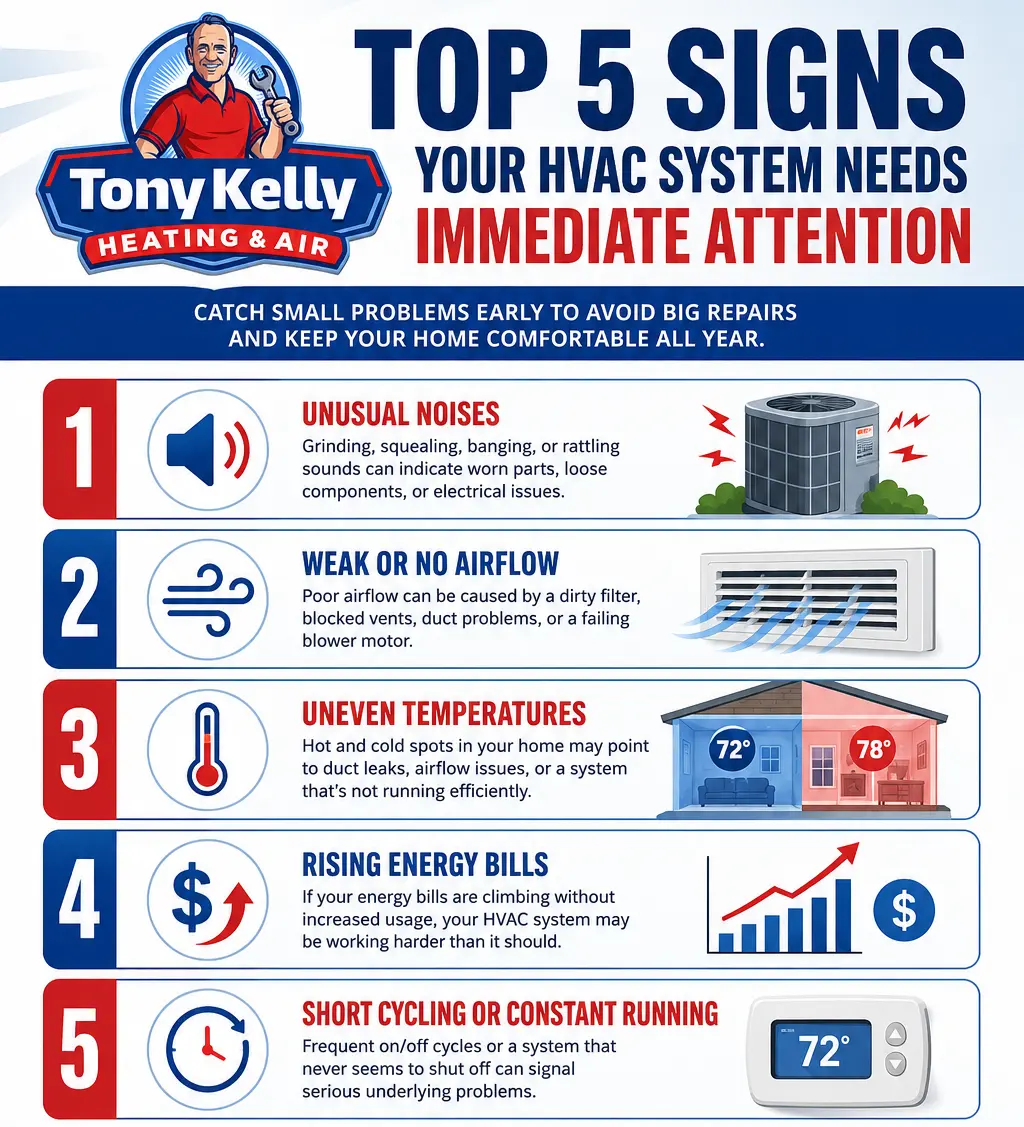
One of the most obvious signs you need HVAC repair is a new or unusual sound. HVAC systems are not silent, but they should sound fairly consistent during normal operation. If your system suddenly starts grinding, rattling, banging, buzzing, clicking, squealing, or hissing, something may be loose, worn, blocked, or malfunctioning.
An AC unit making a grinding noise often points to a moving part under stress. Possible causes include worn motor bearings, a blower motor problem, a fan motor issue, or contact between moving components. Grinding sounds usually do not resolve on their own and can become worse as the system continues operating.
Rattling may come from loose access panels, loose cabinet screws, fan hardware, debris near the outdoor unit, or vibration inside the ductwork. Banging or clanking sounds may be more serious, especially if they happen during startup or shutdown. They can point to a loose blower assembly, damaged fan blade, compressor concern, or broken mounting hardware.
Buzzing may indicate an electrical issue, weak capacitor, contactor problem, relay issue, or loose wiring. A single thermostat click during startup is usually normal, but repeated clicking without the system responding may indicate thermostat, low-voltage wiring, or control board problems. Hissing may come from duct leakage, pressure changes, or a refrigerant leak, especially when cooling performance has also declined.
If the sound is new, loud, or paired with poor performance, schedule an inspection rather than continuing to run the system and hoping the noise disappears. You can also compare symptoms with these common HVAC problems to better understand what different warning signs may indicate.
Weak airflow is one of the most common signs of air conditioner problems and HVAC system problems. You may notice that air barely comes from the vents, certain rooms receive less airflow than others, or the system seems to be running but the home does not feel comfortable.
Weak airflow and no airflow are not always the same issue. Weak airflow means air is still coming from the vents, but not with enough force. No airflow means little or no air reaches the rooms even though the system may appear to be on.
A clogged air filter is one of the easiest causes to check. When a filter becomes packed with dust, pollen, pet hair, and debris, the blower has to work harder to move air through the system. That can reduce comfort, increase energy use, and contribute to frozen coils during cooling season.
The blower wheel moves conditioned air through the ductwork. When dust builds up on the wheel, it can move less air even if the motor still runs. Dirty blower wheel symptoms may include weak airflow, longer run times, dustier indoor air, uneven temperatures, whistling airflow sounds, and reduced system efficiency. Cleaning the blower wheel usually requires professional service because the indoor unit has to be accessed safely.
If only certain rooms have weak airflow, the issue may involve ductwork. Leaky, disconnected, crushed, or poorly balanced ducts can prevent conditioned air from reaching the rooms where it is needed. Signs your ductwork needs attention may include uneven temperatures, dusty rooms, weak airflow from specific vents, or higher utility bills.
If your HVAC system is running but the house is not cooling properly, airflow may be only part of the issue. This guide to common reasons an air conditioner is not cooling explains other causes such as refrigerant problems, dirty coils, thermostat issues, and frozen evaporator coils.
When an HVAC system is working properly, the home should feel reasonably consistent from room to room. Some variation is normal, especially in rooms with heavy sun exposure, upstairs spaces, additions, or areas far from the air handler. However, major temperature differences can be signs your HVAC system needs repair or further evaluation.
You may notice one bedroom stays warm, the living room cools quickly while the back of the house stays uncomfortable, or the thermostat reaches the set temperature even though several rooms still feel stuffy. These problems are often tied to airflow, ductwork, thermostat placement, insulation, or equipment performance.
Thermostat location can also create comfort problems. A thermostat near sunlight, a kitchen, electronics, a draft, or an exterior door may read a temperature that does not represent the rest of the house. Signs of a bad HVAC thermostat include incorrect temperature readings, random cycling, repeated clicking, blank screens, delayed system response, or the system failing to turn on when settings are changed.
Not every uneven temperature issue is caused by a broken system. Some homes have layout challenges that make single-thermostat comfort difficult. Multi-story homes, additions, bonus rooms, large open layouts, and rooms with strong afternoon sun may need a more targeted comfort solution. After repair issues are ruled out, HVAC zoning system installation may help homeowners understand options for controlling different areas of the home independently.
A sudden or steady increase in energy bills can be one of the top signs of HVAC inefficiency. Utility costs can change with weather, rate adjustments, or household habits, but if your thermostat settings and usage have not changed, the HVAC system may be working harder than it should.
When a system loses efficiency, it often continues running. The difference is that it takes longer to reach the desired temperature, uses more electricity, and may provide less comfort. Homeowners may first notice the problem when the monthly bill arrives.
In Tallahassee, higher summer bills are common because AC systems run more often during hot weather. The warning sign is not simply a higher bill in July than in March. The warning sign is a bill that seems unusually high compared with similar weather, similar usage, or the same month in a previous year.
Before assuming a major repair is needed, check the air filter, thermostat settings, supply vents, return vents, and the area around the outdoor unit. If the filter is dirty, replace it. If leaves, grass clippings, or debris are packed around the outdoor condenser, carefully clear the area so the unit can breathe.
If bills remain high after basic checks, an HVAC inspection can help determine whether the system is losing efficiency because of airflow restrictions, dirty coils, refrigerant issues, duct leakage, or equipment wear. Routine service can also help catch these problems early. Learn more about the benefits of preventative HVAC maintenance and why regular tune-ups matter in a heavy-use climate.
Your HVAC system should cycle on and off as needed to maintain the thermostat setting. It should not start and stop every few minutes, and it should not run constantly during mild weather without reaching the desired temperature. Frequent cycling and nonstop operation are both signs that something may be wrong.
Short cycling happens when the system starts, runs briefly, shuts off, and then starts again shortly afterward. This pattern is hard on the compressor, blower motor, capacitor, contactor, relays, and control board because startup places heavy demand on HVAC components.
Possible causes of short cycling include a dirty air filter, low refrigerant, thermostat problems, oversized equipment, dirty coils, electrical issues, blower problems, or restricted airflow. Because several issues can create the same symptom, short cycling should be diagnosed rather than guessed at.
Longer heating cycles can be normal during colder weather, but a furnace or heat pump should not run constantly without maintaining the thermostat setting. Constant operation may point to a dirty filter, duct leakage, thermostat issue, poor airflow, insulation problems, or heat pump performance concerns.
Frequent cycling should be addressed promptly if it happens with burning smells, buzzing sounds, grinding noises, warm air during cooling mode, frozen refrigerant lines, water near the indoor unit, or repeated breaker trips. These combinations can indicate that the system is under significant strain.
The top five signs above are some of the most common, but homeowners may notice other HVAC system failure symptoms before a breakdown occurs. These smaller clues can help identify repair or maintenance needs earlier.
A musty smell may point to excess moisture, a clogged condensate drain, dirty evaporator coil, or microbial growth around damp components. A burning smell may point to electrical problems, overheating components, or dust burning off after the heating system has been unused. If a burning odor continues, turn the system off and schedule service.
If the outdoor unit is running but the home stays warm, possible causes include dirty coils, restricted airflow, low refrigerant, thermostat problems, duct leakage, compressor issues, or electrical faults. Lowering the thermostat repeatedly usually does not solve the underlying problem and may cause the system to run longer under stress.
Possible signs of bad HVAC compressor performance include warm air from the vents, hard starting, loud humming, outdoor unit trouble starting, frequent breaker trips, or short cycling. Compressor issues involve refrigerant and electrical components, so they should be handled by a qualified HVAC technician.
Air conditioners remove moisture from the air, and that moisture should drain through the condensate system. Water around the indoor unit may indicate a clogged drain, cracked drain pan, frozen coil thawing, or drain line issue. In a humid climate, condensate problems should be addressed before they cause moisture damage around the equipment.
A stuffy home may be caused by high humidity, weak airflow, dirty filters, duct leakage, poor ventilation, a dirty evaporator coil, or an HVAC system that is not running properly. Comfort depends on both temperature and moisture control, which is why a home can feel uncomfortable even when the thermostat appears close to the set temperature.
Buzzing sounds, burning smells, flickering thermostat displays, repeated breaker trips, and equipment that hums without starting can all indicate electrical problems. Homeowners should not open electrical panels or attempt to replace capacitors, contactors, relays, or wiring. These issues require professional testing.
Before scheduling service, homeowners can safely check a few simple items. These steps may resolve minor issues or help you provide better information when a technician arrives.
Avoid handling refrigerant, opening electrical compartments, bypassing safety switches, disassembling motors, or attempting compressor repairs. These tasks involve specialized tools, safety training, and proper licensing.
If the system continues showing signs you need to call an HVAC technician, a professional diagnosis is the safest next step. Homeowners can learn more about what professional troubleshooting involves on the HVAC repair in Tallahassee service page.
An HVAC inspection is designed to identify the root cause of the symptom rather than guessing based on one warning sign. Many HVAC symptoms overlap. Weak airflow can come from a dirty filter, blower motor issue, frozen coil, or duct leak. Short cycling can involve the thermostat, refrigerant, airflow, or electrical components.
During a diagnostic visit, a technician may evaluate thermostat operation, airflow, the air filter, blower motor, blower wheel, evaporator coil, condenser coil, refrigerant pressures, electrical connections, capacitors, contactors, safety switches, condensate drain, and ductwork. The exact inspection depends on the symptoms present.
Airflow testing helps determine whether the system is moving enough air through the return and supply sides. Temperature readings can show whether the system is cooling or heating properly. These checks are useful when the home has weak airflow, uneven temperatures, high humidity, or long run times.
Electrical testing helps identify weak capacitors, worn contactors, loose connections, control board issues, motor problems, or components that are not operating within normal ranges. This matters when symptoms include buzzing, intermittent operation, breaker trips, or trouble starting.
Dirty coils reduce heat transfer and can make the system work harder. Refrigerant issues can reduce cooling performance and may indicate a leak. Condensate drain problems can cause water around the indoor unit. These areas are especially important in humid climates where systems remove a significant amount of moisture from indoor air.
If the equipment is running properly but the home still has poor airflow or uneven temperatures, ductwork may be part of the problem. A technician may look for disconnected ducts, crushed flexible duct, air leaks, poor balancing, or damaged sections.
Preventative maintenance does not prevent every repair, but it can reduce the chance that small issues go unnoticed until the system fails. Many common warning signs begin as maintenance-related problems: a clogged filter, dirty coil, blocked drain, weak capacitor, loose electrical connection, or restricted airflow.
For North Florida homes, maintenance is especially helpful before the heaviest cooling months. A seasonal visit can help prepare the system for long run times, humidity, and daily demand. It also gives a technician a chance to identify early signs of wear.
Homeowners can support maintenance by replacing filters regularly, keeping vents open, clearing debris around the outdoor unit, paying attention to new sounds or smells, and scheduling service when comfort changes. These habits help the system operate more efficiently and make it easier to catch developing problems.
Seeing signs HVAC is going bad does not automatically mean the system needs to be replaced. Many problems are repairable, especially when they are caught early. A clogged drain, dirty coil, failed capacitor, thermostat problem, duct leak, or airflow restriction can often be addressed without replacing the entire system.
Replacement may become part of the conversation when the system is older, inefficient, frequently breaking down, or facing a major repair involving expensive components. The best starting point is an accurate diagnosis. Once the cause is clear, homeowners can compare repair, maintenance, and replacement options more confidently.
If a larger repair or replacement decision becomes necessary, homeowners may also want to review HVAC financing in Tallahassee while evaluating next steps.
Although this article focuses on homeowners, many of the same warning signs can also affect light commercial buildings, offices, retail spaces, and small business properties. Poor airflow, loud rooftop units, uneven temperatures, short cycling, high energy use, thermostat problems, and water leaks can all disrupt comfort and daily operations.
Commercial HVAC systems may involve larger equipment, rooftop units, multiple thermostats, zoning controls, and different maintenance requirements. If the issue involves a business property, it may be more helpful to review commercial HVAC services in Tallahassee and North Florida.
Common signs your HVAC system needs repair include weak airflow, unusual noises, uneven temperatures, short cycling, high energy bills, strange odors, thermostat problems, water around the indoor unit, and an HVAC system that is not cooling or heating properly.
You may know your HVAC is going bad if it struggles to maintain comfort, needs frequent repairs, runs constantly, makes new noises, causes higher energy bills, or produces weak airflow. A technician can determine whether the issue is a repair need, maintenance problem, or age-related decline.
Possible HVAC system near failure signs include repeated breakdowns, major compressor issues, frequent breaker trips, severe airflow problems, loud mechanical noises, and a system that can no longer maintain temperature. These symptoms should be professionally evaluated before assuming replacement is required.
Your AC system needs professional attention if it blows warm air, makes grinding or banging noises, has weak airflow, freezes over, leaks water, short cycles, trips breakers, or runs constantly without cooling the house.
An AC grinding noise may come from worn motor bearings, blower motor problems, fan motor issues, or moving parts making contact. Because grinding can get worse quickly, the system should be inspected before continued operation causes additional damage.
Signs of a bad HVAC thermostat include a blank display, inaccurate temperature readings, repeated clicking, delayed response, random cycling, or a system that does not turn on when settings are changed. Wiring or control issues can create similar symptoms.
Signs of a bad HVAC compressor may include warm air from vents, hard starting, loud humming or clanking from the outdoor unit, short cycling, breaker trips, or an outdoor unit that runs without cooling effectively. Compressor problems require professional diagnosis.
A dirty air filter can restrict airflow and make the HVAC system work harder. Over time, severe restriction may contribute to frozen coils, overheating, blower strain, higher energy use, and reduced comfort. Replacing filters regularly is one of the simplest ways to protect the system.
Weak airflow may be caused by a dirty filter, blocked return vent, closed supply vent, dirty blower wheel, blower motor issue, duct leak, frozen evaporator coil, or ductwork restriction. If airflow does not improve after basic checks, schedule an inspection.
No. A clogged filter is common, but weak airflow can also come from duct leakage, blower problems, dirty coils, frozen coils, blocked vents, or dirty blower wheels. If a new filter does not improve airflow, the system needs further evaluation.
Yes. Leaky, disconnected, crushed, or poorly designed ductwork can waste conditioned air before it reaches the rooms in your home. This can cause uneven temperatures, weak airflow, higher utility bills, and longer system run times.
A furnace may run longer during colder weather, but it should not run nonstop without maintaining the thermostat setting. Constant operation may indicate a dirty filter, thermostat issue, duct leakage, poor airflow, heat loss, or system performance problem.
A stuffy house may be caused by high indoor humidity, weak airflow, dirty filters, duct leakage, poor ventilation, dirty coils, or an HVAC system that is not removing enough moisture. In humid climates, comfort depends on both temperature and humidity control.
An HVAC technician may check the thermostat, filter, airflow, blower motor, blower wheel, coils, refrigerant, electrical components, condensate drain, ductwork, temperature split, and overall system operation. The inspection depends on the symptoms the system is showing.
Repair may make sense when the system is otherwise reliable and the issue is limited to a specific component. Replacement may be worth considering if the system is older, inefficient, frequently breaking down, or facing a major repair. A professional diagnosis should come first.
The best time to respond to HVAC problems is before the system stops working completely. Unusual noises, weak airflow, uneven temperatures, rising energy bills, short cycling, water leaks, thermostat issues, and strange smells are all warning signs that deserve attention.
Some symptoms are simple maintenance issues. Others may involve airflow, ductwork, refrigerant, electrical components, blower motors, coils, compressors, or thermostats. By recognizing the signs of HVAC problems early, homeowners can make better decisions, protect comfort, and reduce the risk of larger breakdowns during North Florida’s heaviest heating and cooling seasons.
For homeowners in Tallahassee and surrounding North Florida communities, Tony Kelly Heating & Air provides HVAC diagnostics, repair, and maintenance support for systems showing early warning signs.
Address:
870 Blountstown Hwy. Unit # 9
Tallahassee, FL 32303
Phone: 850-385-3774
License #: CMC1249702
Open Monday Through Friday
8:00 am to 8:00 pm

