
Why Indoor Air Quality Is a Bigger Challenge in Florida
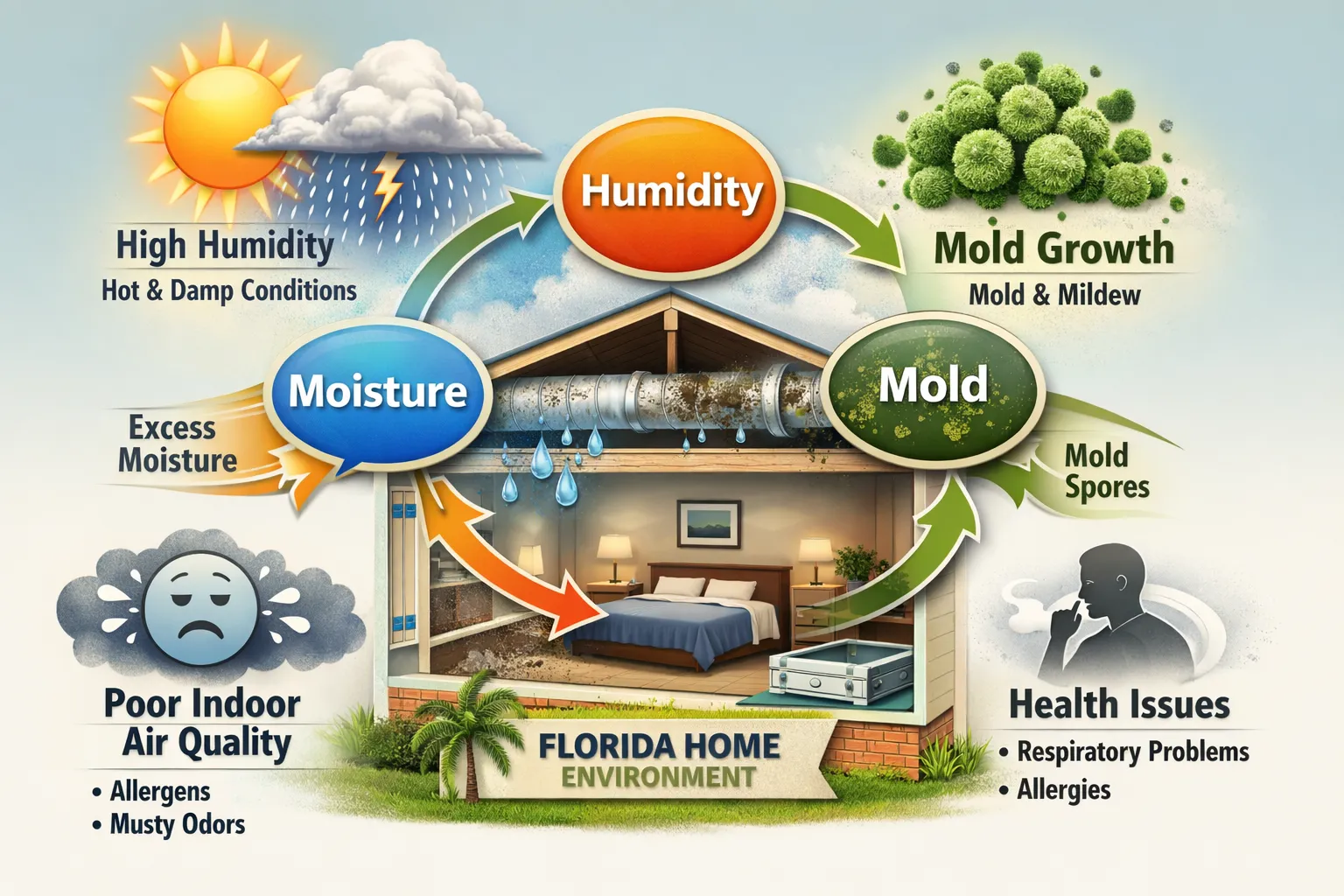
Florida’s climate creates a very different indoor environment than homes in cooler or drier parts of the country. Air conditioning systems run for much of the year, often daily, and indoor spaces are constantly exposed to outdoor humidity trying to make its way inside.
Every time an HVAC system cycles on, warm air from outside pressure differences, small gaps in the building envelope, or attic spaces can introduce moisture into the home. Even well-sealed homes experience this effect over time, particularly during the long summer season.
Unlike colder climates where heating systems dry the air for part of the year, Florida homes rarely get a seasonal break from humidity. This makes moisture control a year-round concern rather than a short-term seasonal issue.
Research and homeowner education from the University of Florida IFAS Extension consistently emphasizes that managing indoor humidity is one of the most effective ways to protect comfort and air quality in Florida homes.
Older homes throughout North Florida can experience additional challenges. Aging duct insulation, minor duct leaks, and older construction materials may allow warm, humid air to interact with cooler duct surfaces, increasing the chance of condensation inside the system.
How Air Moves Through Your Home’s Duct System
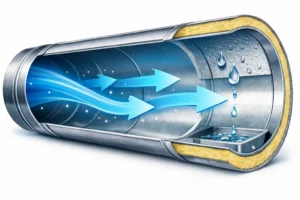
To understand how duct cleaning impacts indoor air quality, it helps to understand how air moves through a typical residential HVAC system. Conditioned air is pulled through a return grille, passes through a filter, and moves into the air handler. From there, it is distributed through a network of ducts to supply vents throughout the home.
This process repeats many times each day. As air circulates, it naturally carries small particles such as dust, pollen, fibers, and skin cells. Even with good filtration, some of this material settles inside the duct system over time.
In Florida homes, this circulating air also carries moisture. When warm, humid air contacts cooler duct surfaces, especially during heavy cooling cycles, condensation can form.
Homeowners who are trying to diagnose airflow issues often start by reviewing common HVAC problems or practical HVAC troubleshooting tips to better understand what symptoms may be connected to duct conditions.
What Air Duct Cleaning Actually Does
Air duct cleaning focuses on removing accumulated debris from inside the duct system. This typically includes dust, loose particles, and residue that has settled on duct walls, supply runs, and return pathways.
When performed correctly, cleaning removes material that would otherwise remain in place and potentially re-enter the airstream during normal operation. This can reduce the amount of visible dust released from vents and may improve how fresh the air feels inside the home.
In humid environments, duct cleaning can also remove material that holds moisture. Dust and debris can act like a sponge, retaining dampness and slowing evaporation.
The U.S. Environmental Protection Agency notes that duct cleaning is most useful when contamination is present and should be paired with addressing moisture and airflow conditions.
How Dirty Ducts Can Influence Indoor Air Quality
Dirty ductwork does not automatically mean poor indoor air quality, but it can contribute to ongoing issues under certain conditions. When ducts contain heavy buildup, airflow can become uneven, and loose material may be redistributed into living spaces.
In Florida homes, moisture makes this effect more noticeable. Dust combined with humidity can produce musty odors that circulate when the system runs.
Homeowners exploring broader indoor air quality services often discover that duct conditions are just one piece of a larger comfort and moisture picture.
What Air Duct Cleaning Does Not Fix
One of the most important aspects of understanding duct cleaning is recognizing its limitations. Air duct cleaning is not a solution for every indoor air quality concern.
Duct cleaning does not lower indoor humidity. Moisture control depends on proper system sizing, runtime, drainage, and in some cases additional dehumidification.
For homeowners dealing with persistent humidity concerns, learning about whole-home dehumidifier installation can provide helpful context for long-term moisture management.
The Role of Humidity in Florida Indoor Air Quality
Humidity is one of the most influential factors affecting indoor air quality in Florida homes. Even when temperatures feel comfortable, elevated humidity can make indoor spaces feel heavy or stale.
Guidance from the National Air Duct Cleaners Association highlights moisture control as one of the most effective ways to keep duct systems cleaner over time.
Air conditioning removes moisture as part of the cooling process, but this removal depends on runtime and system performance.
When Air Duct Cleaning Makes Sense
Air duct cleaning is not something most homes need on a strict schedule, but there are situations where it can be particularly helpful.
Homes that have experienced water intrusion, roof leaks, or storm-related moisture exposure may benefit from inspection and cleaning once repairs are complete.
Moving into an older home with unknown maintenance history is another common reason homeowners consider duct cleaning.
These evaluations often occur during routine HVAC maintenance visits, when airflow and moisture conditions can be reviewed together.
How Duct Cleaning Fits Into a Complete Indoor Air Quality Strategy
For Florida homeowners, the most effective approach to indoor air quality addresses multiple factors at once.
Proper filtration, moisture control, and consistent system care work together to support cleaner air. Many homeowners start by reviewing answers to common HVAC questions or browsing additional resources on the Tony Kelly HVAC blog to better understand how these elements connect.
When combined thoughtfully, these steps help create a more stable indoor environment that feels cleaner and easier to maintain.
Frequently Asked Questions
Does air duct cleaning improve indoor air quality in Florida homes?
It can help reduce circulating dust and debris when buildup is present, especially when combined with humidity control and filtration.
Can dirty ducts cause musty odors?
Yes. Dust combined with moisture can hold odors that circulate when the system runs, particularly in humid environments.
Does duct cleaning remove mold?
Cleaning can remove surface buildup, but moisture control is required to prevent conditions that allow mold to return.
Is duct cleaning part of regular HVAC maintenance?
It is considered a situational service rather than a routine task. Regular maintenance focuses on airflow, drainage, and equipment performance.
Will duct cleaning lower humidity in my home?
No. Duct cleaning removes debris but does not change indoor humidity levels.

