CALL US 850-385-3774
In Tallahassee, crawl space moisture is not just a minor home maintenance issue. It can affect comfort, indoor humidity, air quality, wood framing, insulation, pests, and how hard your HVAC system has to work during North Florida’s long cooling season. Because many crawl spaces are dark, low, and out of sight, problems often develop slowly before homeowners notice musty odors, soft flooring, pest activity, or rooms that feel damp even when the air conditioner is running.
Crawl space encapsulation is designed to control that hidden moisture. Instead of leaving the area under your home exposed to damp ground, humid outdoor air, and storm-season moisture, encapsulation seals the crawl space with a durable vapor barrier, air sealing, insulation where needed, and humidity control. The result is a cleaner, drier, more stable area beneath your home.
If you are still learning the basics, this overview of what crawl space encapsulation is explains the core concept in more detail. This article focuses on why encapsulation matters specifically for Tallahassee homes and how it helps protect your home from the bottom up.
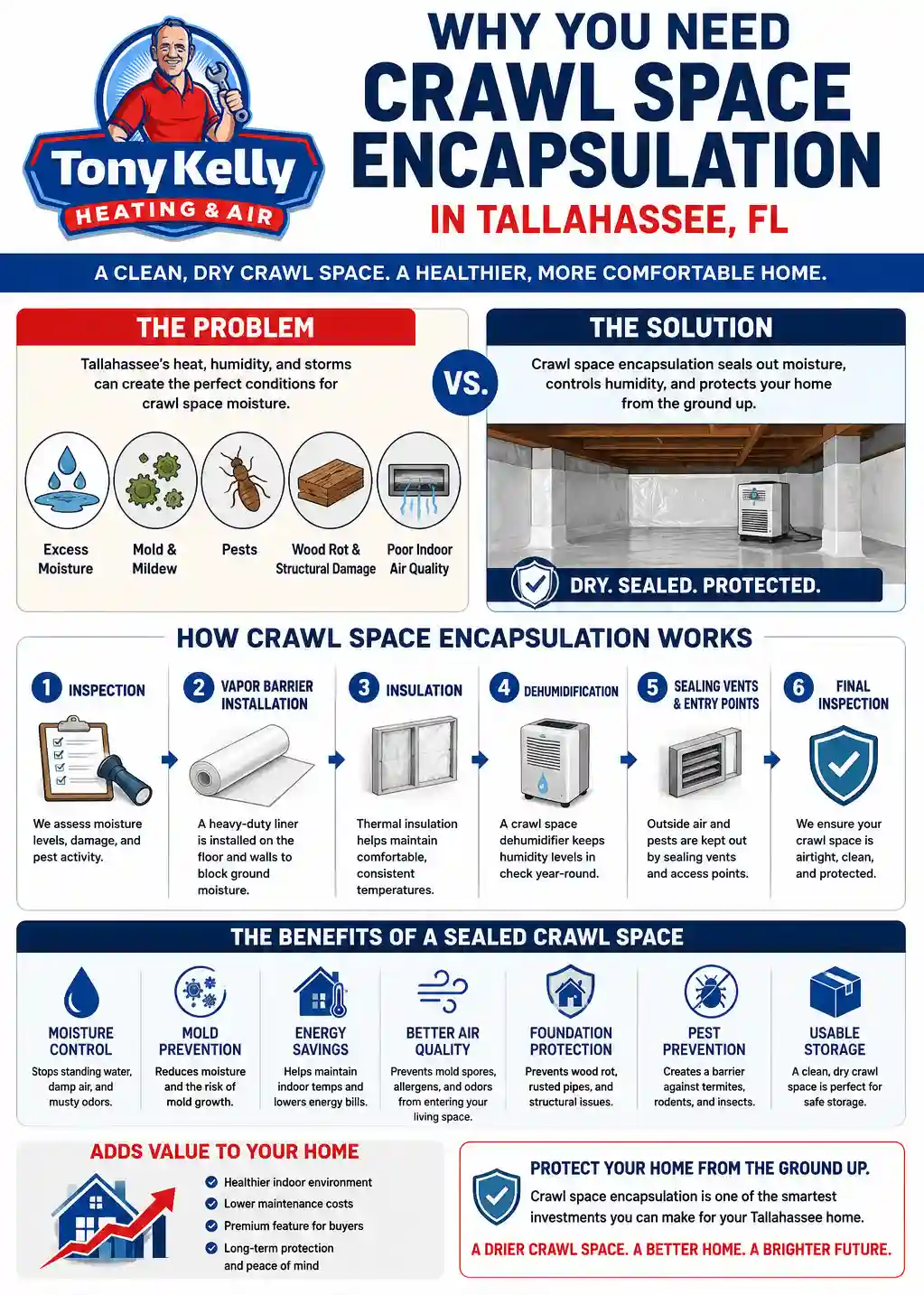
Tallahassee’s climate creates the perfect conditions for crawl space moisture problems. Warm air holds more moisture than cool air, and North Florida homes deal with long periods of heat, humidity, afternoon storms, and heavy air conditioning use. When humid outdoor air enters a vented crawl space, it can condense on cooler surfaces such as ducts, pipes, subflooring, insulation, and floor joists.
This is one reason crawl space ventilation does not always solve the problem in humid climates. In theory, vents allow air to move through the crawl space. In practice, that air is often warm and damp. Instead of drying the space, it can add more moisture. A vented crawl space may feel especially damp after rain, during summer, or when the ground under the home stays wet for long periods.
Moisture can also enter from the soil. Even if there is no standing water, exposed ground can release water vapor into the crawl space. Over time, that vapor raises humidity levels, encourages mildew odors, and creates a damp environment around wood framing. Once insulation absorbs moisture, it can sag, lose effectiveness, and hold dampness against the subfloor.
For many homeowners, the first sign is not something obvious in the crawl space. It may be a musty smell inside the home, floors that feel slightly soft, humidity that never seems to come down, or an HVAC system that runs longer than expected. Because crawl space air can move upward into the living area, moisture below the home can affect comfort above the home.
Crawl space encapsulation creates a controlled barrier between your home and the damp conditions below it. The goal is not simply to cover the ground with plastic. A complete encapsulation system manages several moisture pathways at the same time: ground vapor, humid outdoor air, water intrusion, air leaks, and lingering humidity inside the crawl space.
Most encapsulation projects include a detailed inspection, moisture assessment, drainage corrections if needed, vapor barrier installation, vent sealing, insulation improvements, access door sealing, and a crawl space dehumidifier. The final system is designed to keep the crawl space dry and stable instead of allowing it to change with every storm, heat wave, or humid summer day.
The crawl space encapsulation process can vary depending on the home. A crawl space with standing water may need drainage work before a liner is installed. A crawl space with damaged insulation may need old material removed. A space with pest activity, wood rot, or suspected mold may need additional evaluation before sealing begins.
When done correctly, encapsulation helps protect the underside of the home while also supporting better indoor comfort. It gives homeowners a cleaner, more manageable crawl space instead of an area that stays damp, musty, and exposed.
A professional inspection should come first. The technician looks for standing water, damp insulation, mold-like growth, pest activity, plumbing leaks, damaged ductwork, wood rot, and structural concerns. This step matters because encapsulation should not cover up an active moisture problem. If water is entering the crawl space, the source should be addressed before the space is sealed.
If rainwater collects under the home, drainage may need to be improved. This can include grading corrections, downspout extensions, drainage paths, or other moisture management solutions. Encapsulation works best when bulk water is controlled before vapor control is added.
The vapor barrier is one of the most important parts of encapsulation. A durable liner is installed across the crawl space floor and often extended up the walls or piers. Seams are overlapped and sealed so ground moisture cannot easily rise into the air. In Tallahassee’s humid climate, a heavier vapor barrier is typically preferred because thin plastic can tear, shift, or wear down over time.
Air sealing helps stop humid outdoor air from entering through vents, gaps, cracks, and access points. This step is especially important in North Florida because outdoor air is often the moisture source. Sealing vents and openings helps the crawl space stay more stable instead of constantly pulling in damp air.
Insulation helps separate the crawl space from outdoor temperature swings. Depending on the home, insulation may be added to the crawl space walls, rim joists, or other areas. Wet or sagging insulation may need to be removed because it can hold moisture and reduce energy performance.
Even after a crawl space is sealed, humidity control is still important. A properly sized crawl space dehumidifier helps keep relative humidity in a healthier range. This is especially useful during Tallahassee’s humid months when the air outside stays damp for long stretches.
After installation, the crawl space should be checked to confirm the liner is sealed, vents are closed, the dehumidifier is operating, and moisture levels are under control. A good encapsulation system should also be easy to inspect later so small issues can be caught before they become larger problems.
Not every crawl space problem is obvious. Many homeowners never enter the crawl space, so signs often appear inside the home first. If you notice any of the following issues, it may be time to evaluate the crawl space.
A musty smell is one of the most common signs of crawl space moisture. If the odor is strongest near floors, closets, return vents, or rooms above the crawl space, damp air may be moving upward from below the home.
If your home feels sticky even when the AC is running, the crawl space may be contributing moisture to the living area. Indoor humidity can come from many sources, but a damp crawl space is a common hidden cause in homes with raised foundations.
Condensation forms when warm, humid air meets a cooler surface. In a crawl space, this often happens on metal ducts, plumbing lines, or HVAC components. Over time, condensation can drip onto insulation, wood, or the crawl space floor.
Wood flooring and subflooring can absorb moisture from below. If floors begin cupping, buckling, or feeling soft, the crawl space should be inspected for elevated humidity, wet insulation, or wood damage.
Mold needs moisture to grow. The Florida Department of Health explains that controlling dampness and keeping humidity below 60 percent, with below 50 percent preferred, helps prevent mold growth. You can read more in its guidance on indoor mold and moisture control.
Damp crawl spaces can attract insects, rodents, and termites. Moist wood, wet insulation, and dark protected areas create conditions pests often prefer. Encapsulation does not replace pest control, but it helps remove the damp conditions that make the area attractive.
If humid air enters the crawl space and moves into the home, your HVAC system may need to run longer to maintain comfort. Encapsulation can reduce air leakage, control humidity, and help the home feel more consistent.
Crawl space problems rarely stay isolated below the home. Air naturally moves through gaps in floors, plumbing penetrations, duct chases, and other openings. This means damp crawl space air can enter the living space, especially when the HVAC system is running or when warm air rises through the home.
If the crawl space contains mold spores, pest debris, musty odors, or high humidity, those conditions can affect indoor air quality. Homeowners may notice allergy-like symptoms, lingering odors, dusty air, or rooms that feel uncomfortable even after the AC lowers the temperature.
Encapsulation helps by reducing the moisture that allows mold and mildew to grow. It also helps limit the movement of damp air into the home. When paired with proper HVAC filtration, duct sealing where needed, and indoor humidity control, crawl space encapsulation can be part of a broader indoor air quality strategy.
This is why crawl space work often connects naturally with HVAC comfort. Your air conditioner removes heat and some humidity, but it should not have to fight a wet crawl space underneath the home. Encapsulation helps reduce the moisture load before it reaches the living area.
Your HVAC system is designed to condition the air inside your home. When the crawl space is damp, vented, and leaky, the system may have to manage extra humidity that comes from below. This can make rooms feel warmer than the thermostat reading suggests because humid air reduces comfort.
High humidity can also make homeowners lower the thermostat to feel comfortable. That can lead to longer run times and higher energy use. By controlling moisture at the crawl space level, encapsulation helps the home hold conditioned air more effectively.
Encapsulation can also help protect ductwork located in the crawl space. Ducts in a damp environment may experience condensation, air leakage, insulation damage, or microbial growth if moisture is not controlled. A sealed and conditioned crawl space creates a better environment for ducts, pipes, and HVAC components.
The U.S. Department of Energy notes that properly sealed and insulated crawl spaces can improve comfort, save energy, improve durability, and reduce entry of moisture and pollutants. Its guidance on air sealing and insulating for energy savings also explains how improvements to floors over crawl spaces can reduce heating and cooling costs.
A vapor barrier is important, but it is not the same as full crawl space encapsulation. A basic vapor barrier covers the ground to reduce moisture rising from the soil. Full encapsulation goes further by sealing the crawl space walls, closing vents, addressing air leaks, adding insulation where appropriate, and controlling humidity with a dehumidifier.
In Tallahassee, this distinction matters. If the ground is covered but vents remain open, humid outdoor air can still enter the crawl space. During the summer, that air may carry more moisture than the crawl space itself. Once it moves under the home, it can condense on cooler surfaces and keep the space damp.
A vapor barrier may be a good first step, but homes with musty odors, persistent humidity, visible condensation, wet insulation, or recurring mold concerns usually need a more complete approach. Encapsulation treats the crawl space as part of the home’s comfort and moisture system rather than as an isolated storage area.
Mold prevention starts with moisture control. Spores are naturally present in indoor and outdoor air, but they need moisture to grow on surfaces. Crawl spaces often contain the materials mold needs: wood, dust, insulation, darkness, and humidity.
Encapsulation reduces mold risk by removing the moisture source. The vapor barrier blocks ground moisture. Air sealing limits humid outdoor air. A dehumidifier keeps relative humidity in a safer range. Drainage improvements help stop standing water. Together, these steps make the crawl space much less supportive of mold growth.
This is different from simply spraying or coating surfaces. Mold encapsulation products may cover affected surfaces, but they do not solve the reason mold appeared. If humidity remains high, mold can return. Crawl space encapsulation focuses on the source of the problem by controlling water vapor and air movement.
The crawl space contains important structural components, including floor joists, beams, subflooring, piers, and supports. When these materials stay damp, they can weaken over time. Moisture can lead to wood rot, rusted fasteners, sagging insulation, and pest damage.
In older Tallahassee homes, crawl space moisture can be especially concerning because the home may already have aging framing, older insulation, or less effective drainage around the foundation. Encapsulation helps stabilize the environment around these materials.
By keeping the crawl space dry, encapsulation helps protect the wood that supports your floors. It also helps reduce the conditions that attract termites and wood-destroying insects. While encapsulation is not a structural repair by itself, it can help prevent moisture-related damage from continuing after any needed repairs are made.
Crawl space encapsulation can increase perceived home value because it improves the condition, cleanliness, and durability of an often-overlooked area. Buyers may not always ask about the crawl space first, but a dry, sealed crawl space can be a strong selling point during inspection.
Encapsulation can also reduce future maintenance concerns. A buyer may feel more confident knowing that moisture has been controlled, the crawl space has been sealed, and humidity is managed. In a humid market like Tallahassee, this can help separate a well-maintained home from one with unresolved moisture issues.
The value is not only in resale. Homeowners also benefit from improved comfort, fewer odors, better moisture control, and potentially lower energy use while they continue living in the home. For many families, encapsulation is a long-term protection project rather than a cosmetic upgrade.
Loose plastic sheeting may look like a vapor barrier, but if seams are not overlapped and sealed, moisture can still rise through the gaps. A true encapsulation system should be continuous and properly attached.
If water is actively entering the crawl space, covering the ground will not solve the issue. Drainage should be addressed before encapsulation so water does not collect under the liner.
In humid climates, open vents can bring more moisture into the crawl space. Sealing vents is an important part of turning the space into a controlled environment.
A vapor barrier reduces ground moisture, but it does not remove humidity already in the air. A crawl space dehumidifier helps maintain stable moisture levels year-round.
Mold-like growth should be evaluated and addressed before encapsulation. Simply sealing over moisture damage without correcting the cause can lead to recurring problems.
Thin liners are more likely to tear during inspections, maintenance, or pest control visits. A heavier liner is better suited for crawl spaces that may need occasional access.
You do not need to crawl under the home to notice early signs of a problem. Start with safe, simple checks from inside and outside the house.
Homeowners should avoid unsafe crawl space work, electrical repairs, mold disturbance, pest treatment, structural repairs, or HVAC duct repairs without the right training and protective equipment. Crawl spaces can contain sharp materials, pests, contaminated insulation, electrical hazards, and low-clearance conditions.
Professional encapsulation makes sense when the crawl space has recurring humidity, visible moisture, mold-like growth, damaged insulation, pest activity, or comfort problems inside the home. It is also smart before finishing major flooring projects or selling the home, since unresolved crawl space moisture can affect inspections and long-term durability.
A professional can evaluate whether your home needs only a vapor barrier or a full encapsulation system. They can also identify related issues such as duct leakage, poor drainage, damaged access doors, plumbing leaks, or insulation failure.
Tony Kelly Heating & Air provides crawl space encapsulation in Tallahassee for homeowners who want a cleaner, drier, more controlled area below the home. The goal is to solve the moisture problem at the source and support better comfort throughout the house.
Crawl space repair and crawl space encapsulation are related, but they are not the same. Repair focuses on fixing damage that already exists. Encapsulation focuses on controlling the environment to prevent moisture-related damage from continuing.
For example, if floor joists are damaged by rot, that is a repair issue. If insulation has fallen because it absorbed moisture, that may require removal and replacement. If the crawl space remains humid after repairs, encapsulation helps protect the repaired area by reducing the conditions that caused the damage.
In many homes, the best approach is repair first, encapsulation second. Fix the source of damage, remove compromised materials, control drainage, and then seal and dehumidify the crawl space. This creates a more complete long-term solution.
Crawl space needs can vary by location, even within the same region. A home in Tallahassee may face different drainage conditions than a home in a more rural area, a shaded lot, or a low-lying neighborhood. Homes near tree cover may experience slower drying after storms. Older homes may have undersized vents, aging access doors, or insulation that was installed before modern moisture-control practices were common.
Nearby communities face similar moisture challenges. Homeowners researching crawl space encapsulation in Capitola, crawl space encapsulation in Crawfordville, or crawl space encapsulation in Bradfordville are often dealing with the same concerns: humid air, musty odors, damp insulation, pests, and storm-season moisture.
The most important step is understanding the specific conditions under your home. A crawl space with a dry liner but open vents may need better air sealing. A crawl space with standing water may need drainage first. A crawl space with humidity above recommended levels may need a dehumidifier. The right solution depends on the actual moisture source.
Crawl space encapsulation is the process of sealing the area beneath a raised home to control moisture, humidity, air leaks, and ground vapor. It usually includes a vapor barrier, sealed vents, air sealing, insulation improvements, drainage corrections if needed, and a crawl space dehumidifier.
Tallahassee’s heat, humidity, storms, and long cooling season make crawl spaces vulnerable to damp air and ground moisture. Encapsulation helps protect wood framing, insulation, indoor air quality, and HVAC performance by keeping the crawl space drier and more stable.
Signs include musty odors, condensation on pipes or ducts, damp insulation, visible mold-like growth, warped floors, pest activity, and indoor humidity that stays high even when the AC runs. A hygrometer can help measure humidity levels in the crawl space.
As a general rule, the crawl space should stay below 60 percent relative humidity, with below 50 percent preferred for mold prevention. If humidity frequently rises above that range, a dehumidifier or encapsulation system may be needed.
No. A vapor barrier is one part of encapsulation. Full encapsulation includes sealing vents, sealing air leaks, extending the liner along the walls, improving insulation where needed, and adding humidity control.
Yes. Musty odors are often caused by damp soil, mold growth, wet insulation, or high humidity. Encapsulation helps reduce those conditions by sealing out ground moisture and controlling humidity.
It can. Because crawl space air can move into the living area, reducing moisture, mold conditions, pest debris, and musty odors below the home can support cleaner indoor air. Encapsulation works best when paired with proper HVAC filtration and overall humidity control.
Encapsulation can support lower energy use by reducing air leakage, improving insulation performance, and helping the HVAC system manage humidity more effectively. Actual savings vary by home, crawl space condition, insulation, ductwork, and HVAC performance.
Encapsulation helps prevent mold by controlling moisture, but active mold should be evaluated and addressed before the crawl space is sealed. If the moisture source is not fixed, mold can return.
Encapsulation can help reduce pest attraction by removing damp conditions and sealing entry points. It does not replace pest control, but it can make the crawl space less inviting to termites, insects, and rodents.
For humid climates like North Florida, a heavier liner is usually preferred. Many encapsulation systems use 10- to 20-mil material depending on the crawl space condition, access needs, and durability requirements.
No. Many Florida homes are built on concrete slabs. Crawl spaces are more common in certain older homes, raised homes, and properties where elevation or site conditions made a raised foundation practical.
Some homeowners install basic plastic ground covers, but full encapsulation is more complex. It involves moisture diagnosis, drainage, sealing, insulation, vapor barrier installation, and dehumidification. A professional installation is usually the better option for long-term moisture control.
A properly installed encapsulation system can last for many years, especially when the liner is durable and the dehumidifier is maintained. The system should still be inspected periodically for tears, loose seams, drainage problems, or equipment issues.
In humid climates, open vents often bring damp outdoor air into the crawl space. During encapsulation, vents are typically sealed so humidity can be controlled with a vapor barrier and dehumidifier.
Yes. By reducing moisture below the home, encapsulation helps protect subflooring, hardwood flooring, and floor joists from warping, cupping, and rot caused by prolonged humidity.
It can be. A clean, dry, sealed crawl space can be a positive feature during home inspections. It shows that the homeowner has addressed moisture control and helped protect the structure.
Before encapsulation, the crawl space should be inspected for standing water, plumbing leaks, mold-like growth, damaged insulation, pest activity, and structural damage. These issues should be addressed before the liner and humidity control system are installed.
Inspect it at least once a year and after major storms. Check the liner, seams, access door, dehumidifier, drain line, humidity level, and any signs of water intrusion or pests.
For homeowners dealing with crawl space humidity, musty odors, moisture, or comfort issues, Tony Kelly Heating & Air can evaluate the crawl space and recommend an encapsulation approach that fits the home’s needs.
Crawl space encapsulation is one of the most effective ways to protect a Tallahassee home from hidden moisture. By sealing the ground, closing vents, improving insulation, and controlling humidity, encapsulation helps reduce musty odors, mold risk, pest attraction, wood damage, and energy waste.
For North Florida homeowners, the crawl space should not be ignored simply because it is out of sight. It is part of the home’s overall comfort, air quality, and moisture-control system. When the crawl space stays dry, the rest of the home is easier to keep comfortable.
If your home has persistent humidity, musty smells, damp insulation, condensation, pest activity, or floors that feel uneven or soft, a crawl space inspection is a smart next step. Encapsulation can help protect your home from the ground up and create a cleaner, drier, more stable environment beneath your living space.
Address:
870 Blountstown Hwy. Unit # 9
Tallahassee, FL 32303
Phone: 850-385-3774
License #: CMC1249702
Open Monday Through Friday
8:00 am to 8:00 pm

