CALL US 850-385-3774
Storms in Tallahassee can leave behind more than fallen branches, yard debris, and a long cleanup list. Heavy rain, strong winds, flooding, and high humidity can also affect parts of your home you may not think about right away, including your HVAC system and air ducts.
Your air ducts are responsible for moving conditioned air throughout your home. When they are clean and dry, they help your HVAC system distribute air evenly and support better indoor comfort. After a storm, however, moisture, dust, pollen, outdoor debris, and other contaminants can make their way into the system. If those materials settle inside the ductwork, your HVAC system may circulate them through the home every time it runs.
That is why having your air ducts cleaned after a storm can be an important step for Tallahassee homeowners, especially if your home experienced flooding, roof leaks, water intrusion, visible debris, musty odors, or increased dust after severe weather.
In North Florida, the combination of hot weather, high humidity, and long cooling seasons makes post-storm duct concerns even more important. Moisture does not have to sit long before it creates the right conditions for mold, mildew, and indoor air quality problems. If you are still learning how ductwork affects the air your family breathes, our guide on how air duct cleaning impacts indoor air quality in Florida homes explains why clean ducts matter in humid climates like ours.
Tallahassee storms often bring a mix of wind, rain, humidity, and airborne debris. Even when your home does not experience major visible damage, your HVAC system can still be affected by the conditions around it.
During a storm, high winds can push pollen, dust, dirt, leaves, and outdoor particles toward vents, attic spaces, crawl spaces, and small gaps around the home. If your ductwork has loose joints, small leaks, damaged insulation, or exposed sections, storm-related debris may find its way into the system.
Heavy rain and flooding can create an even bigger concern. Moisture that enters a home through a roof leak, crawl space, attic, or wall cavity can raise indoor humidity and increase the chance of mold growth. If moisture reaches the duct system or the area around it, your HVAC system may begin circulating damp, musty air throughout the home.
This is one reason air duct cleaning after a storm is different from routine duct maintenance. It is not just about removing normal household dust. It is about checking for storm-related contamination, moisture concerns, and debris that may have entered the HVAC system because of severe weather.
After a storm, several types of contaminants may collect inside or around your ductwork. Some are visible. Others are harder to detect without a professional inspection.
Strong winds can stir up dirt, pollen, leaves, grass clippings, and other outdoor debris. If those particles enter the home or the duct system, they may settle inside the ducts and later circulate through your living space.
North Florida already has high seasonal pollen levels. Storms can stir up pollen and other allergens, especially when windows or doors are opened during cleanup. If these particles enter the HVAC system, allergy symptoms may feel worse when the system runs.
Moisture is one of the biggest post-storm duct concerns. Damp ductwork, wet insulation, or high indoor humidity can create conditions where mold and mildew are more likely to grow.
If moisture remains inside or near the duct system, mold and mildew may develop. A musty smell when the HVAC system turns on is one of the clearest signs that moisture may be present somewhere in the system.
Storms can drive insects, rodents, and other pests into attics, crawl spaces, and wall cavities. If pests enter or damage ductwork, they may leave behind droppings, nesting materials, or odors that affect indoor air quality.
Not every storm means your ducts automatically need to be cleaned. However, there are several signs that your ductwork should be inspected after severe weather.
If your home experienced flooding, a roof leak, or water intrusion, it is especially important to have the HVAC system inspected before relying on it heavily again. Running a system with moisture or contamination inside can move particles through the home and make the issue harder to contain.
For homeowners comparing normal maintenance timing with storm-related concerns, this guide on when to schedule air duct cleaning for your Tallahassee home can help you understand when cleaning is routine and when it may be more situation-specific.
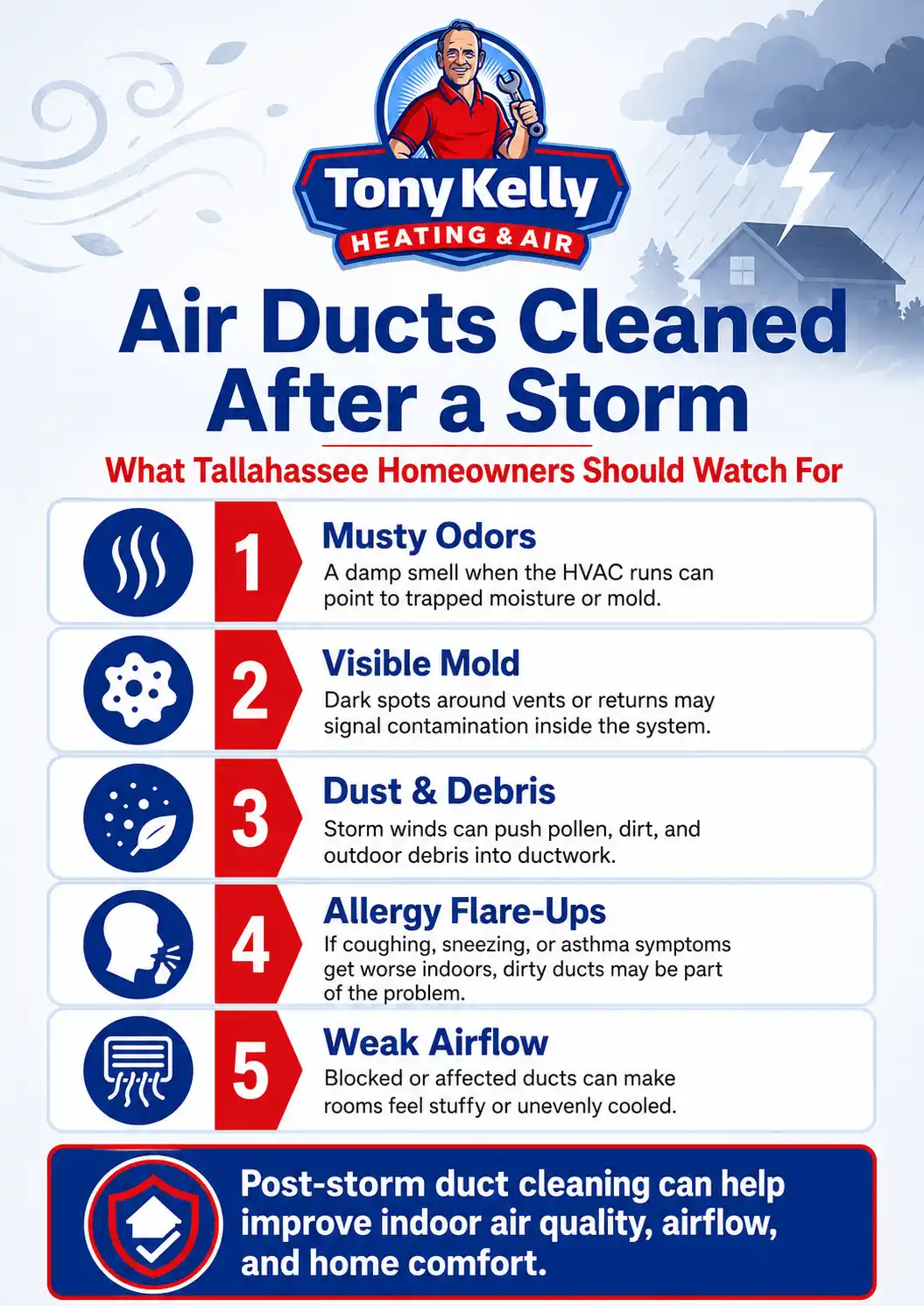
If storm-related debris or moisture is left inside your ductwork, the issue may not stay contained. Your HVAC system moves air through the entire home, which means contaminants inside the ducts can be distributed into bedrooms, living areas, hallways, and other rooms.
Over time, dirty or damp ductwork may contribute to several problems.
Dust, pollen, mold spores, pet dander, pest debris, and other particles can affect indoor air quality. For families with allergies, asthma, or respiratory sensitivities, these particles may make the home feel less comfortable after a storm.
If moisture is trapped inside the duct system, you may notice a musty odor each time the HVAC system turns on. Cleaning helps remove the source of the odor rather than simply masking it with air fresheners or candles.
Dirt, dust, and debris can restrict airflow through the duct system. This may make some rooms feel warmer than others, cause the system to run longer, or make the home feel less comfortable during Tallahassee’s long cooling season.
When airflow is restricted, your HVAC system has to work harder to move air through the home. This can place added strain on system components and may contribute to more frequent maintenance concerns.
Cleaning alone is not enough if the moisture source remains. If ducts are cleaned but leaks, poor insulation, or humidity problems are not addressed, mold or mildew may return. A proper inspection helps identify whether the issue is limited to the ducts or connected to a larger moisture problem.
When there is real contamination inside the duct system, the benefits of air duct cleaning go beyond surface-level dust removal. Cleaning can help reduce odor sources, remove debris, support better airflow, and improve comfort after a storm has affected the home.
Air duct cleaning can help with dust when the duct system contains heavy dust buildup, storm debris, or particles that are being circulated through the home. If you see dust blowing from vents, notice buildup around registers, or feel like you are dusting constantly after a storm, duct cleaning may help reduce the amount of debris moving through the HVAC system.
That said, air duct cleaning is not the only solution for dust. Dust can also come from open windows, pets, flooring, furniture, clothing, attic leaks, old insulation, and everyday activity inside the home. If your home has duct leaks or poor filtration, dust may continue to enter the system even after cleaning.
For the best results, air duct cleaning should be paired with good HVAC maintenance habits. That includes replacing filters regularly, sealing duct leaks, controlling indoor humidity, and keeping vents and returns clean.
Air ducts should generally be cleaned when there is a clear reason to do so. After a storm, those reasons may include visible debris, moisture, musty odors, mold concerns, pest activity, or reduced airflow.
For a Tallahassee home, duct cleaning may be worth scheduling after a storm if:
Air duct cleaning can also be useful after major home renovations, pest infestations, long periods of neglect, or situations where the duct system has been exposed to excessive dust or debris.
There is no single cleaning schedule that applies to every house. Some homes need duct cleaning more often than others, depending on the condition of the ductwork, the age of the HVAC system, indoor air quality concerns, pets, allergies, humidity, and whether the home has experienced storm damage or water intrusion.
As a general guideline, many homes may benefit from air duct cleaning every three to five years. However, that timeline may be shorter for homes with pets, smokers, recent remodeling work, pest problems, heavy dust, or moisture concerns.
In Tallahassee, storm season and humidity are important factors. A home that normally would not need duct cleaning for several years may need an inspection sooner if a storm caused water damage, attic leaks, or visible contamination around vents.
Instead of relying only on a calendar, pay attention to symptoms inside the home. If the system smells musty, dust collects quickly, airflow feels weaker, or allergy symptoms increase indoors, it may be time to inspect the ductwork.
Air duct cleaning should not damage your HVAC system when it is performed correctly by trained professionals using appropriate equipment. The risk comes from poor cleaning methods, improper tools, or inexperienced providers.
Damage can happen if someone uses overly aggressive tools on fragile duct materials, fails to protect HVAC components, does not create proper negative pressure, or opens access points without sealing them correctly afterward. Poor cleaning can also release dust and debris into the home instead of removing it from the system.
That is why it is important to choose a qualified HVAC or air duct cleaning professional. A proper cleaning should include inspection, containment, safe debris removal, vent and register cleaning, and attention to related HVAC components. The goal is not just to “vacuum the vents.” The goal is to remove contaminants from the system without damaging ductwork or spreading particles through the home.
Homeowners can do some basic vent and filter maintenance on their own, but full duct cleaning is not usually a DIY job.
You can safely handle simple tasks such as:
However, professional duct cleaning is different. It requires specialized equipment to place the duct system under negative pressure, loosen debris from inside the ductwork, and remove contaminants without releasing them into the home.
A professional inspection is especially important after a storm because the issue may not be limited to the visible vent covers. Moisture may be hidden in attic duct insulation, return cavities, air handlers, or duct connections. A trained technician can evaluate the system and determine whether cleaning, sealing, repair, or moisture control is needed.
To understand why storms affect air ducts, it helps to know how the system works. Most residential HVAC systems use supply ducts and return ducts. Supply ducts deliver conditioned air into each room. Return ducts pull indoor air back to the HVAC system so it can be cooled, filtered, and recirculated.
In many Tallahassee homes, ducts run through attics, crawl spaces, walls, or other areas that are not fully conditioned. These spaces can become hot, humid, dusty, or damp, especially after a storm. If the ducts have loose connections, damaged insulation, or small leaks, outdoor air and contaminants may enter the system.
Duct systems can be made from sheet metal, fiberglass duct board, or flexible duct materials. Each type can develop issues over time. Flexible ducts may sag, tear, or become kinked. Duct board can be affected by moisture. Metal ducts can leak at joints if they are not sealed properly.
Storms can make existing duct problems worse. A small leak that previously allowed a little attic dust into the system may allow more debris after high winds. Damp insulation around the ductwork may hold moisture. A loose duct connection may pull humid attic air into the return side of the system.
This is why post-storm inspection matters. Cleaning the ducts helps remove contamination, but identifying duct leaks, moisture entry points, or damaged insulation helps reduce the chance of the same problem returning.
After a major storm, use the following checklist to protect your HVAC system and indoor air quality.
Cleaning your air ducts after a storm can provide several benefits when the system has been exposed to moisture, debris, or contamination.
Professional air duct cleaning helps remove dust, pollen, mold spores, pest debris, and other contaminants from the duct system. This can support cleaner air moving through the home.
If dust and debris collected in the ductwork after a storm, cleaning can help reduce the amount of material being pushed through vents when the HVAC system runs.
Musty smells often come from moisture, mold, mildew, or organic debris. Cleaning helps remove odor sources from inside the ductwork and around registers.
When ducts are blocked with dust, debris, or damaged materials, airflow may suffer. Cleaning helps remove restrictions and allows conditioned air to move more freely.
Cleaner ducts, clean filters, and better airflow can reduce unnecessary strain on the HVAC system. This is especially important in Tallahassee, where air conditioners often work for long periods during hot and humid weather.
After a storm, homeowners often focus on visible cleanup. Air duct cleaning helps address the less obvious part of recovery: making sure the air moving through your home is not carrying storm-related dust, moisture, or debris.
While you cannot stop storms from moving through North Florida, you can reduce the chance of duct contamination with a few preventative steps.
Preventative maintenance is especially valuable in homes near wooded areas, older homes with aging ductwork, and homes that have experienced past moisture issues. Homeowners outside Tallahassee may face similar issues after heavy rain and wind, which is why localized duct cleaning resources for nearby areas like air duct cleaning in Woodville and air duct cleaning in Midway, FL can be helpful for understanding how storm exposure affects homes across North Florida communities.
A thorough air duct cleaning should involve more than removing vent covers and vacuuming what is visible. A proper cleaning process typically includes inspection, containment, debris removal, and system evaluation.
The technician inspects the ductwork, vents, returns, air handler, and accessible system components. The goal is to identify dust buildup, moisture, mold concerns, pest debris, damaged ductwork, or airflow restrictions.
Professional equipment is used to place the duct system under negative pressure. This helps contain dust and debris during cleaning so contaminants are removed from the home instead of released into living areas.
Specialized tools loosen dust and debris from inside the ductwork. The loosened material is then pulled into the collection equipment.
Registers, grilles, and returns are cleaned to remove dust, debris, and residue around the visible openings.
After cleaning, the system should be checked for airflow concerns, loose duct connections, moisture issues, or visible damage. If there are signs of mold or water-damaged duct material, additional steps may be needed.
The best duct cleaning results come from cleaning the entire affected system rather than only addressing the visible vents. For homes in the city, professional air duct cleaning in Tallahassee can be especially useful after storms that bring moisture, fallen debris, roof leaks, or long periods of high humidity.
Choosing the right provider matters. Air duct cleaning should be done carefully, especially after a storm when moisture, mold, and debris may be involved.
When comparing companies, ask questions such as:
Be cautious with companies that make extreme claims, offer unusually low pricing without inspecting the system, or pressure you into services you do not understand. A trustworthy provider should explain what they found, what needs to be cleaned, and why.
Air duct cleaning is often misunderstood. Here are a few common myths homeowners should know.
Not every home needs annual duct cleaning. Cleaning should be based on the condition of the system, visible contamination, indoor air quality concerns, and events such as storms, flooding, pest activity, or remodeling.
Duct cleaning can help when the duct system is contaminated, but it does not solve every air quality issue. Indoor air quality also depends on humidity control, filtration, ventilation, cleaning habits, and moisture prevention.
Vacuuming vent covers can help with surface dust, but it does not clean the inside of the duct system. Professional cleaning uses equipment designed to remove debris from deeper inside the ductwork.
Some duct cleaning providers recommend chemical biocides or sealants. These may be appropriate in specific situations, but they should not be applied casually. Homeowners should understand what is being used, why it is being recommended, and whether cleaning alone is sufficient.
Dust around vent covers is common because air moves through those areas frequently. However, heavy dust buildup, visible debris blowing from vents, or dust returning quickly after cleaning may point to a deeper issue.
After duct cleaning, the next step is preventing the same problem from returning. This is especially important in Tallahassee because humidity is a constant factor.
Cleaning your ducts after a storm is helpful, but moisture control is what keeps the problem from becoming recurring. If your home smells musty after every heavy rain, the ducts may be part of the issue, but there may also be a roof, insulation, drainage, or humidity problem that needs to be addressed.
If contaminated air ducts are not cleaned, dust, pollen, mold spores, pest debris, and other particles may continue circulating through the home. Over time, this can affect indoor air quality, create odors, reduce airflow, and place more strain on the HVAC system. If moisture is present, the problem may also lead to mold or mildew growth.
Air ducts should be cleaned when there is visible contamination, mold concern, pest activity, excessive dust, musty odors, or storm-related moisture exposure. After a major storm in Tallahassee, duct cleaning may be needed if your home experienced flooding, roof leaks, attic water intrusion, or noticeable air quality changes.
Many homes may benefit from air duct cleaning every three to five years, but the right timing depends on your home. Homes with pets, allergies, smokers, recent remodeling, high dust levels, or storm damage may need cleaning sooner.
Cleaning air ducts can help with dust if the dust is coming from inside the duct system. It can remove buildup that may be circulating through vents. However, dust can also come from flooring, pets, outdoor air, attic leaks, and everyday activity, so duct cleaning should be combined with good filtration and home maintenance.
Air duct cleaning can cause damage if it is done improperly or with the wrong tools. A qualified professional should use proper equipment, inspect the duct system, protect HVAC components, and avoid overly aggressive methods that could damage duct materials.
Storms can introduce moisture, dirt, pollen, debris, and pest activity into areas around the HVAC system. Cleaning the ducts after a storm helps remove those contaminants, reduce musty odors, improve airflow, and support healthier indoor air quality.
Storms can contribute to mold growth if they bring moisture into the home or increase humidity around the duct system. Mold is more likely when wet materials are not dried quickly or when ductwork has poor insulation, leaks, or condensation problems.
You can clean vent covers, replace filters, and wipe visible dust from registers, but full duct cleaning should be handled by a professional. Professional cleaning requires equipment that can remove debris from inside the duct system without releasing contaminants into your home.
Tony Kelly HVAC understands how North Florida weather affects home comfort. Tallahassee homeowners deal with long cooling seasons, heavy humidity, frequent storms, and the indoor air quality concerns that can come with them.
After a storm, our team can inspect your ductwork, identify signs of contamination, and help determine whether cleaning is needed. The goal is not to recommend unnecessary work. The goal is to help you understand what is happening inside your HVAC system and how to restore cleaner, more comfortable airflow throughout your home.
If you are comparing duct cleaning to other indoor comfort improvements, it can help to start with the basics: cleaner ducts, better filtration, moisture control, and routine HVAC maintenance. Those steps work together to support healthier indoor air and reduce the chance of recurring dust or musty odors.
After a storm, it is natural to focus on visible cleanup first. You may check the roof, clear branches, remove debris, and look for signs of water damage. But your HVAC system and air ducts deserve attention too.
If storm debris, moisture, mold, or dust enters your ductwork, your HVAC system can circulate those contaminants through the home. Air duct cleaning after a storm helps remove hidden debris, support indoor air quality, improve airflow, reduce musty odors, and protect your HVAC system from unnecessary strain.
For homeowners in Tallahassee, Midway, Woodville, Quincy, Perry, Crawfordville, Bradfordville, and nearby North Florida communities, post-storm duct cleaning can be an important part of restoring a cleaner, more comfortable home environment.
Address:
870 Blountstown Hwy. Unit # 9
Tallahassee, FL 32303
Phone: 850-385-3774
License #: CMC1249702
Open Monday Through Friday
8:00 am to 8:00 pm

