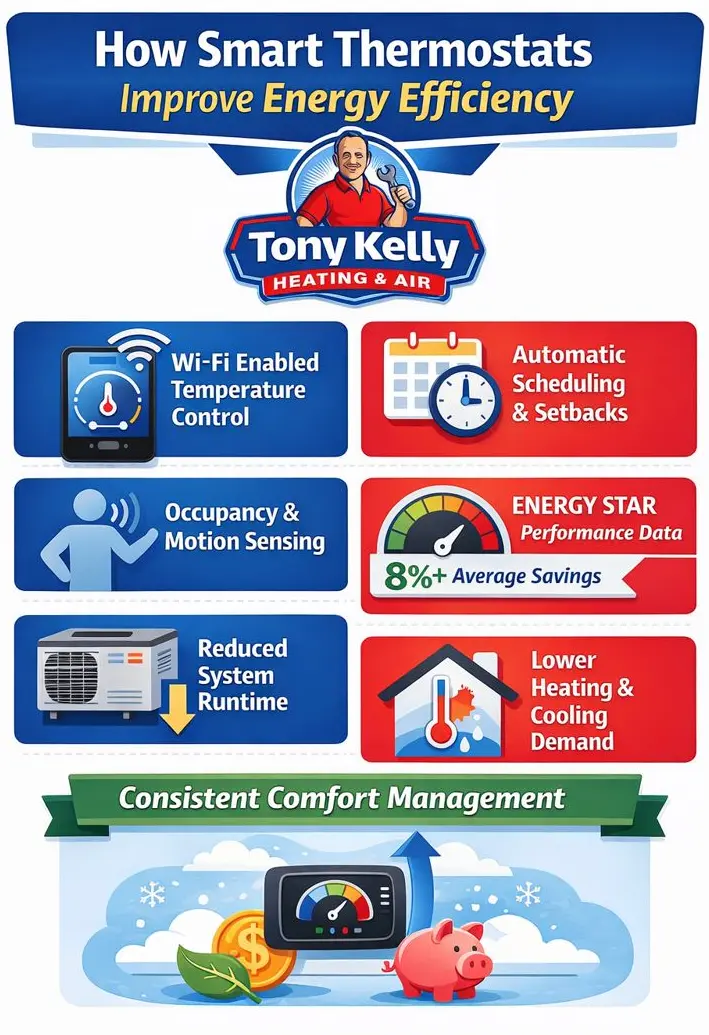
For homeowners across Tallahassee and surrounding North Florida communities, managing indoor comfort often means balancing long cooling seasons, high humidity, and changing household schedules. Smart thermostats are designed to make that process more consistent and efficient by automating how heating and cooling systems respond to real-world conditions.
How Smart Thermostats Work
A smart thermostat is a Wi-Fi–enabled device that adjusts your heating and cooling system automatically based on learned behavior, schedules, and sensor feedback. Unlike traditional thermostats that rely on manual changes, smart models use data such as occupancy, time of day, and outdoor conditions to fine-tune operation.
Most models offer mobile apps that allow homeowners to view system activity, adjust temperatures remotely, and receive system notifications. These features help reduce unnecessary runtime and support overall HVAC efficiency.
Understanding how these systems interact with your HVAC equipment can help homeowners build better HVAC efficiency basics and avoid avoidable wear.
Energy and Cost Efficiency Benefits
Heating and cooling represent a significant portion of household energy use. According to ENERGY STAR smart thermostat guidance, certified smart thermostats can reduce heating and cooling energy use by more than eight percent on average.
These savings come from features like automatic setbacks when the home is unoccupied, adaptive scheduling, and reduced system cycling. When paired with smart energy-saving HVAC habits, homeowners can better align comfort with efficiency.
Comfort and Scheduling Control
Smart thermostats learn temperature preferences over time, helping maintain consistent comfort without constant manual adjustments. Some models support room sensors or integration with zoning strategies, allowing different areas of the home to respond independently.
This flexibility is particularly useful in multi-story homes or households comparing zoning vs whole-home systems, where comfort needs vary throughout the day.
Maintenance Awareness and System Health
Many smart thermostats provide reminders for air filter changes, system checkups, and unusual runtime patterns. These alerts help homeowners stay aligned with preventative HVAC maintenance and may reduce the likelihood of unexpected breakdowns.
Indoor Air Quality and Humidity Awareness
Indoor comfort extends beyond temperature. Humidity plays a major role in how a home feels, especially in North Florida. The indoor humidity recommendations from the EPA suggest maintaining levels between 30 and 50 percent.
Some smart thermostats track indoor humidity and can coordinate with dehumidification equipment. This supports healthier indoor conditions and complements broader efforts around improving indoor air quality.

Storm Season and Local Climate Considerations
North Florida’s hurricane season runs from June through November. While smart thermostats are not storm-protection devices, they can support preparedness by maintaining consistent indoor conditions when schedules change or homes are temporarily unoccupied.
Reviewing hurricane season preparedness guidance alongside HVAC readiness helps homeowners plan calmly and responsibly.
Choosing a Smart Thermostat That Fits Your Home
Compatibility matters. Before selecting a smart thermostat, homeowners should confirm system wiring, heat pump compatibility, and Wi-Fi stability. Reviewing overall HVAC system readiness can help ensure smooth integration.
Frequently Asked Questions
Do smart thermostats really save energy?
ENERGY STAR–certified models have demonstrated measurable reductions in heating and cooling energy use when installed and configured properly.
How do smart thermostats know when I’m home?
They use a combination of scheduling, motion sensors, and location-based features such as geofencing.
Are smart thermostats difficult to install?
Many homes support basic installation, but system compatibility should always be confirmed.
Can a smart thermostat help with humidity?
Some models track humidity and coordinate with dehumidifiers or ventilation systems.
Do smart thermostats work during power outages?
Most retain settings, but Wi-Fi features resume once power is restored.
Are smart thermostats compatible with heat pumps?
Many are, though compatibility varies by system type.
Can I control a smart thermostat remotely?
Yes, most models offer smartphone or tablet control.
Do smart thermostats need internet access?
Internet access enables advanced features, but basic temperature control remains available.
Are rebates available?
Some utilities offer incentives for ENERGY STAR–certified models.
How long do smart thermostats last?
Lifespan varies, but many last for years with regular updates.
Smart thermostats provide homeowners with better visibility, control, and efficiency. When aligned with local climate needs and existing HVAC systems, they can be a practical upgrade that supports comfort and long-term system care.
published on Wednesday, January 21st, 2026