CALL US 850-385-3774
Florida homeowners rely on air conditioning for much of the year. Long cooling seasons, high humidity, and intense summer heat make energy efficiency one of the most important factors when choosing a cooling system. Selecting the most energy efficient air conditioners can help reduce electricity usage, improve indoor comfort, and maintain stable humidity levels throughout the home.
In North Florida communities such as Tallahassee and the surrounding areas, air conditioning systems may operate for eight to ten months of the year. This extended runtime means even small improvements in system efficiency can make a noticeable difference in energy consumption and long-term operating costs.
Modern air conditioning systems now include advanced technologies designed to improve efficiency and performance. Variable-speed compressors, inverter technology, advanced humidity control, and higher SEER ratings all contribute to better energy performance. Understanding how these systems work helps homeowners determine which solution is best for their property and climate conditions.
This guide explains what makes an air conditioner efficient, compares different cooling systems available today, and explores the features that perform best in Florida’s climate. Whether you are researching the most energy efficient HVAC system for a new home or planning to upgrade an aging system, understanding these factors can help you make an informed decision.
Air conditioner efficiency is measured using the Seasonal Energy Efficiency Ratio (SEER), which calculates how efficiently a system cools over an entire cooling season. In 2023, federal regulations introduced an updated measurement called SEER2, which provides a more realistic representation of system performance under real-world operating conditions.
The higher the SEER or SEER2 rating, the more efficiently the system converts electricity into cooling power. According to the
U.S. Department of Energy, modern central air conditioners typically range between SEER ratings of 13 and 21, while high-efficiency systems may reach even higher performance levels.
Florida falls within the southern climate region, where the federal minimum standard for new central air conditioners is currently SEER2 14.3. However, many homeowners opt for systems rated 16 SEER2 or higher because the longer cooling season can justify the investment in higher efficiency equipment.
The ENERGY STAR program, administered by the U.S. Environmental Protection Agency, identifies air conditioning equipment that meets strict efficiency standards. ENERGY STAR certified systems are designed to deliver reliable cooling while reducing energy consumption and greenhouse gas emissions.
While SEER ratings provide a useful benchmark, they represent only one part of the efficiency equation. Proper installation, system sizing, insulation levels, and duct design all influence how efficiently a system performs once installed.
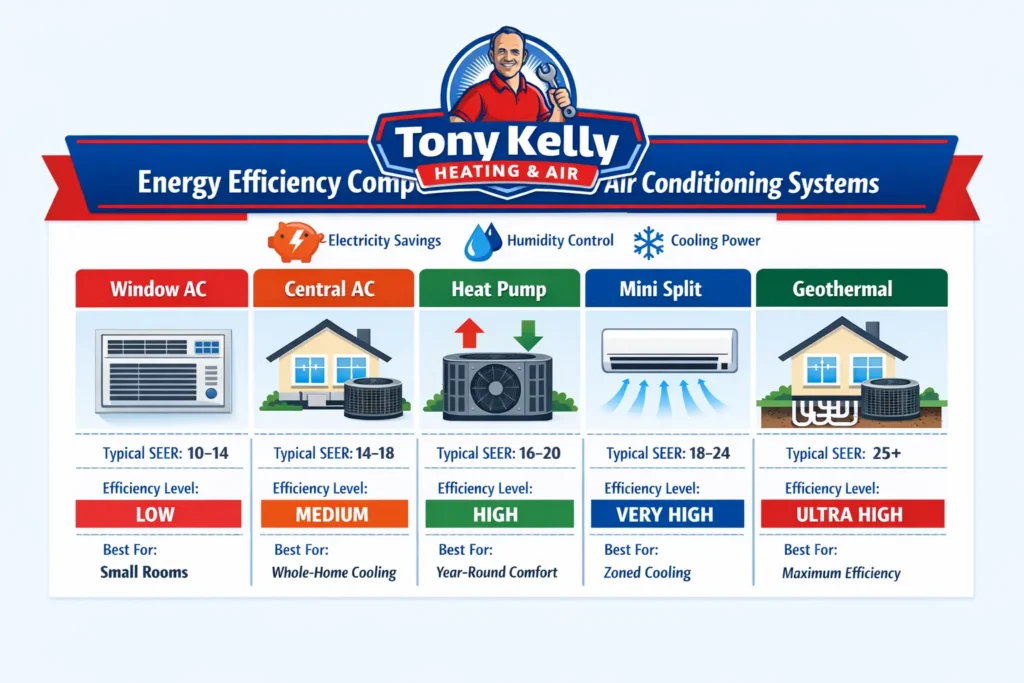
Ductless mini-split systems are often considered among the most energy efficient air conditioning systems available today. These systems consist of an outdoor compressor connected to one or more indoor air handling units, allowing each space to receive targeted cooling.
One of the main advantages of mini-splits is their use of inverter technology. Instead of turning on and off repeatedly, the compressor adjusts its speed continuously to match cooling demand. This allows the system to maintain a steady temperature while using less energy.
Because ductless systems deliver air directly into the living space, they avoid the energy losses associated with ductwork. The
U.S. Department of Energy estimates that duct losses can account for up to 30 percent of energy consumption in traditional HVAC systems when ducts are poorly sealed or insulated.
Mini-split systems also allow for zoned temperature control. Each indoor unit can operate independently, allowing homeowners to cool only the rooms that are actively being used. This approach reduces unnecessary energy consumption and provides greater flexibility.
Many mini-split systems achieve SEER ratings between 18 and 24, placing them among the top rated energy efficient air conditioners available for residential applications.
To learn more about how ductless systems impact cooling costs, explore our article on mini-split systems and energy savings.
Central air conditioning systems remain the most common cooling solution for many Florida homes. These systems distribute cooled air through a network of ducts connected to supply vents throughout the home.
Modern central air conditioners are significantly more efficient than systems installed twenty or thirty years ago. Advances in compressor technology, coil design, and refrigerant management have improved energy performance while maintaining consistent indoor temperatures.
Many of the most energy efficient central air conditioners now feature variable-speed compressors that adjust output levels rather than cycling fully on and off. This allows the system to operate at lower speeds for longer periods, which improves humidity control and reduces temperature fluctuations.
High-efficiency central systems typically include features such as:
Proper duct design also plays a significant role in system efficiency. Leaky ducts, inadequate insulation, or poor airflow design can reduce system performance and increase energy usage.
Our guide to clean air ducts explains how airflow improvements can help systems operate more efficiently.
Homeowners considering new systems often research installation options such as AC installation in Tallahassee or explore long-term planning through HVAC replacement services.
Heat pumps are frequently considered when homeowners search for the most energy efficient HVAC system because they provide both heating and cooling using a single piece of equipment.
Air-source heat pumps transfer heat rather than generating it directly. During the summer, the system removes heat from the home and releases it outdoors. During cooler months, the system reverses the process and extracts heat from outdoor air.
Because Florida winters are relatively mild, heat pumps can operate efficiently throughout the year. Modern heat pumps often achieve high SEER ratings and provide excellent humidity control when equipped with variable-speed compressors.
For homeowners exploring this technology, our overview of heat pump replacement considerations explains what factors influence system selection.
If your home already uses a heat pump system, you can learn more about service options through heat pump repair and installation.
Geothermal HVAC systems represent one of the most efficient cooling technologies available. Instead of exchanging heat with outdoor air, geothermal systems use the relatively stable temperature of the earth as a heat exchange medium.
Pipes known as ground loops circulate fluid through the soil, allowing the system to transfer heat efficiently regardless of outdoor air temperature.
Because underground temperatures remain stable year-round, geothermal systems can achieve extremely high efficiency levels compared to traditional HVAC equipment.
The U.S. Department of Energy reports that geothermal heat pumps can reduce energy use by up to 50 percent compared with conventional heating and cooling systems.
However, geothermal systems require specific property conditions and installation expertise, making them less common than traditional HVAC systems in residential neighborhoods.
Room air conditioners remain a common solution for cooling individual rooms or smaller living spaces. The most energy efficient window air conditioners now feature inverter compressors and ENERGY STAR certification to improve performance.
According to the ENERGY STAR program, certified room air conditioners use approximately 10 percent less energy than standard models.
Variable-speed compressors allow these units to adjust cooling output based on demand, which helps maintain consistent temperatures while reducing electricity usage.
When choosing a window unit, proper sizing is essential. Oversized units may cool the room too quickly without removing enough humidity, which can leave indoor air feeling damp.
Indoor air quality considerations are also important in smaller spaces. Learn more about improving airflow and filtration through
indoor air quality services.
Humidity management plays a significant role in Florida home comfort. Even when temperatures are moderate, high humidity can make indoor spaces feel warmer than they actually are.
Air conditioning systems remove moisture from indoor air during the cooling process. However, homes in humid climates may benefit from additional moisture control equipment.
Whole-home dehumidifiers work alongside HVAC systems to maintain stable humidity levels. This can improve comfort while also reducing strain on the cooling system.
For homeowners experiencing persistent humidity issues, solutions such as whole-home dehumidifiers can help maintain healthier indoor conditions.
Thermostat management is another important factor influencing energy use. Many homeowners researching the most energy efficient air conditioner setting find that a moderate temperature balance helps maintain comfort while reducing system workload.
Energy experts generally recommend setting the thermostat to around 78°F when the home is occupied during summer months. Raising the temperature several degrees while the home is empty can further reduce cooling demand.
Smart thermostats make these adjustments easier by automatically adjusting temperature schedules throughout the day.
Homeowners interested in connected temperature control can learn more about smart thermostat installation and how automated scheduling improves efficiency.
Even the most energy efficient air conditioner brand benefits from proper maintenance and airflow management.
Routine maintenance helps systems operate more efficiently and can extend equipment lifespan. Our article on energy saving HVAC tips explores additional strategies for improving system performance.
If your system is aging, you may also want to review the signs discussed in signs it may be time to replace your AC.
Ductless mini-split systems and geothermal heat pumps are often considered the most efficient cooling options. High-efficiency central air conditioners with variable-speed compressors also provide strong performance when properly installed.
Yes. The most energy efficient inverter air conditioner systems adjust compressor speed based on cooling demand. This reduces energy spikes and maintains more consistent indoor temperatures.
Mini-splits often achieve higher efficiency ratings because they avoid duct losses and operate with inverter compressors. However, central systems remain practical for whole-home cooling when ducts are properly designed.
Improving insulation, maintaining thermostat schedules, sealing ducts, and scheduling regular HVAC maintenance can all contribute to lower cooling energy consumption.
For additional information about indoor air quality improvements, explore our article on UV lights for HVAC systems.
Address:
870 Blountstown Hwy. Unit # 9
Tallahassee, FL 32303
Phone: 850-385-3774
License #: CMC1249702
Open Monday Through Friday
8:00 am to 8:00 pm

