CALL US 850-385-3774
North Florida homeowners know that our hot, humid summers and occasional stormy weather can put extra strain on heating and cooling systems. Understanding how to troubleshoot common HVAC issues not only keeps your home comfortable but also helps prevent minor problems from becoming major repairs. This guide provides practical, homeowner‑friendly steps to identify and resolve common issues without turning your blog into a service page. Along the way, we’ll weave in local context for Tallahassee and surrounding communities and link to helpful resources for deeper learning, including preventative HVAC maintenance articles for ongoing care.
The air filter is your HVAC system’s first line of defense. A clogged filter restricts airflow, forcing the system to work harder and potentially causing short cycling or shutdowns. In Tallahassee, where pollen and humidity levels can be high, filters may clog faster. Homeowners should locate the filter (often in the return air duct or inside the air handler), note its size, and replace it every 30–60 days. During summer’s long cooling run‑times, consider checking monthly, especially if you have pets or allergies. Clean filters help improve indoor air quality and reduce energy consumption.
Tips for managing filters:
For broader advice on improving indoor air quality, see our guide on improve indoor air quality. And remember, clean filters are a low‑cost way to keep your system running smoothly and efficiently.
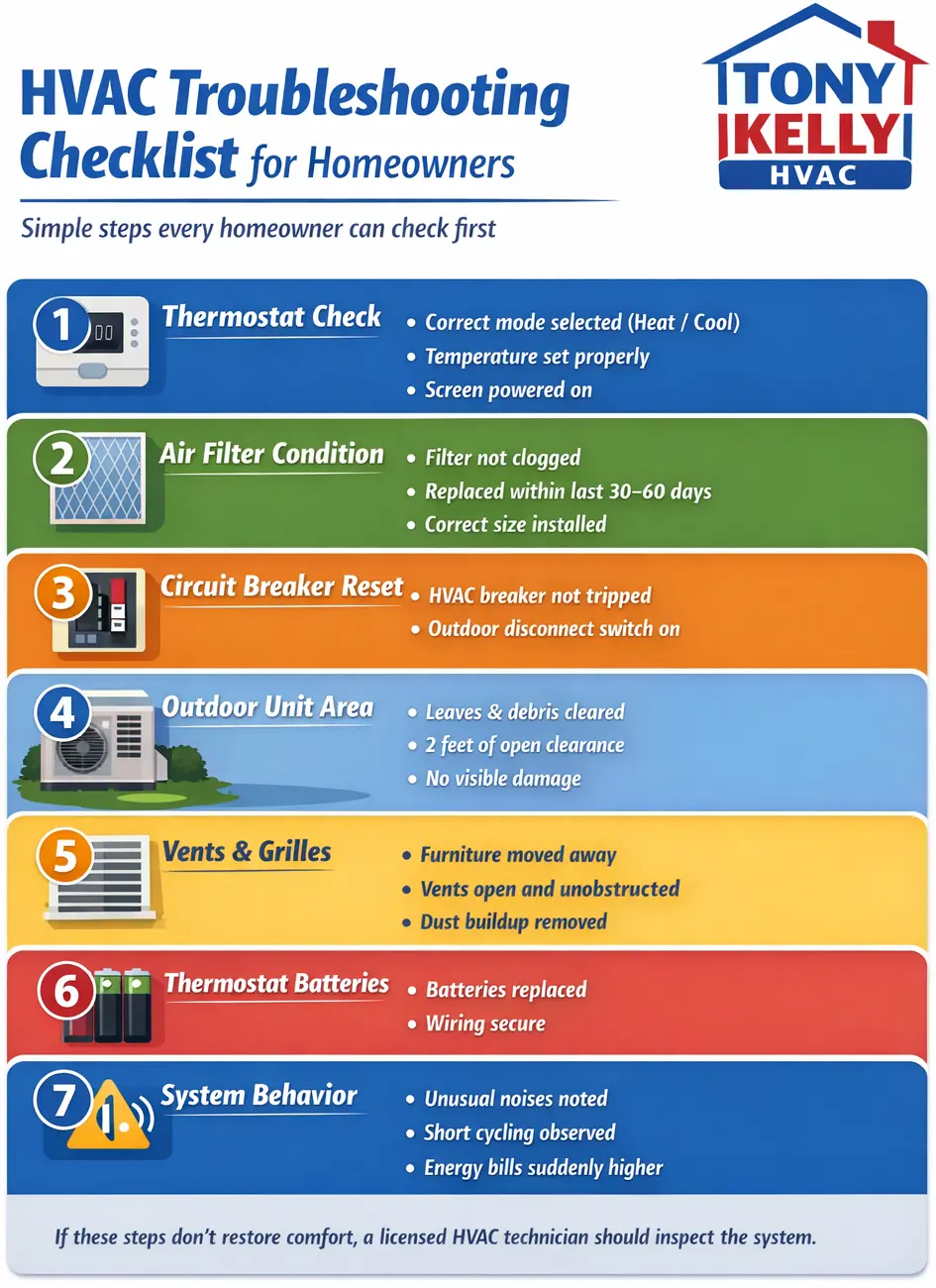
Sometimes an HVAC system shuts down simply because it isn’t getting power. Check your home’s circuit breaker box and look for any tripped breakers labeled for heating and cooling equipment. Reset any tripped breakers by switching them fully off and then back on. Also verify that the outdoor disconnect switch (a small gray box near the condenser) is in the “ON” position.
If your unit shut off during a storm or power fluctuation, wait a few minutes and then try resetting the breaker. North Florida storms can cause temporary surges that trip breakers; resetting can restore power. However, if the breaker immediately trips again, contact a professional—this could indicate an electrical fault or motor issue.
For more comprehensive troubleshooting advice when your system won’t turn on, see what to do if your HVAC unit goes out. Always exercise caution around electrical components and call a certified technician if you are uncertain.
Your outdoor condenser unit needs breathing room to function properly. Leaves, pine needles, branches and other debris can collect around the cabinet, obstructing airflow and causing the system to overheat. In communities like Midway and Woodville where yards are shaded by trees, debris buildup is common. To maintain efficiency:
This is also an opportunity to check that animals haven’t nested nearby and to ensure that landscaping doesn’t impede airflow. For further tips on preparing your outdoor unit for summer, review our article on prepare your air conditioner for summer. If a major storm is forecast, consult NOAA’s hurricane preparedness tips to secure outdoor equipment without urgency—focus on readiness rather than panic.
Blocked vents and ducts restrict airflow, leading to uneven heating or cooling and increased wear on your system. In many North Florida homes, furniture or rugs accidentally block supply or return vents. Move furniture at least two feet away and keep 80% of vents open. Vacuum dust and pet hair from grilles to prevent buildup, and avoid closing vents in unused rooms—doing so can upset pressure balance and cause short cycling.
Regular duct cleaning helps maintain airflow and indoor air quality. Dirty ducts can spread dust, allergens and mold throughout your home. Professional cleaning every three to five years is recommended for homes with pets or after renovations. Learn more about the benefits of air duct cleaning, and refer to EPA’s EPA guidance on indoor air quality for additional strategies to manage humidity and pollutant sources.
The thermostat controls when your HVAC system turns on and off, so incorrect settings can mimic equipment failure. Begin by ensuring the thermostat is set to the correct mode (“Heat” or “Cool”) and that the temperature is at least 3–5 degrees beyond current room temperature. If the screen is blank or unresponsive, replace the batteries or check if it’s securely wired.
Other thermostat tips:
A malfunctioning thermostat can also contribute to short cycling and inconsistent temperatures. If resetting and battery replacement don’t resolve the issue, consult a professional to inspect wiring or consider replacing the unit.
Regular preventive maintenance helps avert many common HVAC problems. In North Florida’s humid climate, systems run for longer periods, making maintenance especially important. Consider the following:
By incorporating these practices, homeowners in Tallahassee, Quincy, or Crawfordville can enjoy reliable comfort throughout the year. When basic troubleshooting doesn’t resolve the problem, or if you encounter unusual noises, smells, or water leaks, contact a trusted professional. For non‑urgent questions about professional HVAC maintenance in Tallahassee, air duct cleaning in Tallahassee, or broader indoor air quality services, Tony Kelly HVAC offers helpful resources and friendly advice.

Q1: What should I do if my HVAC system stops working suddenly?
A: Start by checking thermostat settings and batteries, then inspect the circuit breaker and ensure the air filter isn’t clogged. If these steps don’t restore power, call a professional.
Q2: How often should I replace my HVAC air filter?
A: Replace disposable filters every 30–60 days. Homes with pets, smokers, or high pollen may need more frequent changes.
Q3: Why is my HVAC system making a buzzing or rattling noise?
A: Unusual noises may indicate debris in the outdoor unit, loose panels, or failing components. Turn off the system and visually inspect for obstructions; call a technician if the noise persists.
Q4: Can I clean my HVAC coils myself?
A: Lightly spraying the outdoor coils with a garden hose after turning off power can remove surface dirt. Deep cleaning and coil inspections should be performed by a qualified technician.
Q5: How do I reset my HVAC system after a power outage?
A: Turn off the thermostat, switch the circuit breaker fully off and then on, wait five minutes, and then turn the thermostat back on. If the system doesn’t restart, seek professional help.
Q6: What causes HVAC short cycling?
A: Short cycling often results from a clogged filter, thermostat issues, or an oversized/undersized unit. Replace the filter and check thermostat placement; persistent problems require expert diagnosis.
Q7: How can I improve indoor air quality in humid climates?
A: Regularly change filters, use exhaust fans when cooking or showering, maintain proper humidity with dehumidifiers, and consider professional duct cleaning.
Q8: Do storms affect my HVAC unit?
A: Yes. High winds and flying debris can damage outdoor units. Clear loose objects and follow local hurricane preparedness guidance to minimize risks.
Q9: Should I cover my outdoor HVAC unit in winter?
A: Generally, no. Covering the unit can trap moisture and promote rust. Instead, keep the area clear of debris and consult your owner’s manual for manufacturer recommendations.
Q10: Is a smart thermostat worth the investment?
A: Smart thermostats improve comfort and efficiency by learning your schedule, providing usage reports, and enabling remote adjustments—leading to potential energy savings.
Q11: When should I call a professional for HVAC issues?
A: If basic troubleshooting doesn’t restore function, or if you notice unusual odors, persistent noises, refrigerant leaks, or high energy bills, contact a licensed technician.
Q12: Why does my AC freeze up?
A: Frozen coils can result from low refrigerant, dirty filters, or restricted airflow. Turn off the system to allow thawing and schedule a professional inspection.
Address:
870 Blountstown Hwy. Unit # 9
Tallahassee, FL 32303
Phone: 850-385-3774
License #: CMC1249702
Open Monday Through Friday
8:00 am to 8:00 pm

