Air conditioning repair in Crawfordville, FL is rarely caused by a single mechanical issue. In North Florida, heating and cooling systems operate in one of the most demanding residential climates in the Southeast. Long cooling seasons, elevated humidity levels, afternoon thunderstorms, and salt-influenced coastal air all contribute to wear on HVAC equipment.
If you live in Wakulla County, your system is not just lowering temperature. It is managing moisture, balancing airflow, filtering contaminants, and cycling for extended periods. Understanding how our regional climate affects equipment performance allows homeowners to reduce breakdown risk and make informed decisions about AC maintenance, HVAC service, and long-term air conditioning replacement planning.
Why AC Repair in Crawfordville, FL Is Often Climate-Related
Crawfordville experiences a prolonged warm season with average highs frequently reaching the upper 80s and low 90s. According to climate data, North Florida’s humid season extends from late spring through early fall, meaning air conditioning systems must remove both heat and moisture for much of the year.
The U.S. Department of Energy explains that air conditioners are designed to remove humidity as part of the cooling process (energy.gov/energysaver/air-conditioning). In high-moisture climates, that dehumidification function becomes more demanding. Extended run times increase stress on:
- Compressors
- Blower motors
- Capacitors and contactors
- Evaporator coils
- Condensate drainage systems
This is one reason air conditioning repair in Crawfordville, FL may be more frequent than in drier regions.
Humidity and Its Role in HVAC Service Crawfordville, FL
Humidity changes how your system behaves. When indoor moisture levels are elevated:
- The home feels warmer than thermostat readings suggest
- The AC runs longer to achieve comfort
- Condensate production increases
- Drain lines are more prone to blockage
- Biological growth risk rises inside ductwork
The Environmental Protection Agency recommends maintaining indoor humidity between 30–50% to reduce mold and allergen growth (epa.gov/mold).
In many Crawfordville homes, what appears to be an AC repair issue is actually a humidity management issue tied to airflow, duct leakage, or system sizing.
Most Common Causes of Air Conditioner Repair Crawfordville, FL
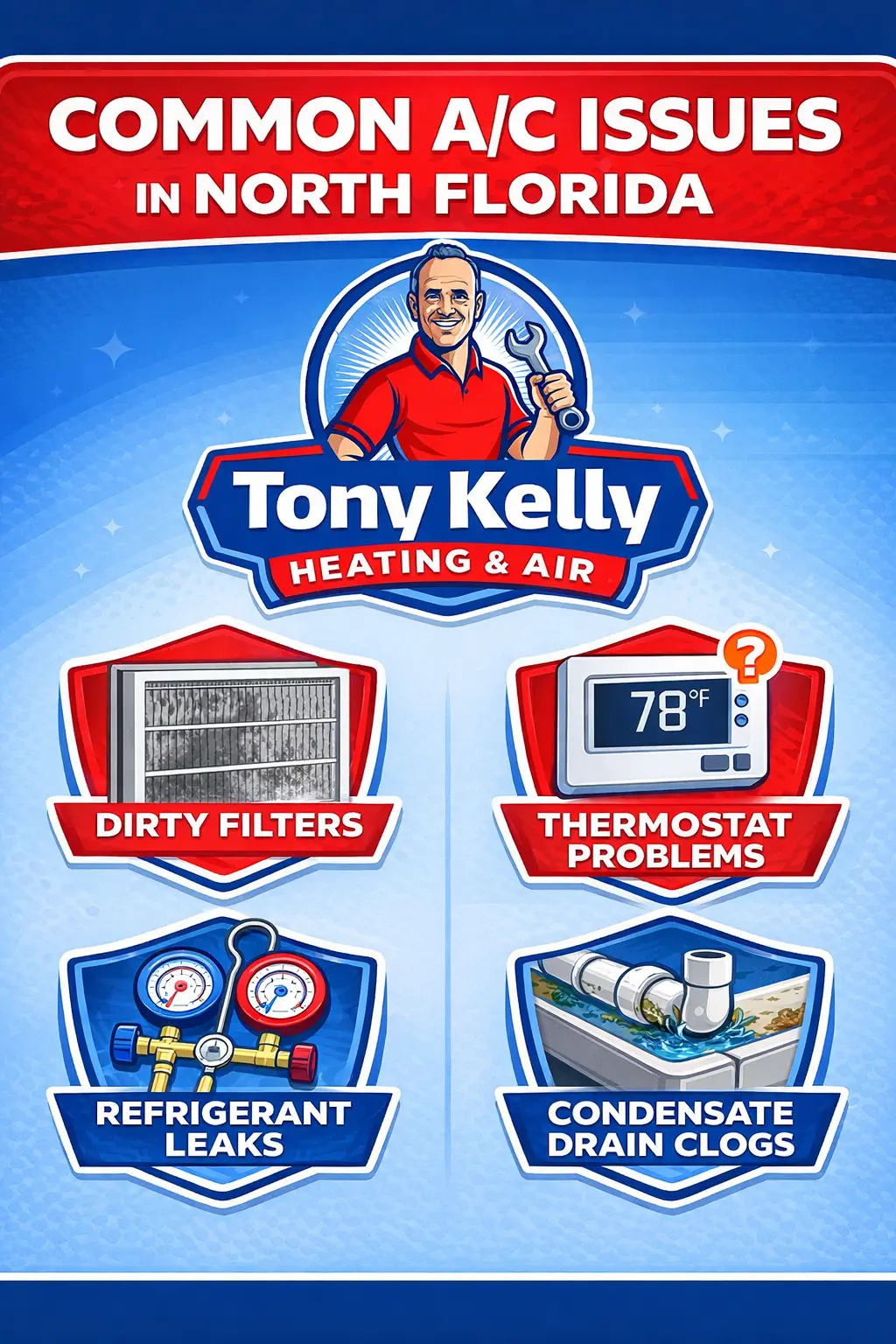
1. Restricted Airflow from Dirty Filters
Clogged filters reduce airflow across the evaporator coil. When airflow drops:
- Coils may freeze
- Efficiency declines
- Compressor strain increases
- Indoor air quality suffers
Energy Star recommends checking filters monthly during heavy use (energystar.gov). In Crawfordville’s long cooling season, that advice is especially relevant.
For additional homeowner guidance, see our article on HVAC troubleshooting tips every homeowner should know.
2. Refrigerant Leaks
Low refrigerant levels usually indicate a leak rather than simple depletion. Running a system with insufficient refrigerant may:
- Reduce cooling capacity
- Cause coil icing
- Increase compressor stress
- Raise energy consumption
When homeowners search for air conditioning service Crawfordville, FL due to weak cooling, refrigerant leak detection is often part of the diagnostic process.
3. Condensate Drain Blockages
Because humidity remains elevated for months, algae growth in drain lines is common. Water backing up can trigger float switches or cause interior water issues.
Our guide on how clean air ducts improve indoor air quality explains how moisture buildup affects overall system performance.
4. Electrical Component Wear
Frequent cycling and moisture exposure contribute to capacitor and contactor wear. Electrical service calls are among the most common HVAC service Crawfordville, FL requests during summer.
AC Maintenance Crawfordville, FL: Prevention Over Repair
Preventive maintenance significantly reduces emergency air conditioning repair needs.
Homeowner Maintenance
- Replace filters regularly
- Keep outdoor units clear
- Flush condensate lines
- Ensure vents remain unobstructed
Our detailed checklist on spring HVAC maintenance outlines seasonal preparation steps.
Professional HVAC Service Crawfordville, FL
Routine inspections may include:
- Refrigerant level verification
- Electrical testing
- Coil cleaning
- Airflow measurement
- Duct inspection
Learn more about long-term planning in our guide to HVAC maintenance plans.
Storms, Power Surges & Heating and Cooling Crawfordville, FL
Crawfordville’s proximity to the Gulf increases storm exposure. Lightning and power surges can impact outdoor equipment.
The DOE recommends surge protection and proper equipment anchoring in storm-prone regions (energy.gov hurricane prep).
For local preparation guidance, review how to prepare your HVAC system for Florida’s hurricane season.
Ductwork & Indoor Air Quality Considerations
Leaky ductwork can reduce efficiency by up to 20–30%, according to the Department of Energy. In humid climates, leakage also pulls in moisture from attics and crawl spaces.
If you suspect airflow imbalance, our page on air duct cleaning in Crawfordville explains when professional cleaning may be beneficial.
When Air Conditioning Replacement Crawfordville, FL Becomes Practical
While many issues are repairable, replacement may deserve evaluation if:
- Repairs become frequent
- System age exceeds 12–15 years
- Energy efficiency declines noticeably
- Major components fail
For homeowners weighing options, our article on AC repair vs AC replacement outlines cost and lifespan considerations.
If you need localized service information, visit:
Expanded FAQ: AC Repair Crawfordville, FL
How often should AC maintenance be scheduled in Crawfordville?
Twice yearly inspections are generally recommended due to extended cooling seasons.
Why does humidity make my AC work harder?
Humidity increases latent heat load, requiring longer run times for moisture removal.
Can clogged ductwork cause AC repair issues?
Yes. Restricted airflow stresses motors and reduces system efficiency.
Is refrigerant supposed to run out over time?
No. Low refrigerant typically indicates a leak.
What causes short cycling?
Oversized systems, thermostat issues, or electrical faults may cause rapid cycling.
Should I turn off my AC during lightning storms?
Turning it off can reduce surge exposure risk.
How long do AC systems last in North Florida?
Lifespan varies but may be shorter in humid climates without routine maintenance.
Does AC maintenance improve energy efficiency?
Yes. Clean coils, correct refrigerant levels, and proper airflow improve efficiency.
What is the most common air conditioner repair in Crawfordville?
Filter restriction, drain line clogs, and electrical component failures are common.
How can I reduce the likelihood of emergency HVAC repair?
Routine maintenance and seasonal inspections significantly reduce breakdown risk.
Final Thoughts
AC repair in Crawfordville, FL is often tied to environmental factors rather than isolated mechanical failure. Understanding humidity, airflow balance, storm exposure, and maintenance timing allows homeowners to approach heating and cooling in Crawfordville, FL proactively.
Informed planning reduces disruption, supports indoor comfort, and extends system longevity.
published on Thursday, February 26th, 2026