CALL US 850-385-3774
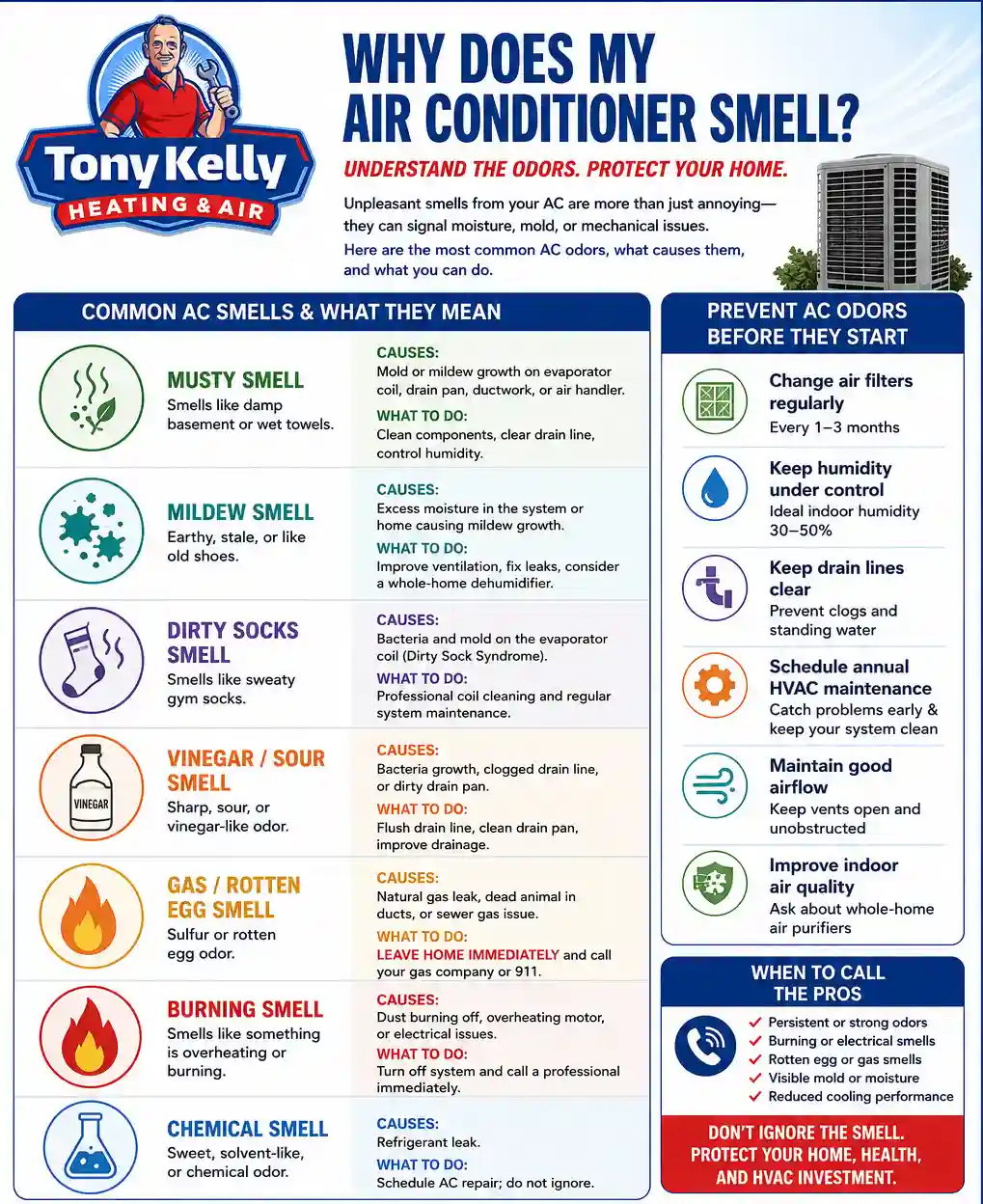
If you’ve ever turned on your air conditioner and immediately noticed an unpleasant odor, you’re not alone. One of the most common HVAC complaints from North Florida homeowners is, “Why does my air conditioner smell?” Whether it’s a musty odor, dirty sock smell, vinegar smell, burning odor, or even a rotten egg smell, your HVAC system is trying to tell you something.
While some odors are relatively harmless, others can indicate mold growth, clogged drain lines, electrical issues, or even dangerous gas leaks. Understanding what different smells mean can help you protect your comfort, indoor air quality, and the lifespan of your HVAC system.
In this guide, we’ll explain the most common air conditioner smells, what causes them, when you should be concerned, and how homeowners in Tallahassee and North Florida can prevent odor problems before they become expensive repairs.
Your air conditioner moves thousands of cubic feet of air throughout your home every day. As air circulates through your HVAC system, it passes over the evaporator coil, air handler, air filter, drain pan, condensate drain line, and ductwork.
When moisture, dirt, bacteria, mold, mildew, or mechanical problems develop anywhere in that system, unpleasant odors can be carried through your vents and into every room.
Some smells occur only when the AC first turns on. Others continue while the system runs. The specific odor often provides clues about what’s causing the problem.
Let’s break down the most common AC odors homeowners experience.
If you’re wondering why your AC smells musty, mold and mildew are usually the culprit.
North Florida’s high humidity creates ideal conditions for microbial growth inside HVAC systems. When moisture becomes trapped inside the system, mold spores can begin growing on surfaces such as:
A musty smell often resembles a damp basement, old books, or wet towels.
The Environmental Protection Agency notes that mold growth occurs when moisture remains present and emphasizes that controlling moisture is the key to mold prevention. Moisture problems that are not addressed can quickly lead to mold growth and reduced indoor air quality.
If you notice a mold smell coming from vents whenever the AC runs, it’s important to have the system inspected before mold spreads throughout the home.
Related Reading: How Air Duct Cleaning Impacts Indoor Air Quality in Florida Homes
Your air conditioner removes significant amounts of humidity from your home. That moisture exits through a condensate drain line.
When algae, dirt, or debris block the drain line, water backs up into the system and sits stagnant. This standing water creates the perfect environment for mold growth and mildew smells.
A dirty air filter can trap moisture and organic debris.
As humidity combines with dust, pollen, and pet dander, mold can begin developing on the filter itself. Restricted airflow also increases condensation on HVAC components.
The evaporator coil stays cold whenever the system runs.
Moisture naturally condenses on the coil surface. If dirt accumulates on the coil, mold and bacteria can begin feeding on that buildup.
This is one of the most common sources of persistent mildew smells.
Leaky or poorly insulated ducts located in attics can develop condensation during North Florida summers.
That moisture creates an ideal environment for mold growth inside the ductwork.
As conditioned air moves through the ducts, odors are distributed throughout the home.
If your AC smells like mildew specifically, you’re likely dealing with excess moisture somewhere in the system.
Many homeowners notice the smell most strongly when the air conditioner first turns on.
This happens because mildew spores and odors accumulate while the system sits idle. Once airflow begins, those odors get pushed into living spaces.
Mildew smells are especially common in:
Installing a whole-home dehumidifier can often help reduce moisture levels and prevent recurring mildew issues.
This is one of the strangest HVAC odors homeowners experience.
Known throughout the HVAC industry as “Dirty Sock Syndrome,” the smell resembles sweaty gym socks, old shoes, or a locker room.
The odor develops when bacteria and mold accumulate on the evaporator coil.
When warm air passes over the contaminated coil, the smell becomes amplified and spreads through the duct system.
Dirty Sock Syndrome often appears:
Professional evaporator coil cleaning is usually the most effective solution.
A sour or vinegar-like smell is another common complaint.
If you’re asking, “Why does my AC smell like vinegar?” several issues could be responsible.
Bacteria thrive in warm, moist environments.
If condensation remains trapped inside the system, bacteria colonies can develop and produce sour odors.
A partially blocked condensate drain line often causes stagnant water to accumulate.
As organic matter decomposes, homeowners may notice a vinegar smell.
Drain pans collect moisture removed from indoor air.
If they aren’t draining properly, mold, mildew, and bacteria can create unpleasant odors.
A dirty air filter that has absorbed moisture can begin harboring mold and bacteria growth.
This can create a sour smell throughout the home whenever the AC runs.
If your AC smells like gas, take the situation seriously.
Air conditioners themselves do not use natural gas.
However, your HVAC system can circulate odors from elsewhere in the home.
A sulfur smell or rotten egg smell often indicates a natural gas leak.
Utility companies intentionally add sulfur compounds to natural gas so leaks can be easily detected.
If you smell rotten eggs:
Never ignore sulfur smells coming through your vents.
While gas leaks are the primary concern, a rotten egg smell doesn’t always indicate a gas problem.
Other possible causes include:
A professional inspection can determine the exact source.
A burning smell from an air conditioner should never be ignored.
Some burning odors are harmless. Others can indicate dangerous electrical issues.
If your AC hasn’t run in several months, a slight burning smell during startup may simply be dust burning off internal components.
This odor usually disappears within 30 minutes.
If the smell persists, electrical issues may be present.
Potential causes include:
Turn off the system immediately and schedule professional HVAC repair.
Chemical odors can indicate refrigerant leaks.
Some homeowners describe the smell as:
Refrigerant leaks reduce cooling performance and may damage the compressor if left untreated.
If you suspect a refrigerant issue, schedule professional AC repair as soon as possible.
Sometimes the air conditioner isn’t creating the smell at all.
The HVAC system simply distributes odors already present inside the home.
Common examples include:
Because the HVAC system circulates air throughout the home, odors can seem like they’re coming from the AC when the real source is elsewhere.
A comprehensive indoor air quality inspection can help identify hidden odor sources.
Many odor problems are tied directly to indoor air quality.
Dust, pet dander, pollen, mold spores, bacteria, and volatile organic compounds can all accumulate inside HVAC equipment.
Over time these contaminants create:
Adding a whole-home air purifier can help reduce airborne contaminants and improve overall indoor air quality.
When odors have been circulating for months or years, the ductwork itself may be contaminated.
Professional air duct cleaning removes:
Many homeowners notice improved airflow and fresher-smelling air immediately after duct cleaning.
Related Reading: How Clean Air Ducts Improve Indoor Air Quality in Tallahassee Homes
The best way to avoid unpleasant HVAC smells is through preventative maintenance.
Simple steps include:
Routine maintenance helps prevent many of the common HVAC issues that lead to odors.
Related Reading: Common HVAC Problems Homeowners Face
Call an HVAC technician immediately if you notice:
Ignoring odors often allows small issues to become major repairs.
Many homeowners first notice problems such as frozen coils, clogged drain lines, or airflow restrictions through unusual smells.
Related Reading: Why Your AC Is Freezing Up in North Florida
A musty smell usually indicates mold growth somewhere in the HVAC system. Common locations include the evaporator coil, drain pan, condensate drain line, air filter, or ductwork.
Yes. A dirty air filter can trap moisture and contaminants, creating conditions that allow mold, mildew, and bacteria growth.
Dirty Sock Syndrome occurs when mold and bacteria accumulate on the evaporator coil and produce odors that resemble sweaty socks.
Usually not, but it often indicates bacterial growth, mold, mildew, or drainage issues that should be corrected.
Air conditioners don’t use natural gas, but they can circulate gas odors from leaks elsewhere in the home. Any sulfur or rotten egg smell should be treated as a potential gas leak.
Mold exposure may contribute to allergy symptoms, respiratory irritation, and poor indoor air quality, particularly for sensitive individuals.
Yes. Air duct cleaning can remove accumulated contaminants that contribute to musty or stale odors throughout the home.
Most homeowners should replace filters every 1–3 months, depending on system usage, pets, allergies, and filter type.
Absolutely. Standing water inside the HVAC system often leads to mold growth and mildew odors.
Rotten egg smells, sulfur smells, burning odors, and chemical smells should be addressed immediately because they may indicate dangerous conditions.
If you’ve been asking yourself, “Why does my air conditioner smell?” the answer often comes down to moisture, mold growth, airflow restrictions, or mechanical issues within the HVAC system.
Musty odors, mildew smells, dirty sock smells, vinegar smells, sulfur odors, and burning smells all point to different underlying problems. The sooner these issues are identified, the easier and less expensive they are to fix.
Regular HVAC maintenance, clean air filters, proper humidity control, and healthy indoor air quality all play important roles in preventing unpleasant AC odors and keeping your North Florida home comfortable year-round.
Address:
870 Blountstown Hwy. Unit # 9
Tallahassee, FL 32303
Phone: 850-385-3774
License #: CMC1249702
Open Monday Through Friday
8:00 am to 8:00 pm

