
CALL US 850-385-3774
North Florida’s hot, humid climate means we spend much of the year in air-conditioned spaces. While air conditioning keeps us comfortable, it can also trap pollutants inside. The good news: improving indoor air quality usually comes down to three practical steps—control pollutant sources, bring in clean fresh air, and filter what remains. The EPA guidance on improving indoor air quality recommends starting with source control and then supporting it with ventilation and air cleaning.
Indoor air can carry a mix of contaminants: volatile organic compounds (VOCs) from paints and cleaning products, formaldehyde from some pressed-wood materials, carbon monoxide from fuel-burning appliances, smoke from cooking or candles, radon from soil, and allergens like pet dander and pollen. Identifying what’s most likely in your home helps you choose the right fix.
Many building-science best practices focus on reducing what enters the air in the first place—like choosing low-VOC products and improving ventilation. This overview on high-performance homes that use low-VOC materials and efficient ventilation systems explains why that “source-first” approach matters.
If you want a deeper explanation of how ductwork can influence indoor air quality, this article on how clean air ducts improve indoor air quality in Tallahassee homes breaks down what happens when dust and debris build up and how air movement spreads particles.
Source control often makes the biggest difference because it removes the problem where it starts. Choose low-VOC paints and adhesives, store chemicals (paints, solvents, gasoline) outside the living space, and use unscented or low-fragrance cleaning products when possible. If you’re remodeling, ask about low-emission materials for cabinetry, flooring, and furniture.
Moisture is another “source” that can quietly create air-quality problems over time. If you’re noticing a damp feeling indoors, the effects of winter humidity on indoor air in North Florida can help you connect the dots between humidity, musty odors, and how crawl spaces or ventilation choices can influence air quality.
Many plug-ins and aerosol sprays add VOCs to the air—even if they smell “clean”. Instead, try simple options that don’t add extra chemicals: simmer cinnamon or cloves on the stove, use baking soda to absorb odors in targeted spots, and keep airflow moving with ceiling fans (set to the correct seasonal direction) and open windows on mild days.
Some homeowners also use houseplants as a small supplement. Plants aren’t a replacement for ventilation or filtration, but they can be a helpful part of a broader approach.
If you’re also trying to improve comfort and efficiency, these energy-saving tips to enhance the efficiency of your HVAC system include habits that often overlap with cleaner air, like sealing gaps and maintaining consistent airflow.
Portable air purifiers can help reduce particles like dust, pollen, and smoke—especially in bedrooms. When choosing a purifier, match the unit to the room size and look for a true HEPA filter. Avoid ozone-generating products.
In many homes, the HVAC filter does more day-to-day work than a single-room purifier. A consistent filter-change schedule helps prevent dust buildup and keeps airflow steady. If you’re considering an upgrade in filter performance, it’s worth confirming your system can handle it without restricting airflow.
Regular maintenance supports this, too. This guide on the benefits of preventative HVAC maintenance explains why small checkups (including filter and airflow checks) can support better indoor air over time.
In Tallahassee and nearby areas like Havana, Crawfordville, and Bradfordville, humidity is one of the biggest comfort and air-quality factors. High humidity can support mold and dust mites. Low humidity can cause dry skin, irritation, and static. A practical target for many homes is a relative humidity range of about 30–50%.
Start with simple habits: run bathroom exhaust fans during showers and for a short period afterward, use the kitchen vent while cooking, check that the dryer vent exhausts outdoors, and address plumbing leaks quickly.
If you’re evaluating long-term moisture control, this article on how whole-home dehumidifiers work in Florida’s humid climate explains what they do (and what they don’t do). For homeowners considering integrated humidity control, you can also review whole-home dehumidifier solutions to understand typical system setups.
Infographic (Text Version): How Humidity Affects Indoor Air Quality
Use this text as the on-graphic copy for a vertical infographic:
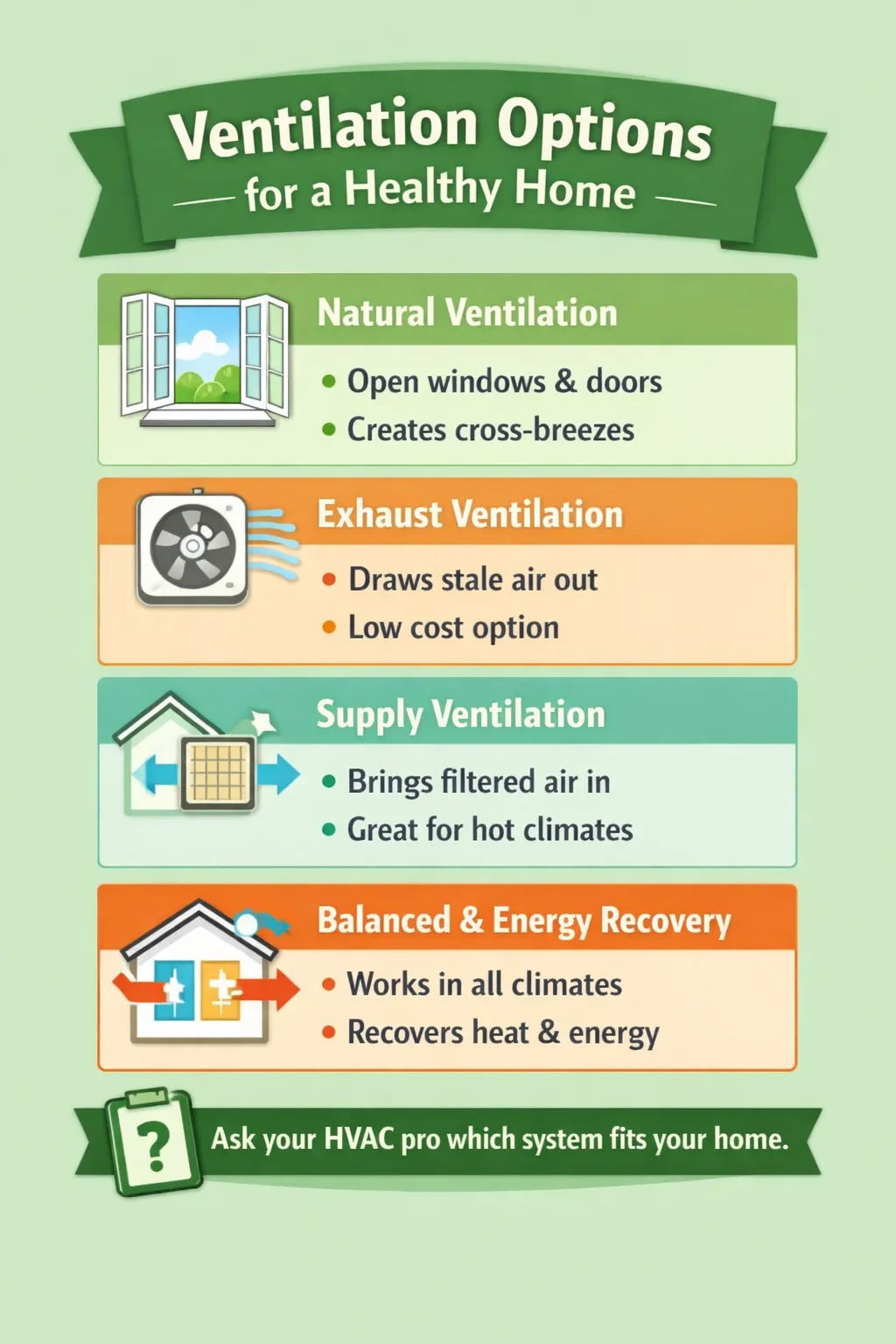
Fresh air helps dilute indoor pollutants, but the “right” approach depends on the weather and your home. On mild days, opening windows on opposite sides of the home can create a cross-breeze. Exhaust fans in kitchens and bathrooms help remove moisture and odors at the source.
For homes that are sealed tightly for energy efficiency, mechanical ventilation can provide consistent fresh air. The U.S. Department of Energy explains the different types of whole-house ventilation systems, including exhaust, supply, balanced, and energy/heat-recovery approaches.
For seasonal upkeep that supports airflow and ventilation, this spring maintenance HVAC checklist is a helpful reference.
Infographic (Text Version): Ventilation Options for a Healthy Home
Use this text as the on-graphic copy for a vertical infographic:
Click to Enlarge
Cooking, candles, fireplaces, and any fuel-burning appliances can add particles and gases to indoor air. Use a vented range hood while cooking (especially when frying or searing) and keep its filter clean. If you use a fireplace, burn seasoned wood and ensure the chimney is properly vented and maintained.
Reducing smoke and particles also helps your system move air more smoothly during long cooling seasons. These tips to minimize the strain on your HVAC system during summer include habits that can support both comfort and cleaner indoor air.
Dust, pet dander, and pollen settle everywhere—and then get stirred up by movement and airflow. Vacuum at least weekly (more if you have pets), use a HEPA vacuum when possible, and damp-mop hard floors to pick up what a vacuum misses. Don’t skip less obvious spots like ceiling fan blades, baseboards, and vents.
If you’re comparing what you can do yourself versus when professional help may be appropriate, this guide on DIY vs professional air duct cleaning walks through the differences in a straightforward way.
Soft surfaces hold onto particles. Wash bedding weekly, clean curtains regularly, and vacuum upholstered furniture. For rugs and carpets, periodic deep cleaning can help remove embedded debris—just make sure everything dries completely to avoid moisture problems.
This overview of the benefits of air duct cleaning also explains why reducing circulating dust can help keep fabrics cleaner longer.
Your HVAC system moves air through every room, so its condition matters. A steady routine—clean filters, clear drains, and well-sealed ducts—can reduce dust recirculation and support more consistent airflow. If you notice visible dust buildup around vents or persistent musty odors, it may be time to look deeper into airflow and duct condition.
If you want to understand what a professional duct cleaning typically includes, this page on air duct cleaning outlines the service at a high level.
Indoor air monitors can show real-time humidity and particle levels (and sometimes VOCs or CO₂). This helps you spot patterns—like humidity spikes after showers or particulates during cooking—and adjust habits accordingly. Pairing monitoring with consistent HVAC performance often makes improvements easier to maintain.
If you’re exploring control and comfort features, the benefits of installing a smart thermostat include practical ways homeowners manage comfort while keeping airflow more consistent.
Focus on source control and airflow: use unscented cleaners, avoid aerosol fresheners, simmer spices for fragrance, keep dust under control, and ventilate on mild days with cross-breezes.
A practical target is often about 30–50% relative humidity. Too high can support mold and dust mites; too low can cause dry skin and irritation.
Plants can help a little, but their impact is modest. They work best as a small supplement alongside filtration, cleaning, and ventilation.
Many homes do well with filter changes every 1–3 months. If you have pets, allergies, or higher dust, you may need to change it more often.
HEPA purifiers can reduce particles in individual rooms, especially bedrooms. Whole-home improvements often come from consistent HVAC filtration, humidity control, and clean airflow paths.
Yes—when outdoor conditions are mild. During hot, humid weather, opening windows can bring in moisture and pollen. Timing and ventilation choices matter.
Exhaust systems pull air out; supply systems push filtered air in; balanced systems do both for even pressure; energy-recovery systems transfer heat (and sometimes moisture) between incoming and outgoing air to support comfort and efficiency.
If there’s visible mold, pests, or heavy dust coming from vents, a professional inspection can help determine whether cleaning makes sense. Otherwise, consistent filtration and housekeeping may be enough.
Cooking can release particles and gases into the air. Use a vented range hood whenever you cook—especially with high heat—and keep the filter clean.
MERV (Minimum Efficiency Reporting Value) describes how well a filter captures particles. Higher MERV filters capture smaller particles, but your system must be able to handle the airflow resistance.
Address:
870 Blountstown Hwy. Unit # 9
Tallahassee, FL 32303
Phone: 850-385-3774
License #: CMC1249702
Open Monday Through Friday
8:00 am to 8:00 pm

