In North Florida, HVAC systems tend to work under conditions that quietly add up over time: long cooling seasons, high humidity, and frequent stretches of warm weather that keep equipment running day after day. When homeowners search for common HVAC issues, it can feel like the same problems keep repeating—especially in places like Tallahassee, Havana, Midway, Quincy, Crawfordville, Monticello, and nearby communities.
The good news is that many breakdowns aren’t “random.” In a climate like ours, HVAC trouble often follows predictable patterns tied to moisture, airflow, and cumulative wear. That doesn’t mean every issue can be prevented, but it does mean homeowners can understand what’s happening, recognize early patterns, and make more confident decisions when troubleshooting HVAC issues.
Before we get specific to North Florida, it helps to understand the basics of how systems are built and what components commonly fail in any region. This overview on how HVAC systems are designed to operate provides a helpful foundation.
North Florida’s Climate Creates Unique HVAC Stress
North Florida sits in a “high load” zone for HVAC. It’s not just that it gets hot—it’s that warmth and humidity often overlap for long stretches. That combination forces your cooling system to handle two jobs at once: temperature control (removing heat) and moisture control (removing humidity as air passes across the indoor coil).
In drier climates, homeowners can often feel comfortable with a slightly higher thermostat setting because the air feels less “heavy.” In humid climates, comfort can be trickier: the thermostat number might look fine, but the air can still feel sticky. That sticky feeling often signals that humidity is still high, which can cause the system to run longer and cycle differently than homeowners expect.
North Florida weather patterns also tend to create long “in-between” stretches—days that aren’t extreme but still require consistent cooling. Those shoulder-season run times matter. Over the course of months, that adds real wear to motors and electrical components and increases the chance of common HVAC problems showing up at the least convenient times.
If you’ve ever wondered why your system struggles most during the hottest stretches, this breakdown of how cooling demand affects system performance helps explain why comfort can change quickly during peak heat and humidity.
Long Cooling Seasons Lead to Cumulative Wear
Many people assume HVAC breakdowns are mainly about system age, but in North Florida, runtime can be just as important – especially when you consider how long HVAC systems typically last in Florida’s climate under extended cooling demand. Age matters, but in North Florida, runtime can be just as important. The more hours a system runs, the more wear accumulates on parts that cycle on and off or operate continuously—especially when outdoor heat pushes equipment to work longer each day.
This is why some common HVAC repairs involve components that don’t seem “old enough” to fail. Certain parts experience stress every time the system starts, stops, or switches modes. Over many months of long run times, those start-up cycles and steady loads can take a toll.
Homeowners often notice this as “it was working yesterday and now it isn’t.” From a mechanical standpoint, that’s not unusual. Some electrical components can degrade gradually until they reach a point where they can’t reliably perform under load. That can show up as intermittent operation, short cycling, or a system that struggles to start on warm afternoons.
Two factors make cumulative wear more noticeable in North Florida homes:
First, outdoor equipment often sits in direct sun, and heat exposure can stress electrical parts over time. Second, indoor equipment may be installed in attics, garages, or closets where surrounding temperatures and airflow can vary. The environment around the equipment matters more than many homeowners realize.
For practical ways to reduce avoidable strain during peak season, see long-term strain on HVAC components. For a general, non-technical checklist from a federal source, Maintaining your air conditioner is also a useful reference.
Why Humidity Plays a Major Role in HVAC Problems
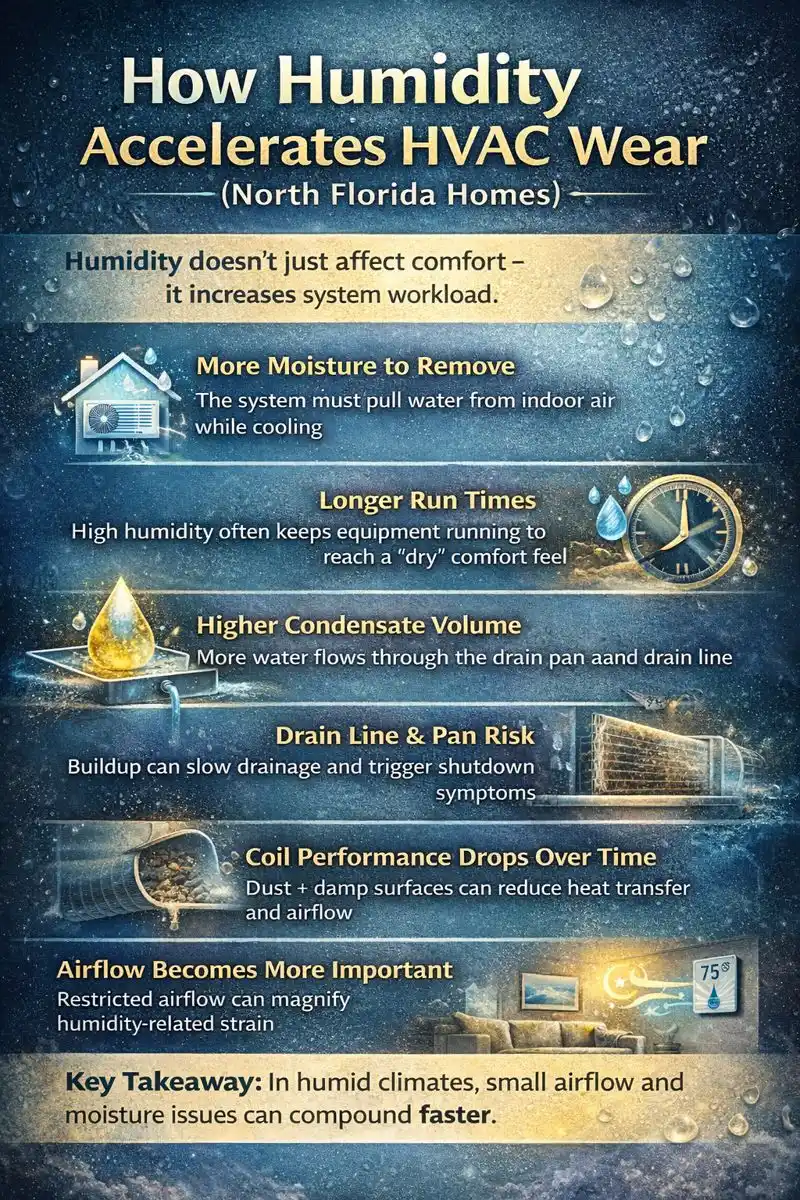
Humidity isn’t only a comfort issue—it can be a performance issue. When indoor air carries more moisture, your HVAC system must remove more water as part of normal cooling. That increases the workload on the indoor coil and adds more demand on the condensate system (drain pan, drain line, and related safety components).
Think of humidity as a “hidden load.” Two homes can set the thermostat to the same number, but the home with higher humidity may require longer runtimes to feel comfortable. That longer runtime increases wear and can magnify other small issues, such as slight airflow restrictions or minor coil buildup.
In North Florida, moisture can also contribute to buildup over time. When dust, pollen, and normal household particles interact with damp surfaces, it can encourage debris accumulation on coils and in drain components. That buildup can restrict airflow and reduce heat transfer—two conditions that often sit behind common AC issues like weak cooling, longer runtimes, and uneven comfort.
Humidity can also change what homeowners experience from room to room. For example, bathrooms, laundry areas, kitchens, and enclosed rooms may feel different depending on ventilation, return airflow, and how the system is balancing air movement. When homeowners describe “hot spots,” “cold spots,” or “one room feels damp,” it’s often a clue that airflow and humidity control aren’t evenly distributed across the home.
If you want a deeper explanation of how moisture control works inside a home, this guide on how humidity impacts HVAC performance pairs well with the concepts here. For a public-health overview of moisture and indoor growth concerns, the EPA’s Mold and moisture basics is a reliable reference.
Common Airflow Restrictions in North Florida Homes
Airflow is one of the most overlooked drivers of common HVAC issues. In many homes around Tallahassee, Bradfordville, Woodville, and nearby communities, duct systems may run through attics or crawl spaces. Over time, small airflow problems can develop from a mix of duct leakage, aging insulation, dust accumulation, and changes in how the home is used.
Airflow problems can be subtle at first. A home might still reach the thermostat setting, but it takes longer, feels less consistent, or has more noticeable humidity. When airflow drops, the system can’t move enough air across the indoor coil. That affects cooling performance and can reduce dehumidification effectiveness—two factors that matter a lot in North Florida.
Airflow restrictions can also show up as:
Reduced air coming from certain vents, a louder “whoosh” at others, rooms that feel warmer than expected, or a system that seems to run long even when outdoor temperatures are moderate. These patterns are common when the duct system is imbalanced, partially restricted, or leaking air into unconditioned spaces.
If you want to understand how airflow-related problems form and how professionals evaluate them, this walkthrough on how airflow problems develop inside HVAC systems is a helpful explainer.
Heat Pumps and Why They’re Often Misunderstood in This Region
Heat pumps are common in Florida homes because they can provide both heating and cooling efficiently in mild-to-moderate winters. But heat pumps can also be misunderstood, especially when outdoor temperatures fluctuate or when the system shifts modes.
One reason is that heat pump heating can feel different than what people expect from other heating types. Instead of blasting very hot air in short bursts, heat pumps often deliver air that feels warm-ish and steady. That can lead homeowners to think the system is “blowing cold air,” when it may actually be operating normally for the conditions.
Another reason is that heat pumps rely on controls and sensors to manage defrost cycles and mode changes. Those transitions can cause changes in sound, airflow, or run time that catch homeowners off guard. This can also make troubleshooting HVAC issues feel confusing if the only reference point is “what it sounded like last year.”
This guide on how heat pumps operate in Florida homes explains one of the most common points of confusion in clear, homeowner-friendly language.
Storm Season Side Effects That Impact HVAC Performance
Storm season in North Florida can affect HVAC performance in indirect ways. Power interruptions can shut systems down unexpectedly, and when power returns, equipment may restart under less-than-ideal conditions. In some homes, moisture intrusion from heavy weather can increase indoor humidity and add load to the cooling system afterward.
None of this means a breakdown is guaranteed—it’s simply another regional factor that helps explain why certain symptoms show up more often during certain times of year. For example, homeowners might notice a system struggling more after the home has been closed up for a day, when humidity rises indoors, or after a series of stormy days when moisture load remains elevated.
If you’d like a general preparedness checklist for storm season, the National Weather Service resource Hurricane safety and preparedness guidance is a solid reference. For HVAC-specific planning concepts, this article on how storms can indirectly affect HVAC systems is a helpful companion.
The Most Common HVAC Issues Seen in North Florida Homes
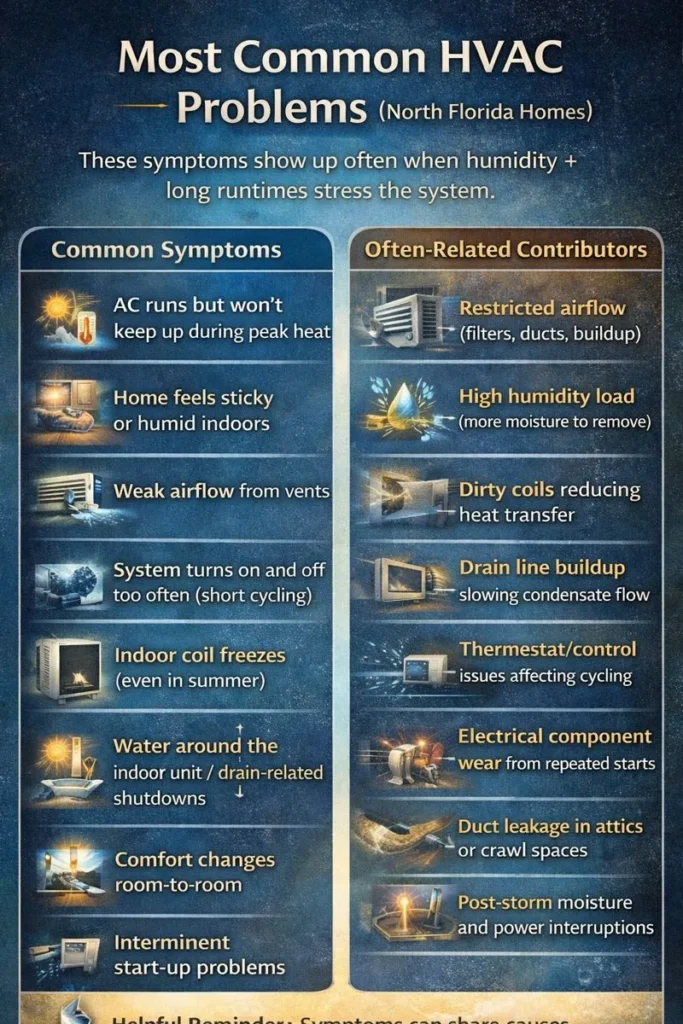
When homeowners look up common HVAC problems and solutions, they’re usually trying to connect a symptom to a likely cause. While every home is different, the same few patterns show up frequently in humid, long-runtime climates like North Florida.
Instead of treating each symptom as an isolated event, it helps to think in categories: airflow, moisture, controls, and cumulative wear. Many “different” symptoms actually share the same underlying contributors.
AC not keeping up during peak heat
If your AC runs for long stretches but the home still feels warm, it doesn’t automatically mean the system is “done.” In North Florida, peak heat and high humidity can push systems close to their limits—especially when airflow is restricted, coils are dirty, or the home is gaining heat faster than the system can remove it.
Homeowners often describe this as “it never shuts off,” “it can’t catch up,” or “it feels warmer in the afternoon.” These can be signs of a system operating under a high load, sometimes combined with issues like duct leakage, poor airflow balance, or a coil that isn’t transferring heat efficiently.
Frozen coils in hot weather
Coil freezing can happen even in summer. It’s often tied to airflow restrictions or to conditions that reduce heat transfer at the coil. In humid climates, longer runtimes can make borderline airflow problems show up more quickly.
From a homeowner perspective, frozen-coil symptoms can show up as weak airflow, reduced cooling, or a system that seems to run but doesn’t improve comfort. Because the symptom is dramatic, it’s a common reason people start searching for troubleshooting HVAC issues online.
Short cycling during summer
Short cycling means the system turns on and off more frequently than it should. This can increase wear and make comfort harder to maintain. In North Florida homes, short cycling is sometimes linked to thermostat placement, airflow imbalance, or system sizing issues, but it can also stem from controls and electrical components.
Homeowners may notice this as frequent starts, inconsistent comfort, or humidity that seems harder to manage. Even if the temperature stays close to target, short cycling can keep the home from feeling “settled.”
Drain line clogs and water issues
In humid climates, HVAC systems remove a lot of water. That means drain lines, pans, and safety switches matter. When drainage slows or clogs, it can trigger shutdowns or cause water-related symptoms that homeowners notice first.
Because this issue is tied to moisture volume, it can be especially common in climates where the system is dehumidifying for long stretches, or in homes where the indoor unit runs frequently to manage comfort.
Electrical component wear and intermittent failures
Electrical parts like capacitors and contactors can wear down over time, especially with frequent cycling and exposure to heat. These issues can feel intermittent—working one day and not the next—because they’re often related to start-up demands and fluctuating conditions.
When homeowners say, “it works in the morning but not in the afternoon,” the difference may be the system load and the starting demand on electrical components during warmer conditions.
For a symptom-based list that helps you spot issues early (without turning your blog into a repair manual), this article on early warning signs of HVAC trouble is a useful reference point.
Why Small HVAC Problems Escalate Faster in Humid Climates
In a humid, long-runtime climate, small inefficiencies can compound. A minor airflow restriction can reduce coil performance. Reduced coil performance can increase runtime. Increased runtime can add wear to motors and electrical components. Meanwhile, higher moisture removal demands keep the system working harder in the background.
This is one reason homeowners may feel like common HVAC issues “snowball” in North Florida. It’s not about panic—it’s about understanding the chain reaction so you can respond calmly and earlier when something feels off.
Another key factor is that humidity can hide problems until the system is under load. A home may feel fine during mild weather, then show symptoms as humidity rises or as the system runs longer during a hot week. That’s why patterns matter more than one-off moments.
This is also where many common HVAC repairs begin: not from a single catastrophic event, but from a series of small stresses that accumulate across a season.
Preventative Awareness That Reduces HVAC Breakdowns
Preventative awareness doesn’t require guessing or DIY repairs. It’s mostly about paying attention to patterns: changes in runtime, changes in comfort, new noises, new odors, or recurring humidity-related discomfort. In North Florida, that awareness matters because systems often run long enough that small changes become meaningful faster.
Here are a few practical, non-technical observations homeowners can track:
How long the system runs in the afternoon compared to earlier in the season; whether certain rooms are consistently warmer or more humid; whether airflow feels weaker than it used to; and whether comfort improves quickly after the system turns on or only slowly over time.
From a homeowner perspective, the goal is to reduce avoidable strain and catch patterns early. This article on why routine maintenance matters in humid regions explains why that approach tends to help over time. If you want to understand what a maintenance plan typically includes (without turning this blog into a sales page), you can review professional HVAC maintenance plans.
When HVAC Issues Need Professional Evaluation
Some troubleshooting is simply observation: noticing patterns and documenting symptoms. But HVAC systems are a mix of electrical components, refrigerant systems, airflow dynamics, and controls—so it’s normal for many issues to require professional evaluation to diagnose accurately.
If you’re dealing with repeated symptoms, comfort swings, or a system that behaves unpredictably, it’s often most helpful to have a trained technician evaluate the full system (not just one part). That kind of evaluation typically focuses on airflow, coil performance, drainage, controls, and how the system responds under load.
For an overview of how professional evaluation fits within broader system care, see professional HVAC evaluation.
Frequently Asked Questions About HVAC Breakdowns in North Florida
Why do HVAC systems seem to break more often in North Florida?
HVAC systems in North Florida often run longer and remove more moisture, which increases wear on components and makes small airflow or maintenance issues show up more quickly.
What are the most common HVAC issues homeowners notice first?
The most common early signs include longer runtimes, uneven temperatures, higher indoor humidity, weak airflow from vents, and comfort that changes from room to room.
Are common AC issues in Florida usually caused by the same thing?
Many common AC issues share root causes like airflow restrictions, moisture-related buildup, thermostat/control problems, and cumulative strain from long cooling seasons.
Why does my AC run but not feel comfortable inside?
This often happens when humidity is high or airflow is restricted, because the system may struggle to remove enough moisture or move enough conditioned air through the home.
Can humidity cause HVAC problems even if the temperature seems fine?
Yes—high humidity can make a home feel uncomfortable and can increase the system’s moisture-removal workload, which can contribute to longer runtimes and performance issues.
Why would an HVAC coil freeze in summer?
Summer coil freezing is commonly linked to airflow problems or reduced heat transfer at the coil, which can happen when a filter is clogged, airflow is imbalanced, or the system is under strain.
What does “short cycling” mean when troubleshooting HVAC issues?
Short cycling means the system turns on and off too frequently, which can increase wear and make it harder to maintain stable comfort and humidity control.
Why are drain line clogs so common in humid climates?
Humid air produces more condensate, so drain lines and pans carry more water; over time, buildup can restrict flow and trigger safety shutdowns or water-related symptoms.
Are heat pumps reliable in North Florida?
Heat pumps can be very reliable in North Florida, but they’re often misunderstood; some behaviors that feel “wrong” to homeowners are normal operation depending on outdoor temperatures and system settings.
How can I reduce the chance of common HVAC repairs?
The best approach is preventative awareness: keep airflow as unrestricted as possible, watch for changes in runtime and comfort, and address recurring symptoms before they compound.
How do I know if my HVAC issue is a quick fix or a bigger problem?
Patterns help: if symptoms are occasional and predictable, it may be minor; if they’re recurring, worsening, or affecting multiple parts of comfort (temperature and humidity), a full evaluation is usually the best next step.
Does North Florida home construction affect common HVAC problems?
It can—duct locations (attics/crawl spaces), insulation levels, and airflow design all influence how hard the system must work and how quickly issues appear.
published on Monday, January 12th, 2026