The Complete Guide to AC Replacement in Tallahassee
Costs, Lifespan, SEER2, Rebates, Florida Climate
Most air conditioners don’t fail overnight. More often, they slowly lose performance, comfort, and reliability over time. This guide is designed to help homeowners recognize the most common “decision signals” that an A/C system may be reaching the end of its useful life, especially in North Florida where long cooling seasons and humidity put extra demand on equipment.
Replacing an A/C isn’t always the right next step. Sometimes a repair, airflow adjustment, or maintenance visit is all that’s needed. The goal here is to help you understand what your system is telling you, what to monitor, and how to make a more confident repair-versus-replace decision.
If you’d like a broader baseline for what can go wrong in heating and cooling systems over time, this overview of understanding common HVAC problems can help you compare what you’re noticing at home with typical system behavior.
How Long Do Air Conditioners Typically Last in North Florida?
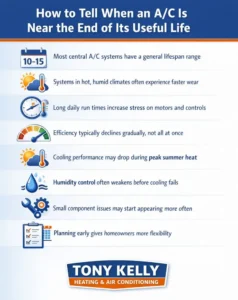
Many homeowners hear that an air conditioner “should last 10–15 years,” but real-life lifespan depends on how the system is used and what conditions it runs in. In Tallahassee and surrounding communities like Bradfordville, Havana, Crawfordville, and Quincy, A/C systems often run long cycles for months at a time. That extended run time can accelerate normal wear on parts like fan motors, capacitors, contactors, coils, and compressors. For a deeper, Florida-specific breakdown, this guide on how long air conditioners typically last in Florida’s climate explains why systems here often age differently than in milder regions.
Regular maintenance can’t stop aging, but it can help the system operate closer to its best performance for longer. If you want a simple explanation of how maintenance supports reliability and efficiency over time, see why regular HVAC maintenance matters.
Another helpful reference point is ENERGY STAR’s overview of when it may be time to replace an air conditioner. It focuses on planning signals like age, repair frequency, and performance changes (not pressure or urgency).
Click to Enlarge
The Difference Between an “Aging” System and a “Failing” System
In many North Florida homes, the decision isn’t “working” versus “not working.” It’s usually one of these:
Aging system: Still runs, but comfort is harder to maintain, humidity feels higher indoors, and energy use trends upward.
Failing system: Breakdowns become more frequent, performance becomes inconsistent, or key components fail in a way that makes the system unreliable.
It’s normal for an aging system to have a few “off” days during peak heat. What matters is the pattern. If small issues keep repeating, or the system needs more help each season to deliver the same comfort, you may be moving from aging into failing.
For a preventative lens (what to watch, what to maintain, and why it helps), these benefits of preventative HVAC maintenance explain how maintenance supports comfort and reduces surprise issues without turning the conversation into “replacement-first.”
Sign #1: Your A/C Is Near or Beyond Its Expected Lifespan
Age matters because internal wear adds up. Even if your A/C still cools, older systems often:
Run longer to hit the thermostat setting
Struggle more during peak heat and high humidity
Develop small electrical or airflow issues that show up repeatedly
If you’re unsure whether what you’re seeing is “normal aging” or an early warning sign, this post on signs your AC is about to break can help you separate routine issues from patterns that deserve closer attention.
Practical homeowner tip: If you don’t know your system’s age, look for the installation paperwork, check the data plate on the outdoor unit, or review past service records. Age alone doesn’t force a decision, but it gives useful context.
Sign #2: Energy Bills Are Climbing Without a Usage Change
If your home’s habits haven’t changed (same thermostat settings, similar occupancy, similar weather patterns) but your energy bills keep trending upward, an aging A/C may be losing efficiency. As systems wear, they often need longer run times to deliver the same cooling and dehumidification.
It can help to understand what “efficiency” means in plain language. Higher-efficiency systems generally move heat more effectively, so they can do the same job with less effort. The U.S. Department of Energy provides a helpful overview of how cooling efficiency impacts long-term home comfort, including why runtime and system condition matter.
Before assuming the system is “done,” it’s smart to rule out common contributors like a clogged filter, blocked return vents, or poor airflow. This guide on how to tell if your AC is running efficiently walks through homeowner-friendly indicators that can explain why bills rise.
Sign #3: Comfort Is Inconsistent From Room to Room
Uneven comfort is one of the most frustrating issues for homeowners. You may notice:
One side of the house stays warmer than the other
Back bedrooms feel stuffy while the living area feels fine
Some rooms cool quickly while others never quite get comfortable
In some cases, uneven comfort is ductwork-related. In other cases, it’s a system capacity and airflow issue that becomes more obvious as the A/C ages. When the system is losing efficiency, it may not have enough “push” to keep every area balanced during hot afternoons in places like Midway, Woodville, or Monticello.
Sign #4: Your System Cools, But the House Still Feels Sticky
In North Florida, comfort isn’t just temperature. Humidity plays a big role. A system can technically “cool” while still leaving the house feeling sticky, heavy, or damp. That’s often a sign the system isn’t managing moisture as well as it used to.
Homeowners often describe this as:
The thermostat looks normal, but the air feels clammy
The home feels less comfortable after showers, cooking, or laundry
The A/C runs more often, but the indoor air still feels “wet”
As systems age, coils can become less effective, airflow can decline, and run cycles can change. Any of those can reduce dehumidification. If you want a clear explanation of the moisture side of comfort, this article on how whole-home dehumidifiers work in Florida’s humid climate explains why “cool” and “comfortable” aren’t always the same thing.
It’s also worth noting that controlling humidity supports indoor air quality. Federal guidance commonly recommends keeping indoor relative humidity in a moderate range (often cited as 30–50%) to reduce conditions that support biological growth. The U.S. Consumer Product Safety Commission’s indoor air quality guide notes that 30–50% relative humidity is generally recommended for homes.
Sign #5: Repairs Are Becoming More Frequent or More Complex
One repair isn’t a sign you need a new system. Over time, parts wear out—especially in climates where the A/C works hard for long stretches. The bigger signal is when repairs start to “stack,” such as:
You fix one issue, and a different issue appears soon after
The system needs multiple service visits in the same cooling season
Performance improves briefly after repair, then drops again
This pattern can be a sign that overall system wear is catching up. When multiple components are aging together, reliability becomes harder to predict.
If you want homeowner-safe troubleshooting context (without turning it into DIY repairs), these HVAC troubleshooting tips homeowners should know can help you understand what changes are meaningful and what’s worth documenting before a service visit.
Sign #6: Electrical Control Issues Keep Showing Up (Relays, Contactors, and “No Response” Symptoms)
Your Google Search Console queries suggest homeowners are looking for answers about relays and relay-related issues. That makes sense: many A/C “it won’t start” problems relate to electrical control components in the outdoor unit or air handler.
In plain terms, relays and contactors act like switches. They help the system start and stop major components at the right time. When these parts wear out, you may notice symptoms like:
The thermostat calls for cooling, but the outdoor unit doesn’t respond consistently
The system seems to “try” to start, then stops
Cooling becomes intermittent, especially during long hot days
Electrical component failures can happen on newer systems too, but repeated control issues are more common as systems age—especially when equipment has been running heavy cycles through Tallahassee summers and humid shoulder seasons.
If you’re trying to understand what to do when the system stops responding at all (without guessing at parts), this guide on what to do if your HVAC unit goes out covers safe next steps and common causes at a high level.
Sign #7: Your System Uses Outdated Refrigerant or Older Technology
Another planning signal is refrigerant type. Some older systems use R-22 (often called “Freon”). R-22 is no longer produced or imported in the U.S., and only reclaimed supplies remain. The EPA explains this in its overview of the phaseout of older R-22 refrigerant systems.
This doesn’t mean you must replace an R-22 system immediately. It does mean that, over time, servicing older refrigerant systems can become more constrained, and homeowners often prefer to plan ahead rather than be surprised by limitations when a leak or major component issue occurs.
Repair vs. Replacement: A Calm Way to Evaluate the Decision
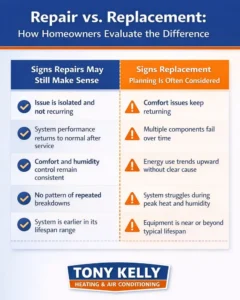
Most homeowners aren’t looking for a “yes/no” answer. They want a reasonable way to think through the decision. Here are practical questions that often help:
Is comfort getting harder to maintain? (especially during peak heat and humidity)
Is the system reliability changing? (more interruptions, more inconsistent performance)
Are issues repeating? (same symptoms coming back, or different parts failing over time)
Is efficiency trending down? (longer runtime, higher bills without clear cause)
Is the system near the end of its typical lifespan?
Some homeowners decide to keep repairing and monitoring. Others prefer to plan a replacement timeline so they can choose equipment and schedule work at a convenient time. If you want a deeper decision guide that stays educational (not salesy), see AC repair vs. AC replacement considerations.
Click to Enlarge
Early Warning Signs to Watch Over the Next Cooling Season
If you’re not ready to make a decision, you can still make progress by watching for patterns. Consider tracking:
How long the system runs in the afternoon compared to earlier in the season
Whether humidity discomfort increases even when the thermostat setting is unchanged
Any recurring electrical “no response” moments (even if they reset)
Whether certain rooms become consistently harder to cool
When It Makes Sense to Learn More (Without Rushing)
Learning more doesn’t mean you’re committing to replacement. For many homeowners, it simply means understanding options and timelines. If you want a high-level overview of how Tony Kelly HVAC approaches residential heating and cooling support in Tallahassee and nearby communities, you can review the heating and air conditioning services overview.
FAQs: Signs It’s Time to Replace an A/C
How do I know if my A/C is too old to keep repairing?
If the system is near the end of its typical lifespan and you’re seeing repeated performance issues (comfort, humidity control, or recurring breakdowns), it’s reasonable to compare ongoing repairs with a planned replacement timeline.
What are the most common early signs an A/C is wearing out?
Longer run times, uneven comfort, rising energy use without a clear cause, and reduced humidity comfort are common early signals. These often show up gradually.
Is an A/C replacement always the right move when bills go up?
Not always. Filters, airflow restrictions, thermostat settings, and duct issues can also affect energy use. If those are addressed and bills still trend upward, system efficiency decline may be part of the picture.
How long should a central air conditioner last in Tallahassee?
Lifespan varies, but systems in hot, humid climates often see heavier seasonal demand. Regular maintenance can help performance, but aging still occurs over time.
Why does my home feel sticky even when the A/C is running?
Cooling and dehumidifying are related but not identical. An aging system may still lower temperature but remove less moisture, which can make the home feel clammy or “heavy.”
How do I know if my A/C relay is bad?
Relay-related problems often show up as inconsistent starting, intermittent cooling, or the outdoor unit not responding as expected when the thermostat calls for cooling. A qualified technician can confirm the cause safely.
What does it mean when the outdoor unit clicks but doesn’t start?
This can point to electrical control components, starting components, or other issues. Because multiple conditions can produce similar symptoms, it’s best treated as a diagnostic situation rather than a guess.
If my A/C uses R-22, do I have to replace it?
No. Many homeowners continue using older equipment. However, because R-22 is no longer produced or imported, planning ahead can be helpful if the system develops a refrigerant-related issue later on.
What’s the difference between repairing an A/C and replacing it?
Repairs address specific failures or performance issues. Replacement is a planning decision that may be considered when the system’s overall reliability, comfort control, or efficiency has declined over time.
How can I reduce strain on my A/C while I’m deciding what to do?
Keeping filters clean, maintaining clear airflow at vents, and using consistent thermostat settings can support steadier operation. Scheduling routine maintenance can also help identify airflow or performance issues earlier.
What information should I gather before talking to a technician?
Helpful details include the system’s approximate age, how long symptoms have been happening, whether issues are consistent or intermittent, and whether comfort problems affect specific rooms.
Tony Kelly Owner Chris Windham Explains Why AC Units Make Loud Noises