CALL US 850-385-3774
In North Florida, your air conditioner runs through long stretches of heat, humidity, afternoon storms, and heavy summer demand. While homeowners often notice when an AC system stops cooling, many do not realize the real issue may be coming from the compressor itself.
The compressor is one of the most important components inside a central AC system. It helps circulate refrigerant through the system so heat can be removed from your home. When the compressor starts failing, your AC may still run — but cooling performance, humidity control, energy efficiency, and overall comfort can quickly decline.
If you’ve been searching for how to tell if AC compressor is bad, this guide breaks down the most common warning signs Florida homeowners experience, what causes compressor problems, how to check if the compressor is working, and when repair or replacement may make sense.
For homeowners comparing system efficiency and long-term cooling performance, you may also want to read our guide on most energy-efficient air conditioners for Florida homes.
The compressor is located inside the outdoor portion of your central air conditioning system. Its job is to compress and circulate refrigerant throughout the refrigeration cycle.
As refrigerant moves through your system, it absorbs heat from inside your home and releases it outdoors. The compressor keeps this entire process moving. Without it, your AC cannot properly cool the air.
In Florida homes, compressors work especially hard because systems often run for extended periods throughout spring, summer, and even early fall. High outdoor temperatures combined with humidity create heavy demand on the entire HVAC system.
Over time, constant operation, electrical stress, airflow issues, dirty coils, and refrigerant problems can all contribute to compressor wear.
If you’re trying to understand broader HVAC lifespan expectations in this climate, our article on how long an AC unit lasts in Florida’s climate explains how heat and humidity affect system longevity.
Many compressor failures start with subtle symptoms before the system completely stops working. Catching the warning signs early may help prevent additional damage to your HVAC system.
Here are some of the most common bad AC compressor symptoms homeowners notice.
One of the clearest signs of compressor trouble is when your system runs but the air coming from the vents no longer feels cold.
The compressor helps move refrigerant through the cooling cycle. If it begins failing, refrigerant cannot circulate properly, reducing your system’s ability to remove heat from indoor air.
Warm air does not always mean the compressor has failed completely, but it often points to a refrigerant or compressor-related issue.
Other causes of warm air can include:
If your AC is struggling to cool during Florida heat, our article on common summer HVAC cooling problems may also help narrow down the issue.
Healthy air conditioners typically produce a steady humming sound while running. Grinding, rattling, clanking, buzzing, or loud clicking noises can indicate compressor trouble.
These sounds may point to:
If the outdoor unit suddenly becomes noticeably louder than normal, it’s a good idea to shut the system off and have it inspected before additional damage occurs.
Homeowners often notice similar warning signs in other HVAC failures as well. Our article on signs your AC is about to break covers broader system warning symptoms.
A failing compressor can draw excessive electrical current, especially during startup.
If the breaker connected to your HVAC system repeatedly trips, the compressor may be overheating or struggling internally.
While homeowners sometimes reset the breaker multiple times, repeated tripping should never be ignored. Breakers are designed to protect the system from electrical overload and potential fire hazards.
Compressor-related breaker trips can be caused by:
If your system keeps shutting down unexpectedly, our HVAC troubleshooting guide walks through several homeowner-safe checks before scheduling service.
Florida homeowners often notice humidity issues before they notice temperature issues.
When compressors struggle, systems may lose their ability to remove moisture efficiently from indoor air. The house may still feel somewhat cool, but indoor air can start feeling damp, sticky, or clammy.
Signs of poor humidity control include:
Humidity control is a major part of comfort in North Florida homes. Our guide on whole-home dehumidifiers in Florida’s climate explains how HVAC systems manage moisture indoors.
Small vibration during startup is normal. Excessive shaking or violent movement when the outdoor unit turns on is not.
This symptom may indicate the compressor is “hard starting,” meaning it struggles to begin the refrigeration cycle.
Hard starting can eventually damage internal compressor components and place additional strain on electrical parts.
In some cases, replacing a capacitor or installing a hard-start kit may help reduce strain, but systems should be professionally evaluated before the problem worsens.
Sometimes the outdoor fan still runs, but the compressor itself never starts.
This often results in:
Several issues can cause this symptom:
Diagnosing compressors usually requires electrical testing and refrigerant pressure checks by an HVAC technician.
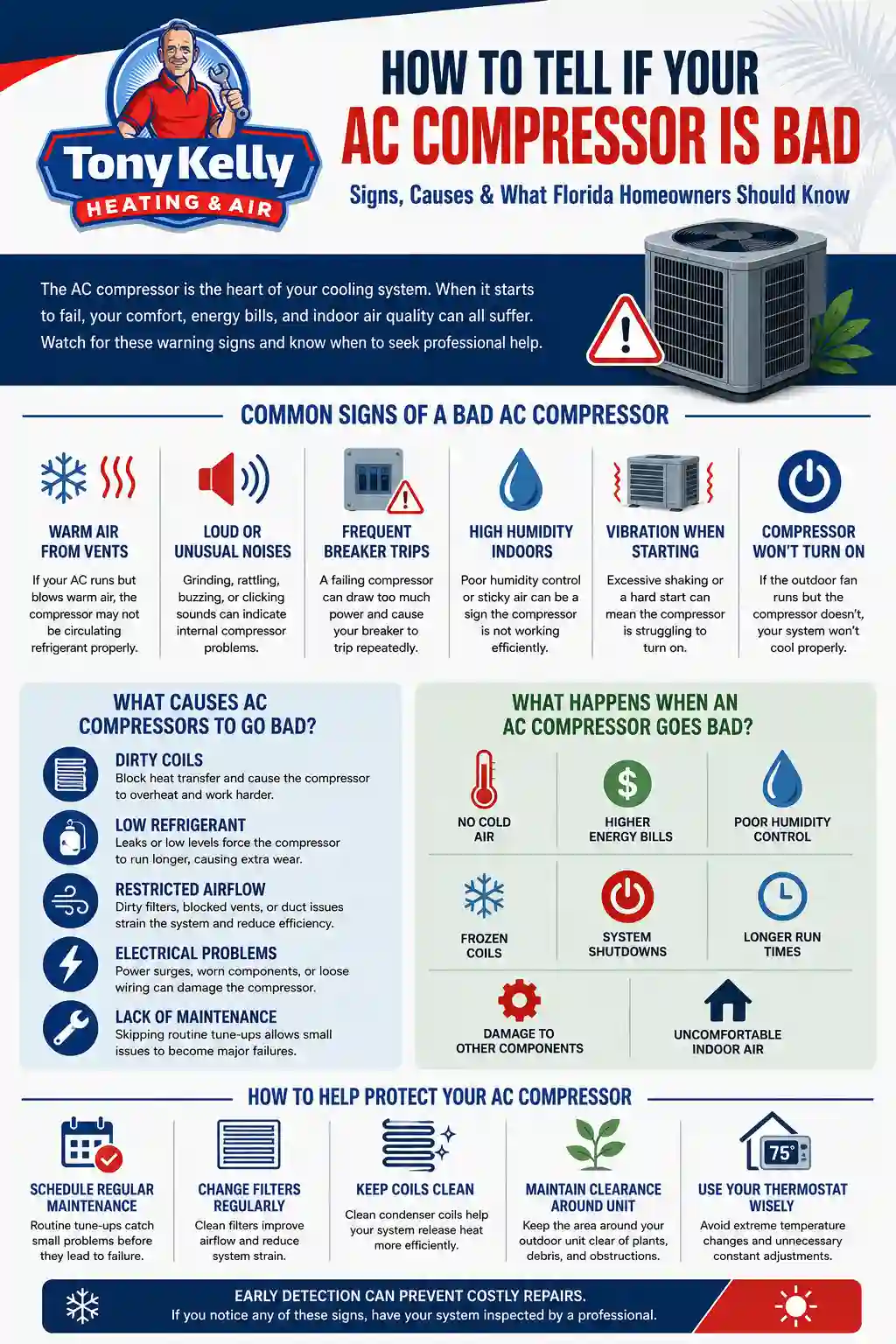
Compressors rarely fail randomly. Most failures develop over time due to stress placed on the system.
In Florida homes, several environmental and mechanical factors commonly contribute to compressor damage.
The outdoor condenser coil releases heat from your home into outdoor air.
When coils become coated in dirt, pollen, grass clippings, or debris, heat cannot escape efficiently. This forces the compressor to work harder and run hotter.
Long-term overheating significantly shortens compressor lifespan.
Low refrigerant often results from leaks somewhere in the system.
When refrigerant levels drop too low, the compressor must work harder to maintain cooling performance. This increases wear and can eventually lead to compressor overheating or failure.
Poor airflow creates additional strain throughout the HVAC system.
Common airflow restrictions include:
Many homeowners do not realize how much airflow impacts compressor performance. Professional air duct cleaning in Tallahassee may help improve system airflow and reduce unnecessary strain.
Florida storms and power fluctuations can damage HVAC electrical components.
Compressor-related electrical issues may involve:
Electrical stress often causes compressors to overheat or fail prematurely.
Routine maintenance helps identify small issues before they turn into major compressor failures.
Annual HVAC tune-ups often include:
Skipping maintenance allows wear and tear to build over time.
Our article on preventative HVAC maintenance explains why regular inspections are especially important in Florida homes.
When compressors fail completely, the AC system loses its ability to cool properly.
Depending on the type of failure, homeowners may experience:
Running a failing compressor too long can increase repair costs because additional parts may become damaged during operation.
Some systems may continue partially cooling for weeks or months while compressor performance slowly declines.
Others may stop suddenly after overheating or electrical failure.
Homeowners can perform a few basic observations before calling an HVAC technician.
While compressor diagnosis ultimately requires professional testing, these steps may help identify obvious issues.
Set the thermostat several degrees below room temperature.
If the system runs but airflow never becomes cool, the compressor may not be functioning properly.
Go outside while the system starts.
You should normally hear:
If the fan runs but you hear clicking, buzzing, or silence where the compressor should engage, further diagnosis is needed.
If the breaker connected to the outdoor unit repeatedly trips, stop resetting it continuously.
This often signals electrical or compressor-related problems.
Look for:
Keep vegetation trimmed around the condenser to allow proper airflow.
Higher-than-normal energy bills sometimes indicate the compressor is struggling to maintain cooling performance.
As systems lose efficiency, run times increase significantly.
If you are comparing system efficiency or wondering whether replacement may eventually make sense, our guide on AC repair vs AC replacement in Tallahassee explains common factors homeowners evaluate.
Sometimes.
The answer depends on the specific issue causing the compressor problem.
In some situations, the compressor itself may still be healthy while surrounding electrical components fail.
Repairs may involve:
However, if the compressor motor itself has internally failed, replacement may be necessary.
Whether replacement makes financial sense often depends on:
Most central AC compressors last roughly 10–15 years with proper maintenance.
However, Florida’s climate can shorten lifespan due to:
Well-maintained systems often last significantly longer than neglected ones.
Routine inspections, airflow maintenance, refrigerant management, and keeping coils clean all help reduce compressor strain.
Yes.
Restricted airflow inside the duct system forces your HVAC equipment to work harder.
When airflow becomes restricted:
Dirty ducts, crushed ductwork, disconnected ducts, and clogged filters can all contribute to airflow problems.
Our guide on how air duct cleaning impacts indoor air quality in Florida homes explains how duct systems affect overall HVAC performance.
North Florida’s climate creates unique HVAC challenges compared to cooler regions.
Compressors in Tallahassee-area homes often run:
These conditions naturally increase wear on compressors over time.
Homes with older ductwork, insufficient insulation, poor airflow, or oversized systems may place even more strain on cooling equipment.
Homeowners in nearby communities like Crawfordville, Monticello, and Kelly Creek often experience similar issues during long Florida summers.
For homeowners needing regional support, you can also learn more about HVAC services in Crawfordville and HVAC services in Monticello.
Warm air, loud outdoor noises, breaker trips, reduced airflow, and rising humidity are some of the earliest warning signs homeowners notice.
Yes. Some compressors fail gradually while others stop suddenly due to overheating, electrical damage, or internal motor failure.
Often, yes. A struggling compressor may run longer and draw more electricity while trying to cool the home.
Yes. Low refrigerant forces the compressor to work harder, increasing heat and wear inside the system.
Restricted airflow from dirty filters increases system strain and may contribute to overheating and compressor stress over time.
Clicking without startup may indicate capacitor issues, relay problems, electrical faults, or compressor failure.
No. Repeated breaker trips may signal compressor or electrical problems that require professional diagnosis.
Yes. Long cooling cycles combined with high outdoor temperatures and humidity create additional stress on compressors in Florida homes.
Most Florida HVAC systems benefit from professional maintenance at least once per year, though many homeowners schedule twice-yearly inspections due to extended cooling seasons.
Yes. Poor airflow from dirty ducts, collapsed ductwork, or clogged filters can increase strain throughout the HVAC system.
Compressor repair focuses on restoring the failed component or related electrical parts. Full system replacement may make more sense when the unit is older, inefficient, or nearing the end of its lifespan.
Routine maintenance helps identify refrigerant issues, electrical wear, airflow restrictions, and dirty coils before they create major compressor problems.
Your AC compressor plays a major role in keeping your Florida home cool, comfortable, and properly dehumidified.
Because compressors work especially hard in North Florida’s climate, small issues can gradually turn into larger problems if ignored for too long.
Watching for early warning signs like warm air, unusual noises, breaker trips, humidity issues, and longer cooling cycles can help homeowners address problems before complete system failure occurs.
Routine maintenance, proper airflow, clean coils, and timely repairs all help extend compressor lifespan and improve overall HVAC performance.
Whether you live in Tallahassee, Crawfordville, Monticello, Kelly Creek, or surrounding North Florida communities, understanding how your AC compressor works can help you make more informed decisions about your home’s cooling system.
Address:
870 Blountstown Hwy. Unit # 9
Tallahassee, FL 32303
Phone: 850-385-3774
License #: CMC1249702
Open Monday Through Friday
8:00 am to 8:00 pm

